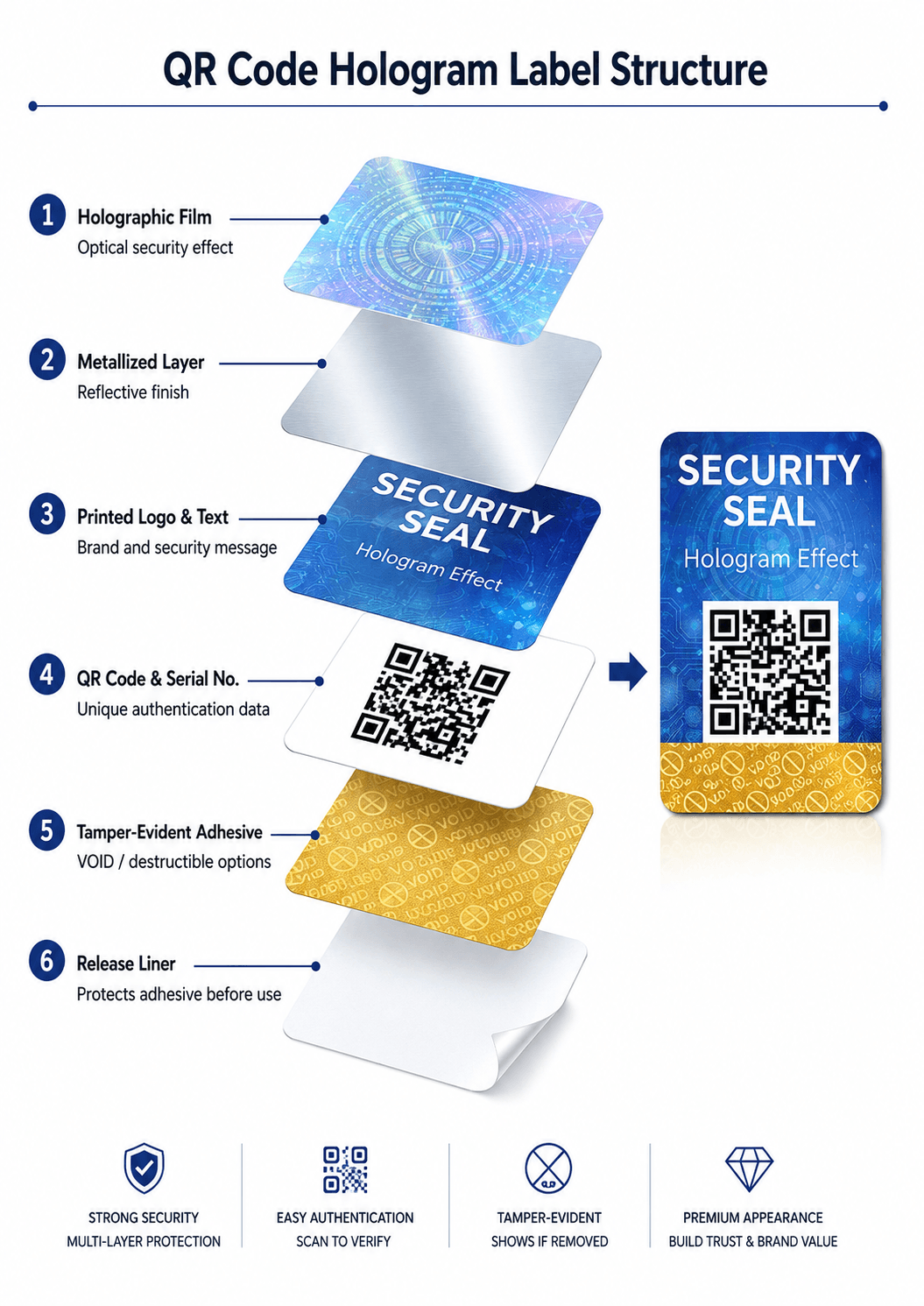
What Is Packaging Traceability?
Packaging traceability is the ability to identify a product, package or asset and connect it with records created during production, storage, delivery, inspection and service. The GS1 Global Traceability Standard provides a framework for identifying traceable objects, capturing data and sharing relevant information among authorized parties.
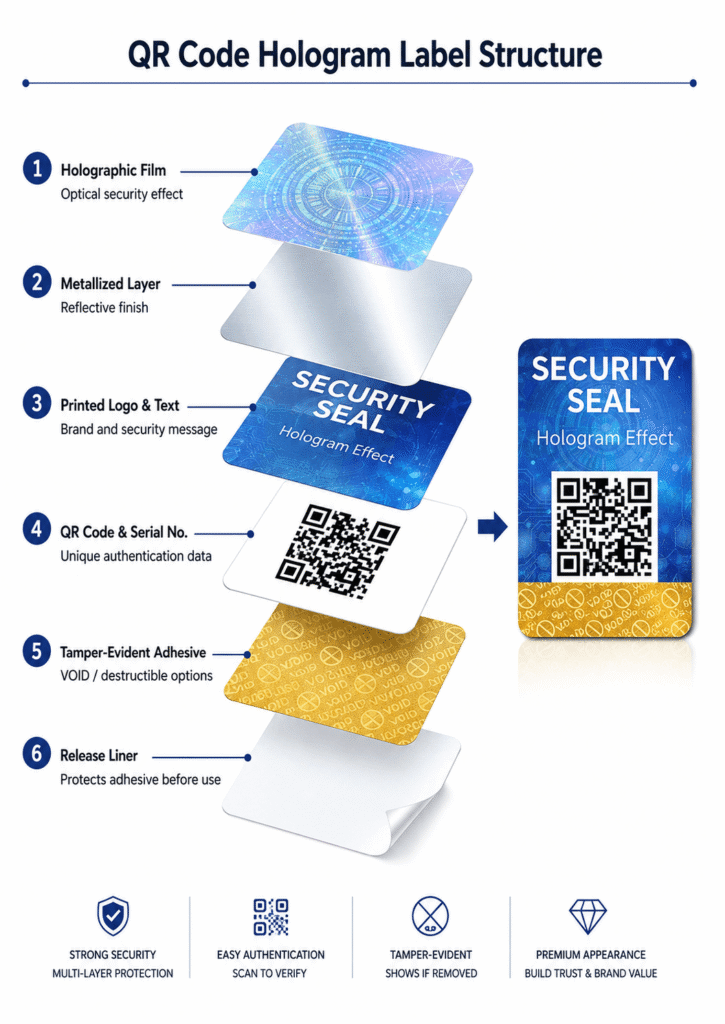
Traceability can operate at three levels. Product-level identification connects all units of the same product type to shared information. Batch-level traceability links a group of units to the same production lot. Item-level traceability assigns a unique identity to each physical unit, supporting individual inventory, warranty, repair or handover records.
Printing a QR code does not by itself create a complete packaging traceability system. A QR code, serial number, barcode or RFID tag is only a data carrier. It must connect to defined data, a database or record system, responsible operators and a verification process. Buyers must also decide who generates the identifiers, who can update the records and what happens when a code is scanned.
PACK EXPO International 2026 brings together packaging buyers, suppliers and technology providers. Its official program includes dedicated Discovery Tours for Labels, Labeling and Printing and Digital Transformation, providing useful context for the connection between physical packaging and digital records. This guide therefore compares QR code traceability, serial number tracking, RFID packaging and variable data labels for practical B2B applications.
Why Item-Level Traceability Matters in 2026
Item-level traceability assigns a unique identity to each physical product, component or package. Two items with the same SKU may have different production dates, inspection results, warranty status, repair histories or delivery records. Product-level data identifies what an item is; item-level data shows what happened to that specific unit.
For B2B operations, packaging traceability can support inventory counts, batch management, logistics handovers, product recalls and after-sales identification. A unique code can connect one battery, automotive part, boiler component or electronic device with its individual history. Serial number tracking also allows staff to verify an item manually when scanners or network access are unavailable.
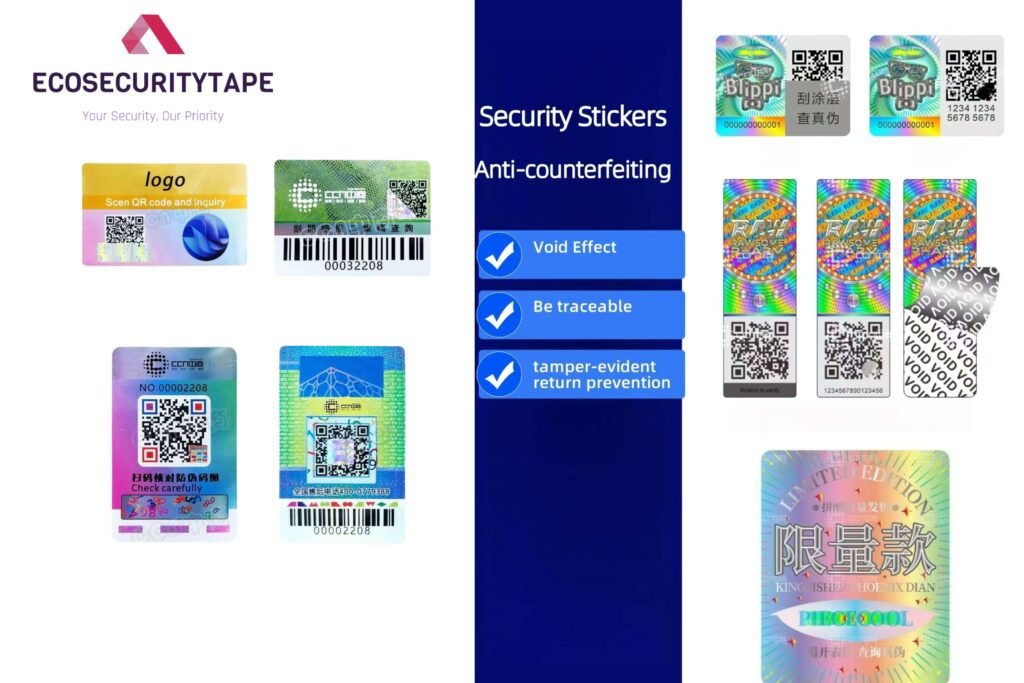
Item-level traceability requires a unique identifier. QR code traceability can connect each item to a digital record, while variable data labels can carry different serial numbers, barcodes or URLs. RFID packaging may support faster non-contact reading when compatible tags, readers and software are available. However, smaller businesses do not always need to begin with RFID. A structured numbering sequence or unique QR code may provide a simpler starting point.
Identification and tamper evidence are different. A unique code identifies an item but does not prove that the label has not been copied or removed. Combining unique data with tested VOID or destructible labels adds visible evidence of interference.
PACK EXPO International 2026 highlights Labeling and Digital Transformation as dedicated areas of interest, but the appropriate system still depends on business risk. Buyers should match the solution to the item value, inspection workflow, number of users and consequences of incorrect identification.
Fixed Codes vs Unique Data: What Buyers Must Understand
Buyers should choose the data level according to what must be identified. Fixed data repeats the same content on every label, batch data identifies a production group, and unique data assigns a different identity to each item. Greater complexity does not automatically improve packaging traceability.
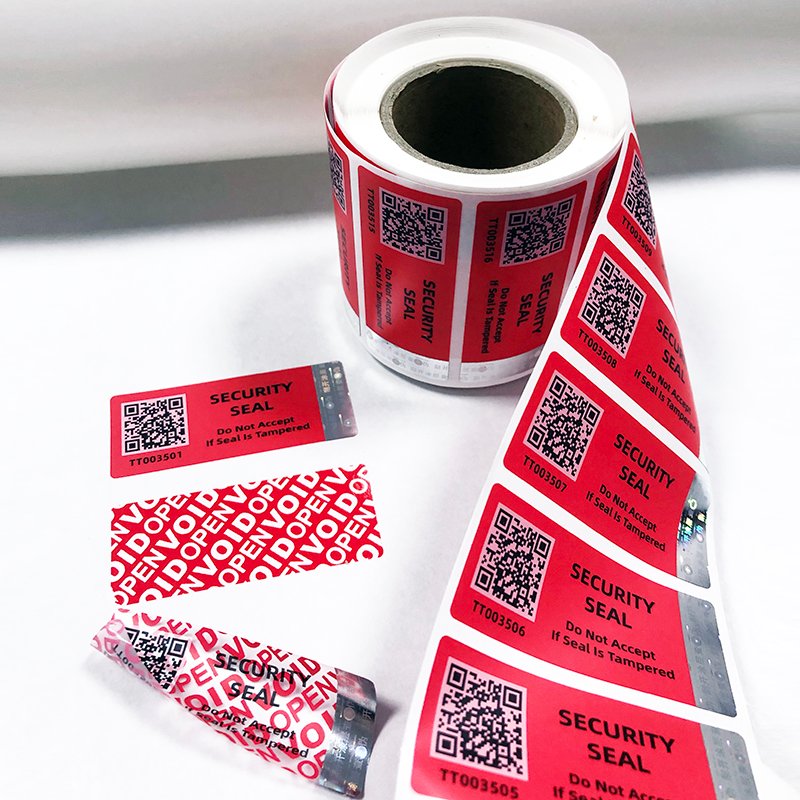
A fixed QR code can direct users to the same instruction page, manual or contact form, but it cannot distinguish individual items. A batch code connects multiple packages to one production or shipment record and can support quality checks or recalls, but it is not item-level traceability. QR code traceability, serial number tracking or unique barcodes can connect individual products with inventory, warranty, repair or service records. RFID packaging also requires unique identifiers and compatible reading infrastructure.
EcoSecurityTape can produce fixed, batch or variable data labels according to the required size, material, surface and quantity. For unique data projects, buyers must confirm who creates the identifiers, prevents duplicates and manages the database or verification system.
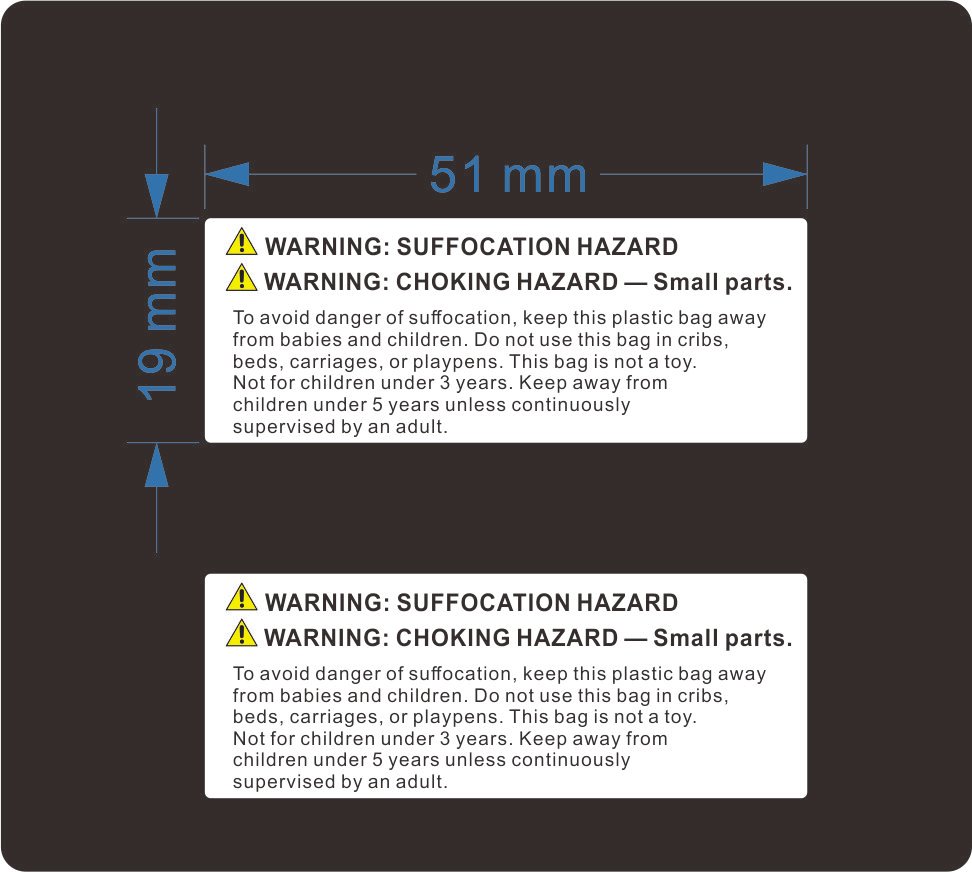
Not every application needs unique codes. A U.S. customer ordered and paid for 500 custom destructible paper warning labels for plastic bags used at a trade show. Every label carried the same safety message because the purpose was product warning and destructible removal, not individual tracking. EcoSecurityTape prepared the preliminary artwork layout free of charge before production. This approach helps buyers avoid unnecessary system costs and workflow complexity.
| Identification Level | Example | What It Can Identify | Common Use |
|---|---|---|---|
| Fixed data | Same QR code on every label | Product model or shared webpage | Instructions and contact information |
| Batch data | Same lot number for one production batch | A group of products | Production and recall records |
| Unique data | Different code on every label | One product, package or asset | Warranty, service and inventory tracking |
QR Codes for Product, Warranty and Service Records
QR codes can connect physical packaging with product pages, instructions, warranty portals and service records. Unlike RFID packaging, they can usually be scanned with smartphones. For packaging traceability, buyers must decide whether every label should share the same destination or identify a specific item.
A fixed QR code repeats the same webpage or document on every label. It suits shared manuals or contact information but cannot identify individual items. A unique QR code contains a different identifier or URL on each label, allowing products to connect with separate inventory, warranty or repair records. This form of QR code traceability requires correctly generated data and a system that recognizes each identifier.
Dynamic content does not always require the printed QR image to change. A code can point to a controlled redirect whose destination is updated later. The landing page, database and access permissions should be managed by the buyer or an appointed software provider; printing variable data labels alone does not maintain that system.
Before production, buyers should confirm the URL format, encoding rules, label size, print contrast and scanning distance. Samples should be scanned with devices used in the actual workflow. GS1 Digital Link can connect product, batch and serial identifiers with online information. Ordinary QR codes are not automatically GS1 Digital Link compliant.
EcoSecurityTape is evaluating a Spanish battery-label project using a 30 × 20 mm matte-silver label with a unique QR code, Code 128 barcode and human-readable serial number tracking. The project remains under review because its small size, data length, durability and scanning requirements must be confirmed.
Serial Numbers and Barcodes for Inventory Control
Serial numbers and barcodes provide practical identification for inventory, logistics and controlled handovers. Serial number tracking is useful because the identifier can be read manually without a scanner. Barcodes improve speed when warehouses already use compatible scanning equipment.
A serial number may contain letters and numbers. Code 128 can encode letters, numbers and symbols, making it suitable for product IDs, asset numbers and shipment references. When a barcode includes a human-readable number, staff can still identify the item if the code is damaged, the scanner fails or network access is unavailable.
Before producing variable data labels, buyers should specify the starting number, number of digits, prefix or suffix, numbering direction and whether duplicates are permitted. They should also confirm the barcode type, encoded content, label size, scanner and reading distance. For packaging traceability, the printed identifier must match the customer’s record system. QR code traceability may be added for online warranty or service information, while RFID packaging is more suitable when electronic reading infrastructure is available.
EcoSecurityTape completed a custom order for 3,000 cash bags for a Turkish customer. Each bag carried a sequential number from 0001 to 3000, supporting bag identification and handover records. The numbering was printed as part of the customized bag design.
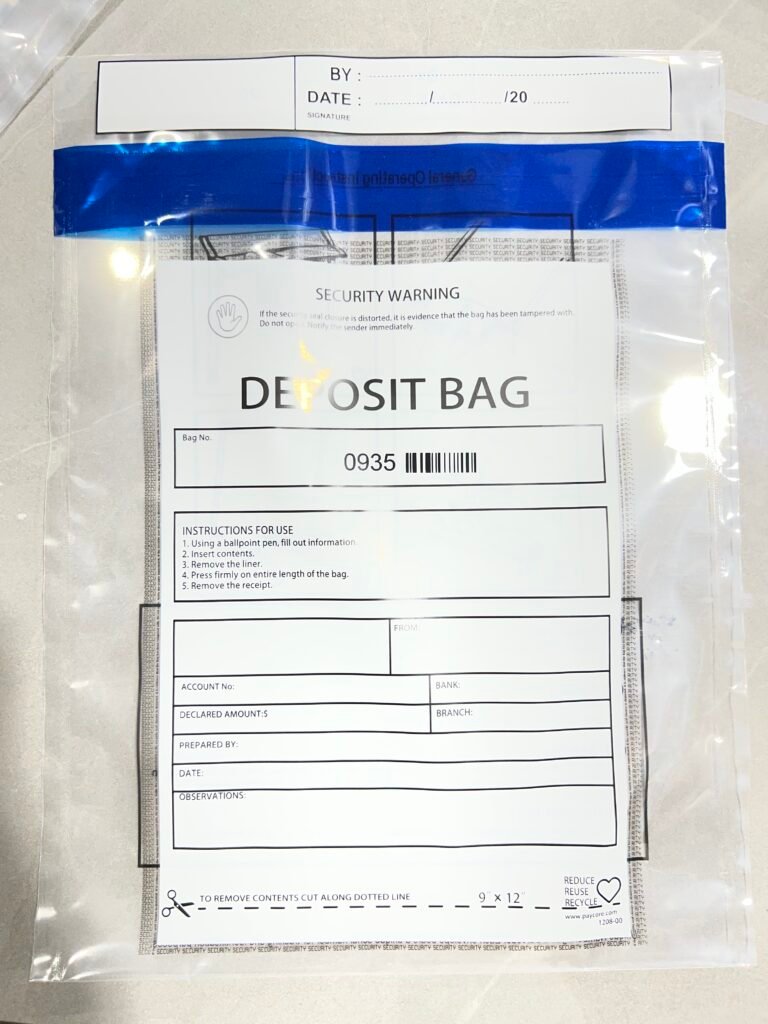
EcoSecurityTape can produce security labels, bags and other packaging with approved variable data. Unless separately agreed, the scope does not include database development or inventory software. The buyer and project team should define how identifiers are assigned, recorded, scanned, updated and verified after delivery.
RFID Packaging for Automated, Non-Contact Identification
RFID packaging uses an electronic tag, reader and software to identify products or assets through radio signals. In a suitable system, RFID supports non-contact reading and may capture multiple tags without aligning each item with a scanner. Performance depends on the tag, reader configuration and environment.
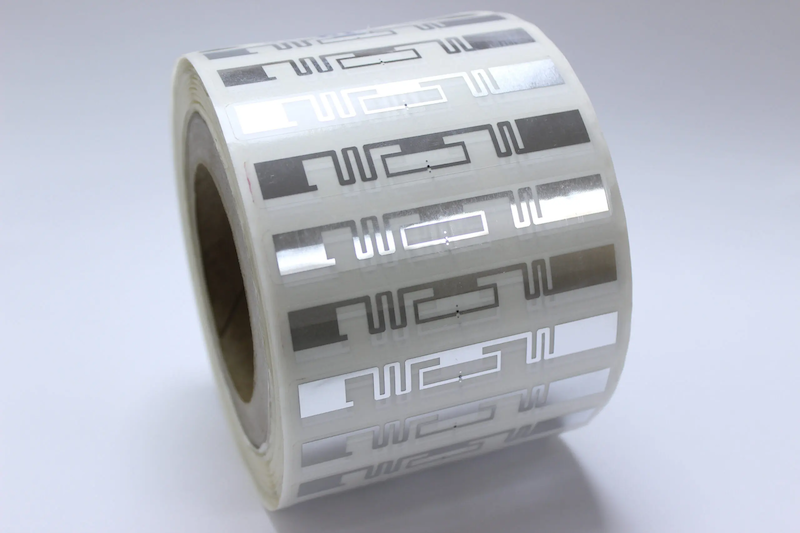
Before selecting RFID, buyers should confirm the required frequency, chip, memory, reading distance and data format. They should verify whether compatible readers and software are available and whether tags will be read individually or in batches. Metal, liquids, installation direction and surrounding materials can affect performance, so testing on the actual product is essential. The GS1 RFID Standards provide technical frameworks for EPC-enabled identification.
RFID normally costs considerably more than printed serial numbers or QR codes because it may require electronic tags, readers, encoding equipment and software integration. EcoSecurityTape receives inquiries from buyers who initially believe RFID is necessary. After reviewing the application, some find that serial number tracking or QR code traceability combined with an OPEN VOID label meets the requirement at a lower cost.
In this structure, variable data labels provide a unique identity, while the OPEN VOID effect shows visible evidence of removal. It can support practical packaging traceability without adding RFID infrastructure. Buyers should define the required reading speed, distance, automation level and business risk before choosing RFID.
Combining Traceability with Tamper-Evident Security Labels
Traceability and tamper evidence solve different but related problems. Serial numbers, QR codes and RFID provide an identity, while VOID and destructible labels show removal evidence. Combining them allows staff to identify an item and check whether its security label has been disturbed.
For packaging traceability, variable data labels can carry a different serial number, barcode or QR code for each product. Serial number tracking supports manual inspection, QR code traceability can connect users with digital records, and RFID packaging may support automated reading in compatible systems. However, a QR code can be copied or photographed, so it should not be treated as tamper protection by itself. A database record also cannot confirm adhesion or removal performance. VOID message visibility, fragmentation and residue must be tested on the actual surface.
EcoSecurityTape has supported several projects that illustrate this combination. A Swiss customer ordered non-transfer VOID labels for boilers and other large equipment used in inventory management. The customer had previously purchased VOID security tape and returned about one month later after confirming the tape’s tamper-evident performance.
A first-time U.S. customer selected non-transfer VOID labels for automotive parts after EcoSecurityTape shared non-confidential product images through WhatsApp. The labels were chosen to provide removal evidence while limiting printed residue on the parts.
For a Spanish battery project still under evaluation, the proposed 30 × 20 mm matte-silver label combines a unique QR code, Code 128 barcode and human-readable serial number. The project requires confirmation of data length, scan performance, durability and record management before production.
EcoSecurityTape also completed 3,000 serialized cash bags for a Turkish customer, numbered from 0001 to 3000 for bag identification and handover records. Similar combinations may be used for electronics, evidence bags, warranty labels and asset management, but the structure must match the surface, workflow and inspection risk.
QR Codes vs Serial Numbers vs RFID: Which Should Buyers Choose?
No identification method is best for every packaging traceability project. Buyers should compare the application workflow, item value, order quantity, repeat-purchase volume, scanning environment and total system cost before choosing serial numbers, barcodes, QR codes or RFID packaging.
Serial number tracking is the simplest option for manual inventory, warranty and handover checks. It requires no scanner and is suitable for low-volume trials, although manual entry can become inefficient at higher volumes. Barcodes are practical when a warehouse already uses compatible scanners and software. They can carry fixed or unique data and work well for logistics and stock control.
QR code traceability can connect a product with online instructions, service pages or individual digital records. A smartphone may be sufficient for scanning, but the buyer still needs reliable URLs, data management and a verification process. RFID is more appropriate when operations require automated, non-contact or batch reading. Its higher tag, reader, integration and testing costs should be justified by operational benefits.
| Method | Human Readable | Reader Required | Data Type | Typical Cost Level | Best For |
|---|---|---|---|---|---|
| Serial number | Yes | No | Unique | Low | Manual inventory and warranty checks |
| Barcode | With printed text | Compatible barcode scanner | Fixed or unique | Low | Warehouse and logistics scanning |
| QR code | No; optional text can be added | Smartphone or 2D scanner | Fixed or unique | Low to medium | Digital records and service information |
| RFID | No; optional text can be added | Compatible RFID reader | Usually unique | Higher | Automated and batch identification |
The lowest label price does not always produce the lowest overall cost. Buyers should consider equipment, software, staff training, code management, repeat orders and the consequences of identification errors. Low-quantity projects can often begin with variable data labels using QR codes or serial numbers and move to more automated technology after the process has been validated.
EcoSecurityTape can review the product type, application surface, quantity, repeat-order plan, tamper-evident requirement and available scanning system. Based on this information, we can recommend a suitable security and traceability packaging structure. Database development and software integration must be confirmed separately for each project.
FAQ About Packaging Traceability
What Packaging Traceability Options Can EcoSecurityTape Customize?
EcoSecurityTape can produce labels, security tape and bags with serial numbers, barcodes, fixed or unique QR codes and selected RFID structures. QR code traceability, serial number tracking, variable data labels and RFID packaging must be evaluated according to the application. Database development and software integration are not automatically included and should be confirmed separately.
What Is the MOQ for Custom Traceability Labels?
Selected custom label projects can start from 500 pieces. The actual MOQ depends on the label size, material, adhesive, tamper-evident structure, printing and variable-data requirements. EcoSecurityTape can evaluate lower-quantity trial orders when the selected production process allows.
How Long Does Production Take?
Most regular custom label orders can be produced within three to five working days after payment and final artwork approval. Large quantities, special materials, RFID components or complex variable-data projects may require additional time. A project-specific schedule will be confirmed before production.
Can I Test Packaging Traceability Labels Before Ordering?
Yes. When suitable stock labels are available, EcoSecurityTape can provide samples free of charge, while the buyer pays the courier cost. Testing on the actual product helps confirm adhesion, VOID performance, residue, code readability and scanning distance before custom production.
Can EcoSecurityTape Prepare the Label Artwork?
Yes. EcoSecurityTape can prepare a free preliminary layout based on the customer’s dimensions, logo, printed text and data requirements. For accurate preparation, buyers should also provide the quantity, application surface, numbering format, barcode or QR-code file, preferred packaging method and delivery destination.
Why Choose EcoSecurityTape for Packaging Traceability?
EcoSecurityTape helps B2B buyers turn packaging traceability requirements into practical labels, tape and security bags. We review the application surface, identification level, scanning process, quantity, budget and required tamper-evident result before recommending a structure.
Our experience includes serial number tracking for cash bags, non-transfer VOID labels for boilers and automotive parts, and QR code traceability for a battery-label project under evaluation. We can produce variable data labels with serial numbers, barcodes and fixed or unique QR codes. RFID packaging can also be evaluated when electronic reading is required, although tag, reader and software compatibility must be confirmed separately.
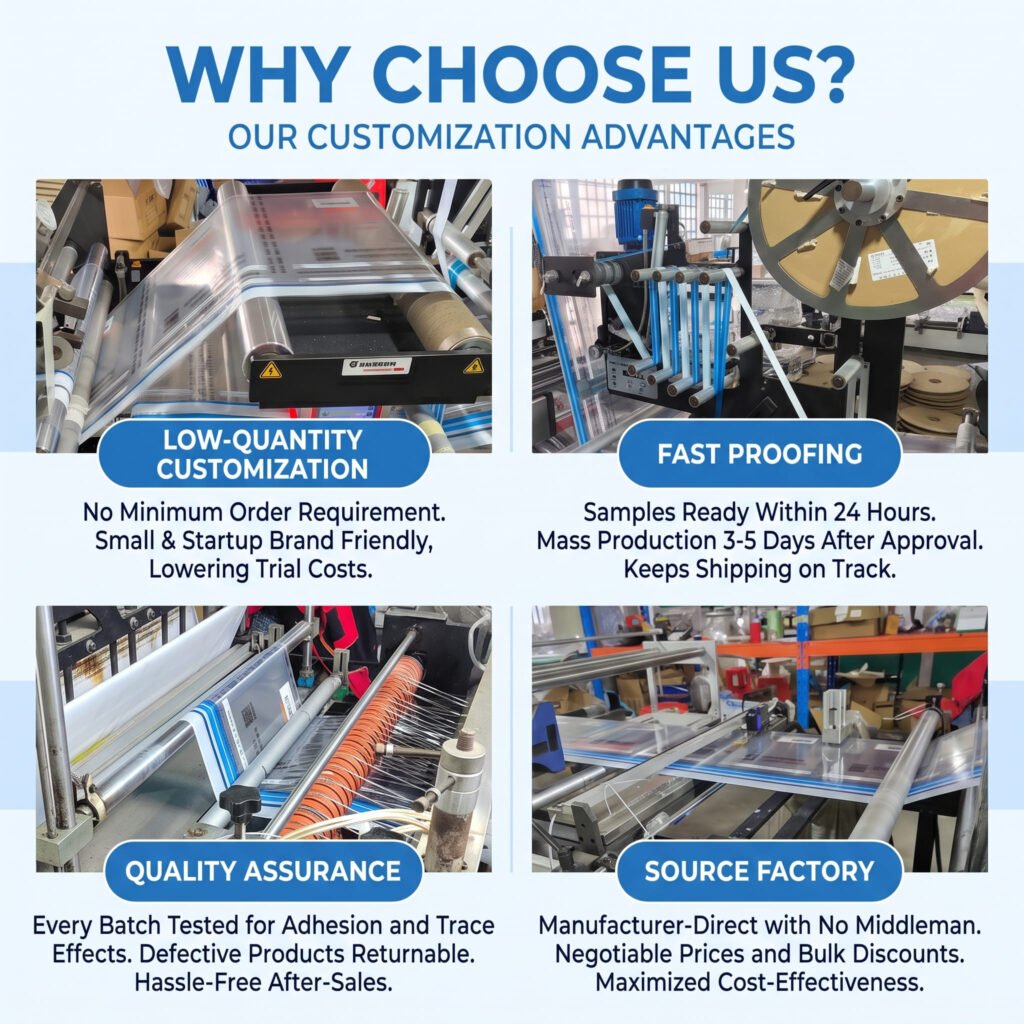
Selected custom label projects can start from 500 pieces, allowing buyers to test an application before committing to larger quantities. EcoSecurityTape provides free preliminary artwork based on the customer’s dimensions, logo, printed content and data requirements. When suitable stock samples are available, they can be provided free of charge, while the buyer pays the courier cost.
Most regular custom label orders can be produced within three to five working days after payment and final artwork approval. Express delivery normally takes about five to seven working days to major European and North American destinations, subject to customs and local conditions. We can also provide non-confidential case images to help buyers compare structures and reduce sourcing risk.
Conclusion
Effective packaging traceability begins with a clear understanding of what must be identified, how the data will be captured and who will manage the records. Serial numbers, barcodes, QR codes and RFID each serve different workflows and budgets. When required, these identifiers can be combined with VOID or destructible labels to provide visible evidence of removal.
Planning a custom traceability project? Send EcoSecurityTape your label size, quantity, application surface, artwork, data format, tamper-evident requirement and delivery destination. We can recommend a suitable structure, prepare a free preliminary layout and evaluate available samples for testing.
Email: info@ecosecuritytape.com
WhatsApp: +1 615 480 2757

Focus on tamper evident packaging, free sample for test, small-batch MOQ, let’s have a talk.