What Are Tamper Evident Labels for Metal Surfaces?
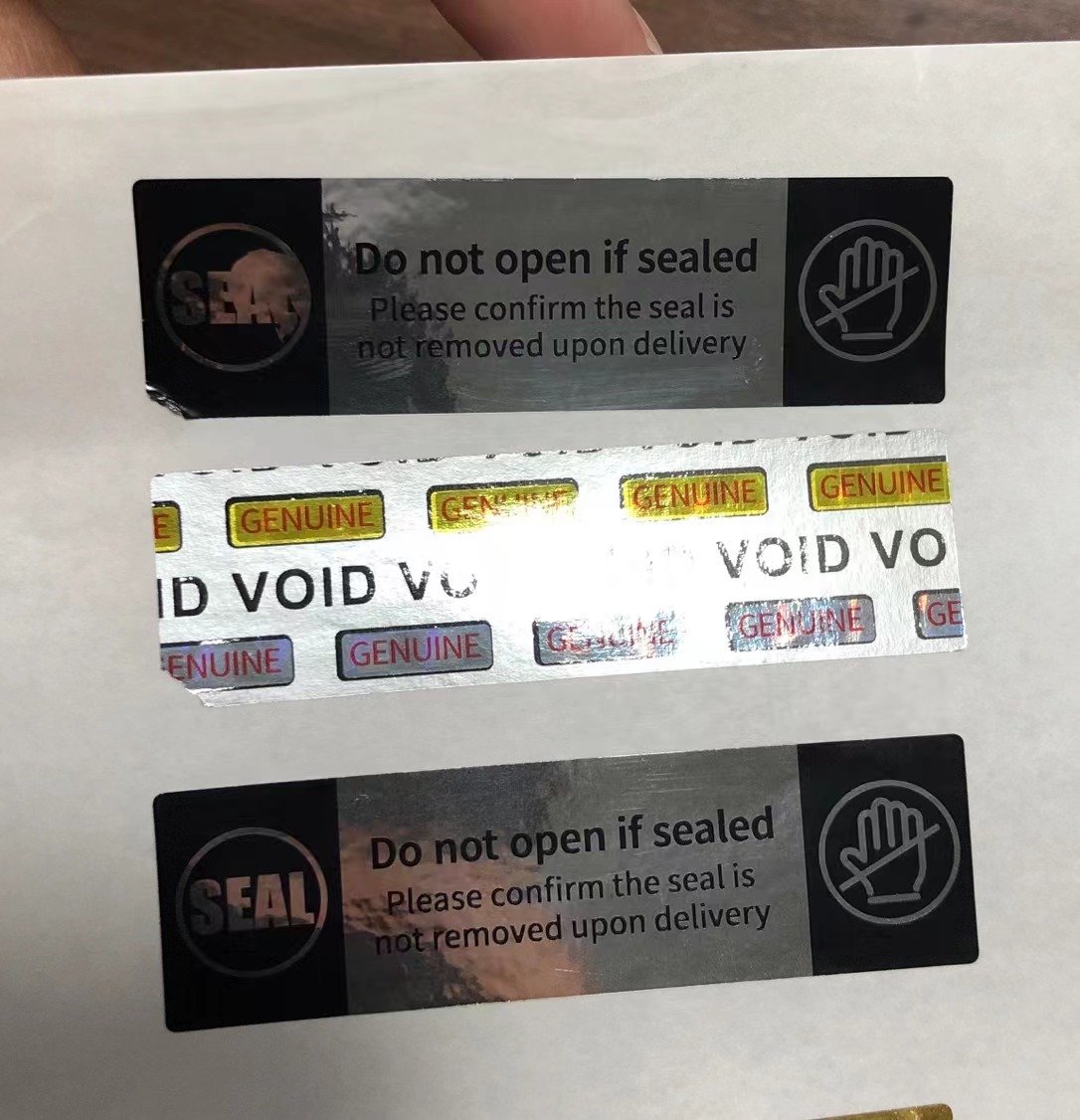
Tamper evident labels for metal surfaces are security labels used to reveal attempted removal or interference on metal products, equipment, components or packaging. Depending on the selected construction, peeling may leave a security message on the surface, display evidence on the label, or divide the effect between both.
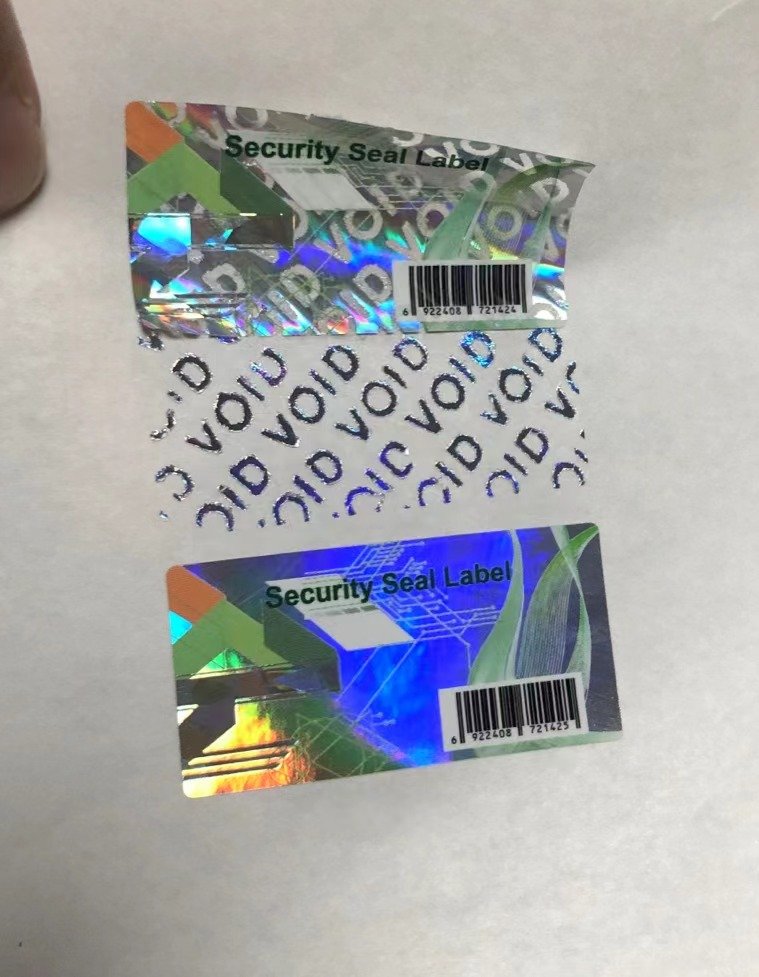
These labels can combine identification with removal detection. A printed asset number helps staff recognize equipment, while the security construction helps them identify whether the label has been disturbed. The two functions should be evaluated separately during product selection.
Ordinary identification labels primarily carry information. Security labels add an opening or removal effect, but that effect does not automatically establish compatibility with every metal surface. Bare metal, paint, powder coating and other finishes may produce different results.
Buyers should also distinguish three characteristics: the printed information visible before removal, the security message produced during peeling, and any adhesive residue afterward. A non-transfer construction, for example, can avoid a prominent transferred VOID message without guaranteeing residue-free removal under every condition.
EcoSecurityTape receives label inquiries from different countries every week. Many buyers request samples because they want to examine adhesion and removal performance before ordering. We prepared this guide to explain those practical selection questions.
EST supports custom tamper evident labels with project-specific dimensions, wording, colors and layouts. Our starting MOQ is 200 pieces, allowing new buyers to begin with a smaller project. Quantity arrangements for multiple designs are confirmed during quotation.
Selecting tamper evident labels for metal surfaces should therefore start with the actual product, finish and inspection requirement. Surface photos, removal expectations and representative testing provide a stronger basis for approval than label appearance alone.
Why Metal Surface Finish Matters for Label Selection
The term “metal surface” does not describe one uniform application condition. Tamper evident labels for metal surfaces need to be selected according to the material and its finish, including coatings, texture, contamination and condition.
Bare metal: Buyers should identify the metal where possible and describe any polishing, treatment or protective layer. Oil, handling contamination and uneven areas can affect contact between the adhesive and surface. A sample should be tested on the actual part rather than an unrelated metal sheet.
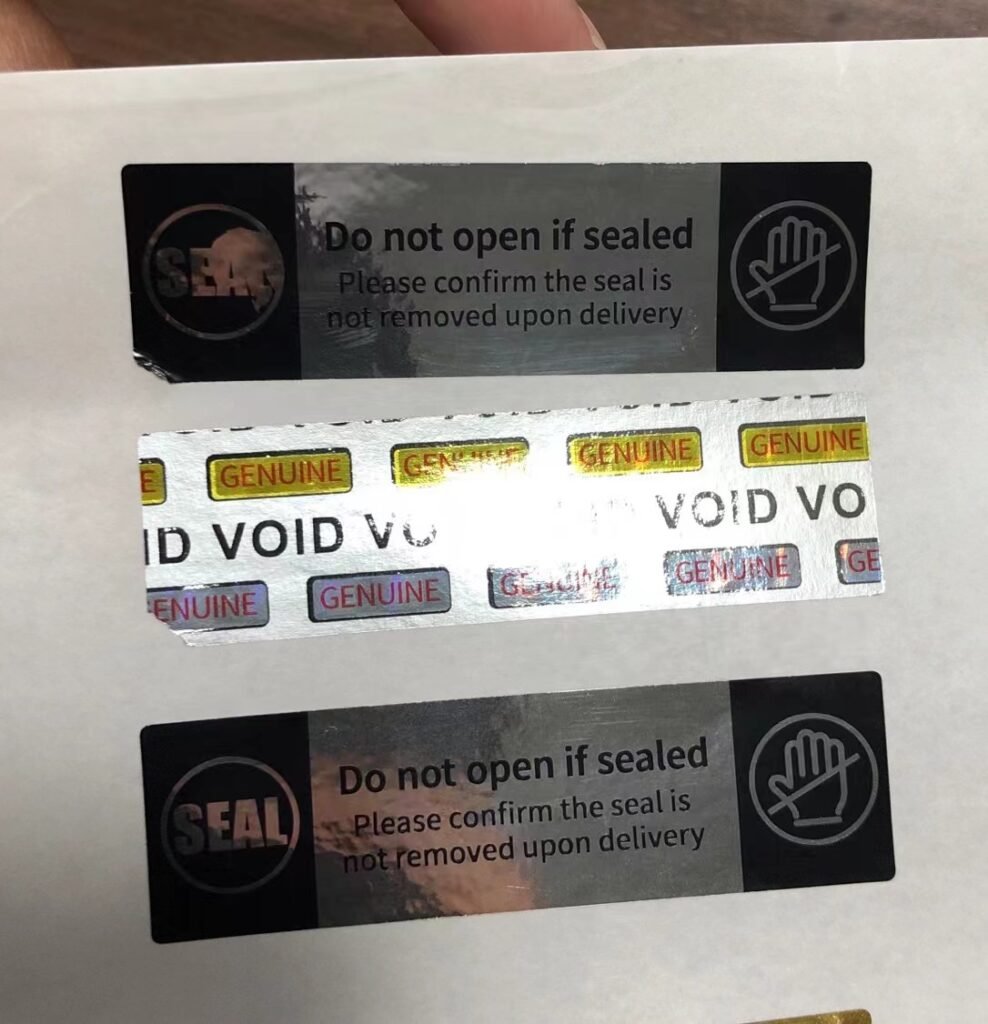
Painted metal: The label adheres to the paint layer, so the condition of that layer matters. Testing should examine both adhesion and what happens to the paint during removal. Weak, damaged or insufficiently cured coatings can complicate evaluation.
Powder-coated and textured surfaces: Texture may reduce continuous adhesive contact. Two powder-coated products can also differ in finish and surface condition. Approval on one component should not automatically extend to every coated part.
Other treated surfaces: Plating, protective films and specialized finishes require separate confirmation. Buyers should explain whether the label is attached directly to the finished surface or to a temporary protective layer.
For VOID labels for metal, the correct result involves more than strong adhesion. The label should produce the intended security evidence while meeting the buyer’s expectations for surface appearance afterward.
An asset label on equipment may remain attached for an extended period, while a packaging seal may be removed soon after delivery. These applications require different testing periods and acceptance criteria.
EcoSecurityTape reviews the finish alongside dimensions, printed information and transfer requirements. When several surfaces are involved, buyers should identify each separately.
This approach helps select tamper evident labels for metal surfaces based on real conditions and reduces the risk of treating the metal name alone as a complete specification.
Full-Transfer vs Partial-Transfer vs Non-Transfer VOID Labels
Full-transfer, partial-transfer and non-transfer describe where the security message or pattern appears after peeling. The appropriate choice for tamper evident labels for metal surfaces depends on the inspection process and acceptable surface condition.
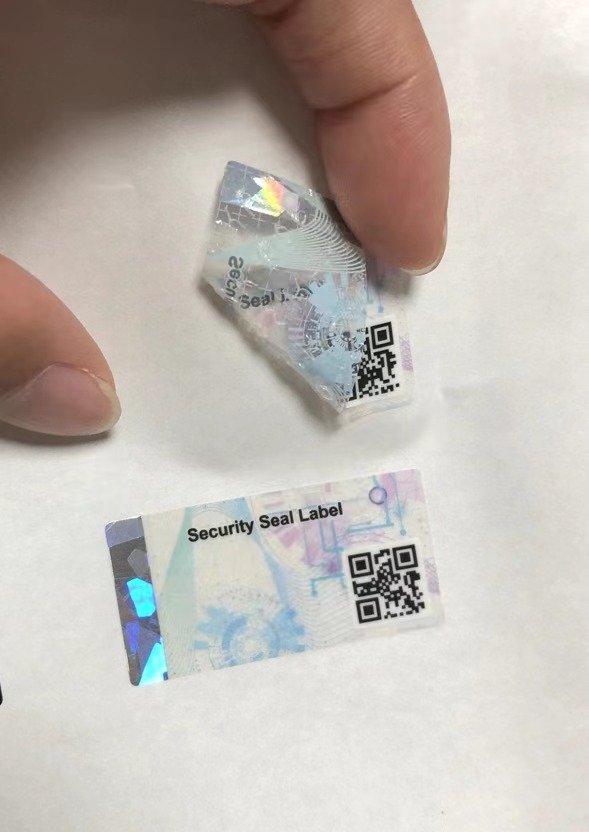
Full-transfer labels leave the designated effect on the application surface. Partial transfer VOID labels divide the effect between the removed label and surface. Non transfer security labels keep the principal visible evidence on the label without prominently transferring the security message onto the product.
| Comparison Point | Full-Transfer Labels | Partial-Transfer Labels | Non-Transfer Labels |
|---|---|---|---|
| Security message location | Primarily on the application surface | On both label and surface | Primarily on the label |
| Inspection focus | Check the surface and removed label | Check both parts | Check the label for removal evidence |
| Surface appearance afterward | Visible transferred marking | Some transferred marking | No prominent transferred security message |
| Buyer priority | Persistent surface evidence | Evidence across both parts | Removal detection with a cleaner appearance |
| Residue consideration | Confirm acceptable transferred material | Assess transferred material and adhesive | Test adhesive residue separately |
| Approval requirement | Actual surface testing | Actual surface testing | Actual surface testing |
A non-transfer label is not automatically more secure or less secure than another structure. Construction, adhesion, placement and inspection all influence practical performance.
Likewise, a transferred security message is not necessarily an unwanted result. For some disposable packaging or closure applications, persistent marking may be exactly what the buyer requires. Other applications prioritize keeping the equipment surface relatively clean.
EcoSecurityTape recommends comparing removal examples before selecting VOID labels for metal. Buyers should know what an intact label looks like and what change staff should recognize after interference.
Testing must still establish how the selected construction behaves on the actual finish. A product photo showing a clear VOID effect on one surface does not prove the same result on every painted or coated component.
Choose the structure according to the evidence needed, then verify that tamper evident labels for metal surfaces produce that evidence under representative conditions.
Choosing a Transfer Effect for Metal Products and Equipment
Choosing tamper evident labels for metal surfaces begins with a practical question: what must staff identify during inspection? The answer may involve asset identity, attempted label removal, disturbed access points or the condition of a packaged component.
For equipment asset management, a printed number can help link the item to an inventory record. A tamper-evident construction adds a way to identify disturbance of the label. If the equipment finish should remain relatively clean, a non-transfer structure may be worth testing.
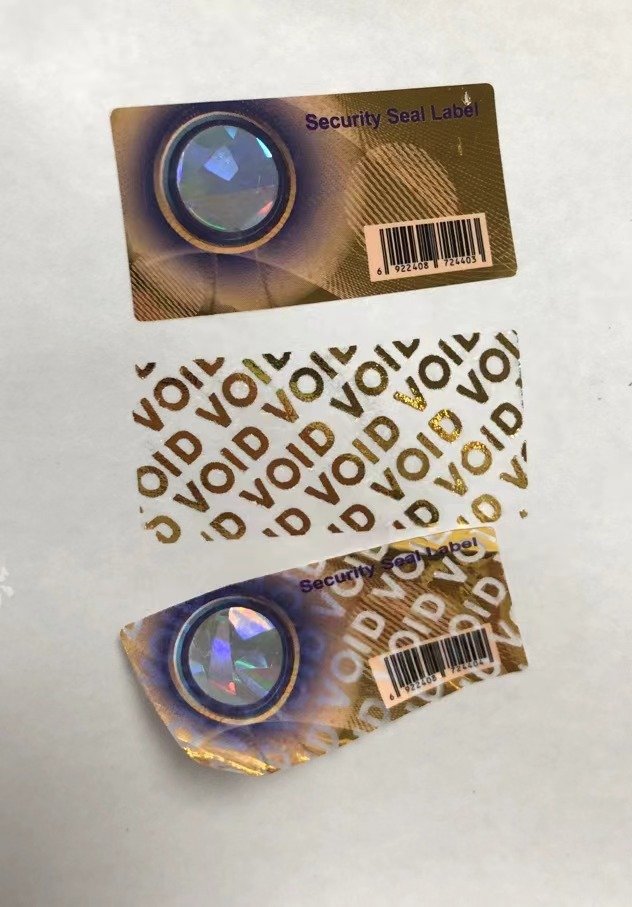
For a closure or access point, buyers should consider where evidence needs to remain after removal. A full-transfer or partial-transfer effect may support a process that requires visible marking on the underlying surface. Placement must also make sense for the actual opening.
For automotive components, the surface may be bare, painted, coated, oily or uneven. The selected label should fit the available area and the buyer’s removal requirements. A suitable construction for one component should not be approved automatically for all parts.
Unlike standard stock tape, labels generally require project-specific preparation. Different customers need different dimensions, wording, colors and security effects, even when their products appear similar.
EcoSecurityTape supports custom tamper evident labels from a 200-piece starting MOQ. This gives new buyers a manageable trial quantity once the specifications are confirmed. Quantities for several sizes or designs are reviewed separately.
Logo printing can improve identification, but it does not replace adhesive and removal testing. Buyers should specify both their branding requirements and expected security effect.
For tamper evident labels for metal surfaces, the best selection is the construction that fits the inspection procedure and passes application testing. It should not be chosen only because another customer used the same color or label shape.
Surface Preparation, Adhesion and Removal Considerations
Surface preparation helps buyers evaluate tamper evident labels for metal surfaces consistently. Applying a sample to a contaminated area can produce a result that does not represent normal use or the performance of the selected construction.
Check that the application area is clean and dry. Where cleaning is required, the method must be compatible with the metal and its coating. Do not assume that a particular solvent is suitable for every finish. Follow the product or equipment owner’s approved preparation method.
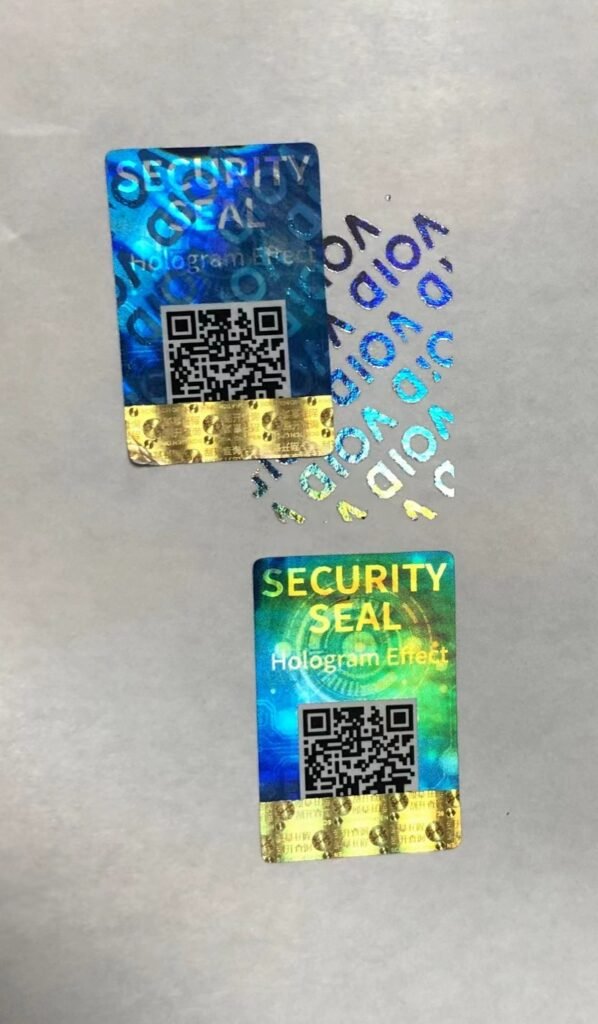
Inspect the surface before applying the label. Record scratches, loose paint, protective films or other existing conditions so they are not later mistaken for damage caused by removal.
Apply the label with consistent pressure and sufficient contact. Curved surfaces, edges and uneven areas may affect contact and should be included in testing where relevant.
Attachment time also matters. An immediate peel test may not represent a label used during transport, storage or extended equipment service. Buyers should tell EST how long the label is expected to remain attached and agree on representative evaluation periods.
After removal, inspect the security message, adhesive residue and surface condition separately. A clear VOID effect does not automatically mean that the finish remains undamaged. Similarly, a visually clean surface does not establish that the security evidence is satisfactory.
For non transfer security labels, check for adhesive traces even when the VOID message remains on the label. For transfer constructions, establish whether the remaining marking is acceptable.
EcoSecurityTape recommends recording these observations rather than describing a sample only as “good adhesion.” Detailed feedback helps review VOID labels for metal against the actual acceptance criteria.
Consistent preparation and recorded conditions make comparisons between samples more useful and provide a reference for repeat purchasing.
How to Test VOID Labels on Actual Metal Surfaces
Testing tamper evident labels for metal surfaces should assess identification, adhesion, removal evidence and the condition of the finish. Use actual products or representative pieces with the same surface treatment.
1. Identify each surface:
Record the metal, coating and texture where known. If the project includes several finishes, test each separately rather than combining the results.
2. Confirm the sample construction:
Identify the transfer effect, dimensions and printed layout. A stock sample may demonstrate material behavior without representing the final custom size.
3. Prepare and apply consistently:
Use the intended cleaning and application method. Record the location and avoid changing pressure or placement between comparison samples.
4. Allow representative attachment time:
Evaluate after a period relevant to the operation. Longer-use applications may require additional checks rather than relying on a single immediate peel test.
5. Inspect identification and removal:
Check printed information for readability, then peel and examine the label and surface. Confirm that the expected security effect is clear.
6. Record residue and finish condition:
Photograph transferred markings, adhesive traces, lifted paint or other changes. Share the conditions and acceptance requirements with EST.
Suitable stock label samples can be provided free of charge, while customers cover transportation. Buyers may use an eligible DHL or other courier collect account, arrange collection through a Chinese freight forwarder, or ask EST to organize shipping.
When evaluating tamper evident labels for metal surfaces, assess adhesion separately from the visible tamper effect. ASTM International’s peel adhesion test standard for pressure-sensitive tape provides a reference for evaluating peel adhesion, but does not establish whether a VOID pattern transfers correctly. For your label project, test samples on the actual bare, painted or coated metal surface and record the application conditions, dwell time, removal behavior and any residue or coating damage. Confirm both acceptable bonding and the required full-transfer, partial-transfer or non-transfer effect before approving bulk production.
If EST arranges transportation, the buyer pays the freight charge to us. Custom sampling requirements should be confirmed separately from free stock samples.
A stock sample is a useful starting point for tamper evident labels for metal surfaces, but differences in dimensions, artwork or construction must be acknowledged. Final approval should identify the tested specification and any requirements still awaiting confirmation.
Real Customer Projects and EST’s Customization Process
EcoSecurityTape has supported equipment and component labeling projects as well as new metal-surface inquiries. These examples show different purchasing needs rather than establish one universal label specification.
Switzerland: 5,000 Labels for Boiler Equipment Asset Inventory
A Swiss customer purchased 5,000 non-transfer labels for asset inventory on boiler equipment. The labels supported equipment identification and inventory checks, while the non-transfer structure was selected to keep the application surface relatively clean.
This is an asset-management application. It should not be interpreted as proof of suitability for every boiler temperature or surface location; those conditions require separate product confirmation.
United States: 2,000 Labels for Automotive Parts
A U.S. customer purchased 2,000 non-transfer labels for automotive parts. This project illustrates demand for removal evidence where surface appearance matters. Other automotive applications still require testing because component finishes and operating conditions differ.
France: A 35 × 15 mm Partial-Transfer Label Inquiry
A French buyer requested partial transfer VOID labels measuring 35 × 15 mm, with a company logo, for a metal surface. This remains an inquiry example rather than a completed delivery claim.
For new custom tamper evident labels, EST starts by confirming dimensions, colors, wording, quantity, surface and transfer requirements. The MOQ starts at 200 pieces. Orders above 200 pieces can include logo customization according to the agreed specification.
Send a vector logo for free preliminary artwork. After design approval, EST prepares the PI and starts production upon receipt of the agreed payment. Payment stages and shipment terms are recorded in the PI; dispatch before final balance settlement can apply where expressly agreed.
EcoSecurityTape’s brand reflects our emphasis on environmentally responsible and safe material selection. Specific environmental or material-safety requirements should be reviewed against documentation for the selected product.
FAQs About Tamper Evident Labels for Metal Surfaces
Q1: Do VOID labels work on every metal surface?
No single specification should be assumed to work on every finish. Tamper evident labels for metal surfaces require testing on the actual bare, painted, coated or treated material. Surface texture, contamination and coating condition should be included in the review.
Q2: Which transfer effect should I choose?
Choose according to where inspection evidence should appear. Full-transfer effects leave marking on the surface; partial-transfer effects divide it between both parts; non transfer security labels keep the principal evidence on the label. Actual surface testing confirms whether the selected effect meets your requirements.
Q3: Will the labels leave residue or damage paint?
That depends on the construction, adhesive, finish and application conditions. Test transferred messages, adhesive residue and surface damage separately. Non-transfer does not automatically mean residue-free, and strong adhesion does not guarantee that a weak coating remains intact during removal.
Q4: Can I customize the dimensions, logo and wording?
Yes. EST reviews dimensions, shape, colors, text and transfer requirements for custom tamper evident labels. Orders above 200 pieces can include logo customization. Send a vector logo, and our team can prepare preliminary artwork free of charge before the design is approved.
Q5: Can I request samples, and what is the MOQ?
Suitable stock samples are free, while the customer pays transportation. Use an eligible courier collect account, a Chinese freight forwarder, or shipping arranged by EST. The starting MOQ is 200 pieces; quantity requirements for multiple designs are confirmed during quotation.
Q6: What information is needed for a quotation?
Send label dimensions, quantity, surface photos, metal or coating details, printed information and preferred removal effect. Include acceptable residue, expected attachment period and delivery country. These details help EST review VOID labels for metal against your actual application instead of recommending by appearance alone.
Conclusion: Select Metal Security Labels Through Application Testing
Choosing tamper evident labels for metal surfaces requires matching the finish, transfer effect and inspection procedure. Bare metal, painted equipment and coated components should be evaluated separately, with residue and surface damage checked alongside security evidence.
EST’s Swiss boiler-equipment order of 5,000 labels and U.S. automotive-parts order of 2,000 labels demonstrate real applications. The French partial-transfer inquiry highlights another requirement: project-specific dimensions, branding and surface testing.
EcoSecurityTape supports a 200-piece starting MOQ, free preliminary artwork and suitable free stock samples, with transportation paid by the buyer.
Send your surface photos, dimensions, quantity, vector logo and removal requirements to request a recommendation or quotation.
Email: info@ecosecuritytape.com
WhatsApp: +1 615 480 2757
Contact EcoSecurityTape
Download the Product Catalog

Focus on tamper evident packaging, free sample for test, small-batch MOQ, let’s have a talk.