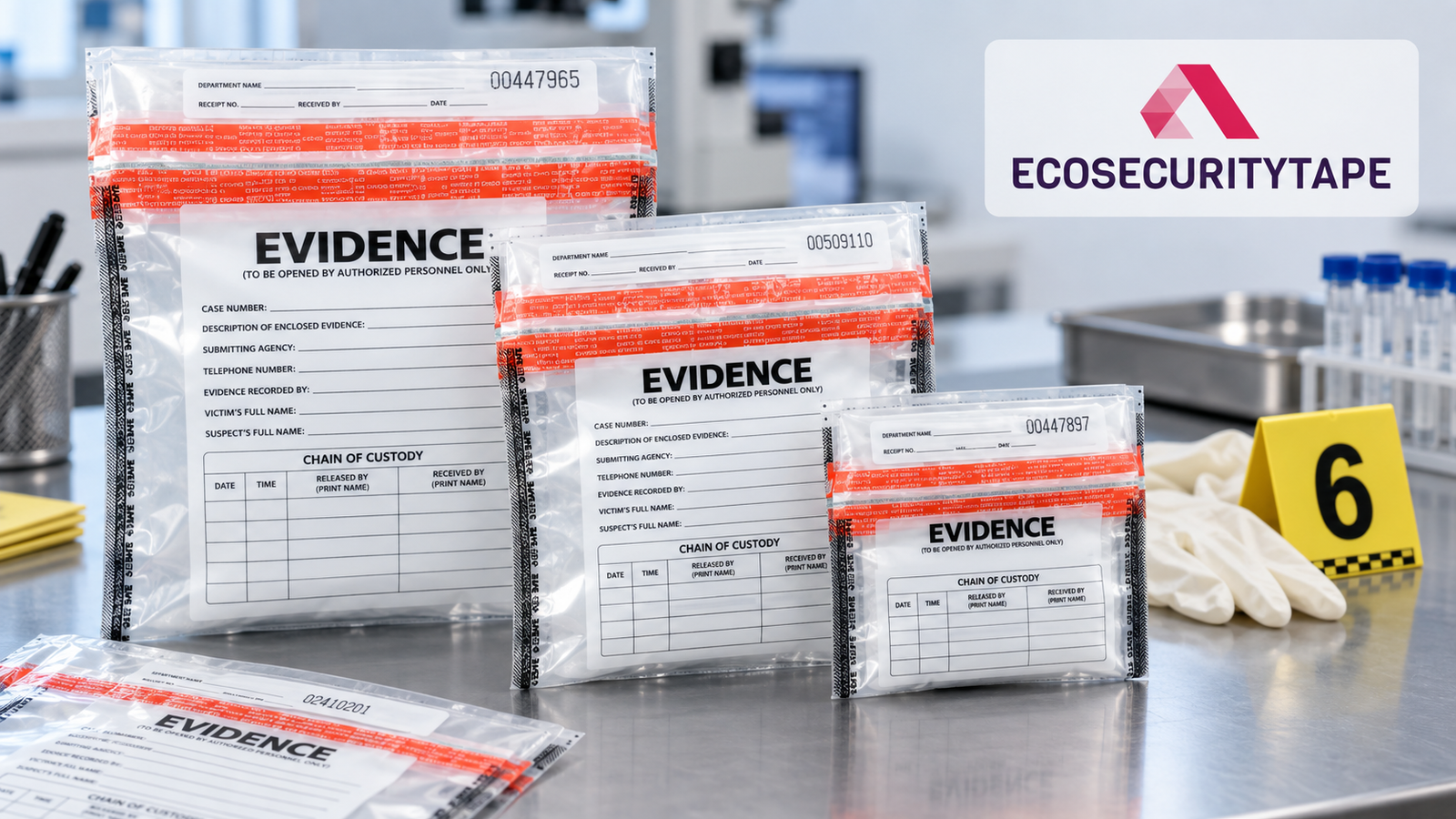
What Are Custom Evidence Bags for Multi-Variant Projects?
Custom evidence bags are security bags manufactured according to a buyer’s approved dimensions, printed layout, identification requirements and sealing specifications. They can support packaging identification and visible opening checks, but they do not replace an institution’s evidence-management procedures.
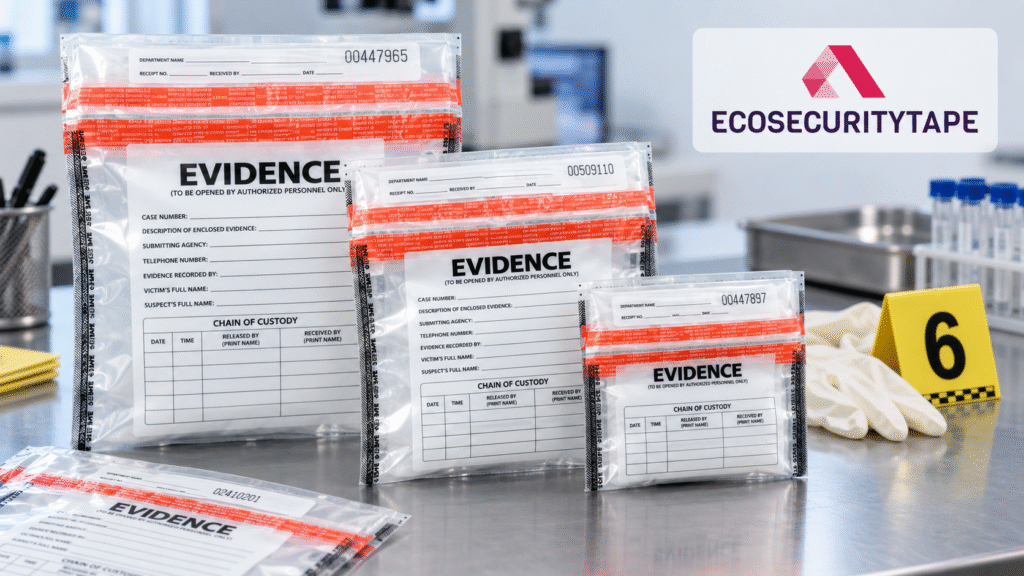
A multi-variant project includes more than one size, design or construction. Two bags may have the same dimensions but different printed forms, while another pair may share artwork but require different capacities.
For custom evidence bags, these differences should be recorded individually. A general description such as “four forensic bag designs” is useful for starting a discussion, but it is not a complete production specification.
The intended contents and handling process should guide material selection. Buyers should follow their own approved packaging requirements and confirm that the proposed construction is suitable. A plastic security bag should not be assumed appropriate for every evidence category.
EcoSecurityTape receives international inquiries for custom forensic evidence bags, including projects from Brazil, Indonesia and Saudi Arabia. These requirements involve questions about dimensions, seal performance, numbering, writable areas and printed languages.
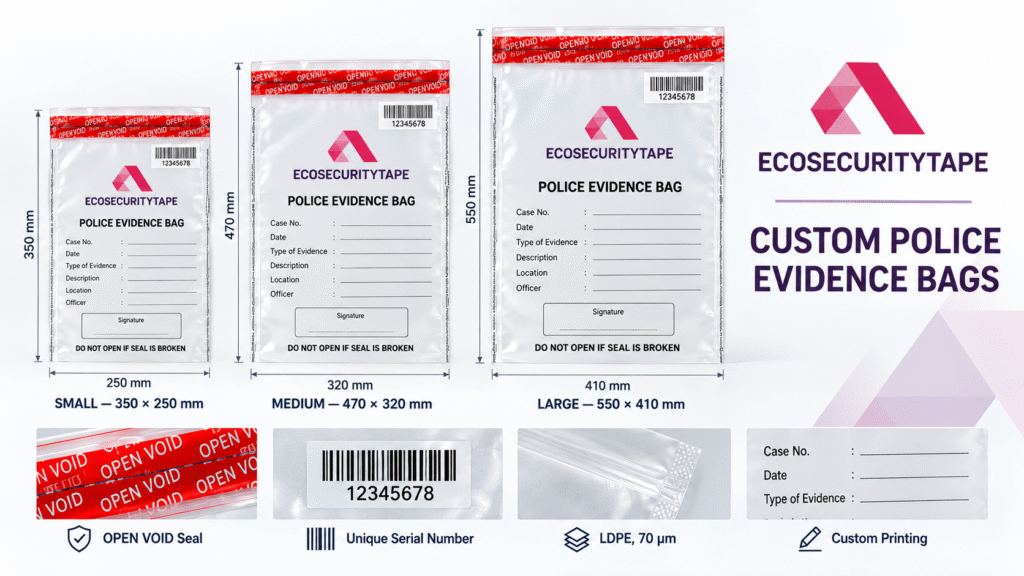
Our MOQ for this bag category is 5,000 pieces. Buyers should provide the quantity for each variant so EST can confirm how the minimum applies to a multi-design project.
Custom evidence bags may include logos, warning text, serial numbers, barcodes and agreed record fields. Each feature needs a clear purpose and an approved position rather than being added simply because another bag includes it.
This guide explains how to prepare purchasing information before quotation and artwork approval. An organized checklist helps both parties review the same requirements.
For custom evidence bags, the goal is a documented specification that connects the bag’s structure and information layout with the buyer’s actual operation, sample requirements and approval process.
Create a Specification List for Every Bag Size and Design
Preparing custom evidence bags starts with a separate specification for every variant. Use a stable style code so dimensions, artwork, quantities and sample comments can be linked to the correct bag.
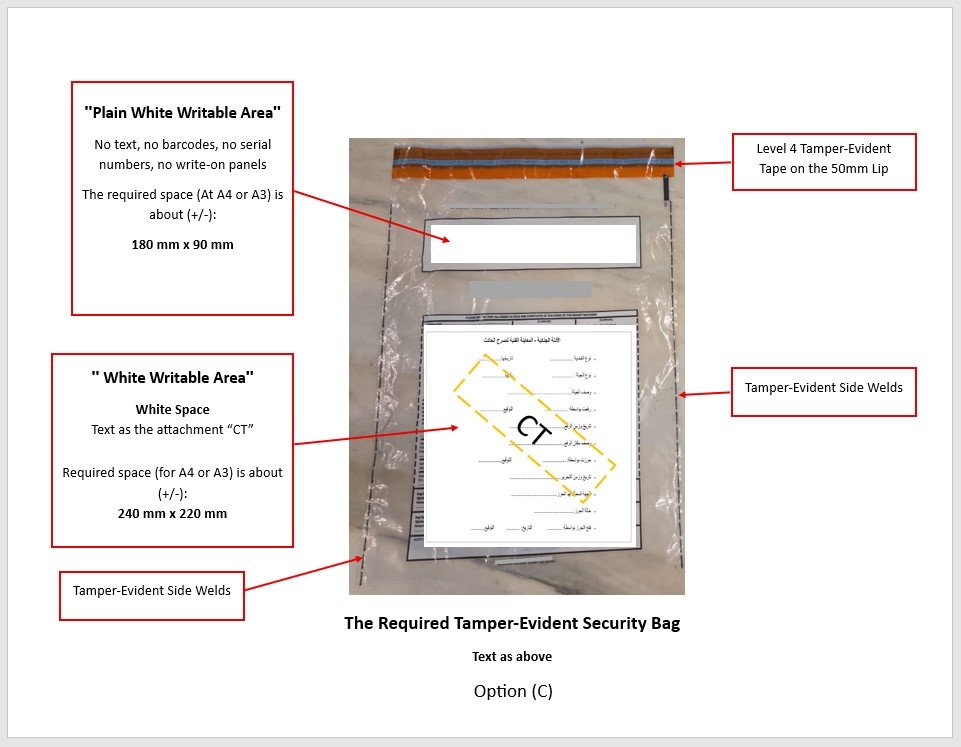
State how dimensions are measured. Overall height may include a closure area or other structure, while usable loading space can be smaller. Width, height and any additional pocket or receipt area should be identified on a drawing.
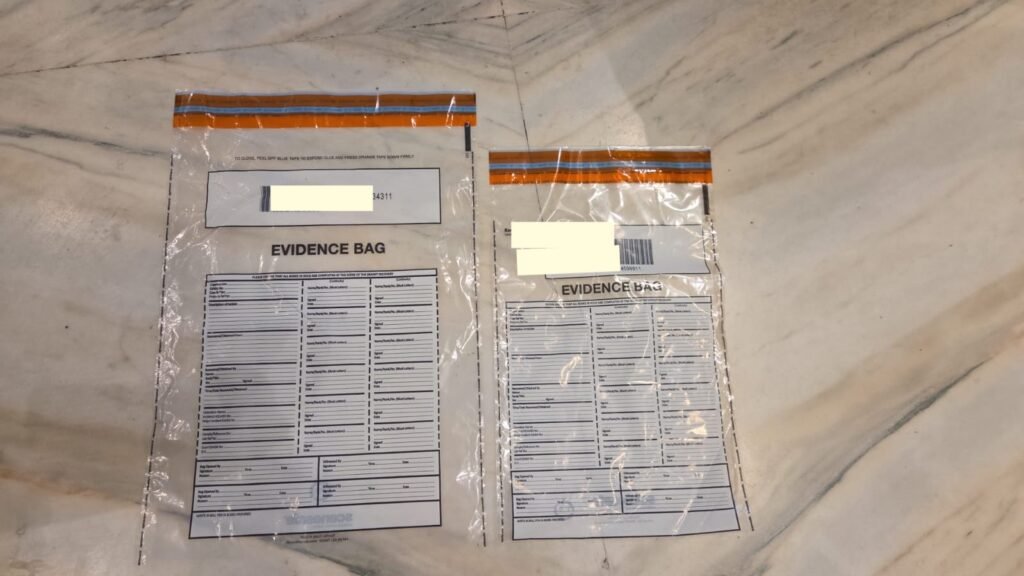
Custom evidence bags should be quoted from confirmed requirements rather than estimated photographs. When a detail is undecided, mark it as pending and ask EST to review options.
| Specification Field | Information to Provide | Purchasing Check |
|---|---|---|
| Variant identification | Style code and description | Use the same code on artwork and order records |
| Dimensions | Overall and usable dimensions | Confirm measurement method |
| Quantity | Pieces required for each variant | Confirm MOQ allocation |
| Film | Thickness and appearance requirements | Review suitable construction |
| Closure | Seal structure and required evidence | Agree on testing criteria |
| Printed layout | Text, logo, colors and languages | Identify the approved version |
| Identification data | Serial and barcode requirements | Define ranges and relationships |
| Packing | Quantity and identification per pack | Prevent variant confusion |
For custom evidence bags, a quantity column is particularly important. An order total does not tell the supplier how many pieces of each design are required.
The 5,000-piece MOQ should be discussed alongside this breakdown. Do not assume several styles can always share one combined minimum; production arrangements must be confirmed.
Buyers should also identify essential and optional features. This helps EST evaluate changes without overlooking a requirement that the institution considers mandatory.
A clear specification list for custom evidence bags becomes the reference for quotation, drawing review and production. Update it when changes are approved so an earlier version is not accidentally used.
For repeat purchases, keep a master list of approved custom evidence bags and record changes against it. A new language, extra field or revised dimension should be visible in the purchasing documents, not communicated only through an informal message. This helps the buyer identify which version is being quoted and which version receiving staff should expect.
Confirm Film, Seal Structure and Tamper-Evident Requirements
The construction of custom evidence bags should be selected against the intended use, required appearance and agreed inspection criteria. Buyers need to describe what the bag must contain and how staff will handle it.
Film thickness, transparency and bag strength are separate choices. Transparent designs permit visual observation of contents, while opaque designs conceal them. Neither appearance alone establishes the security performance of the closure.
Before specifying custom evidence bags, confirm the evidence type and the receiving laboratory’s packaging instructions. NIST’s biological evidence packaging and preservation guidance addresses packaging, storage and tracking considerations for biological evidence. Its recommendations include using separate, previously unused paper bags or other breathable containers for dried biological evidence.
For custom evidence bags, seal requirements should include the closure arrangement, sealing area and expected opening evidence. Ask for representative examples so inspectors understand the difference between an intact and disturbed seal.
Tamper evident evidence bags help show interference when their construction performs as intended. They should not be described as impossible to open or as guaranteeing complete protection against every attack.
If a buyer requests EST’s Level 4 or Level 5 features, list the functions rather than relying only on the level name. Under EST’s terminology, Level 4 covers normal-temperature opening evidence, cold-condensation response, heat-triggered color change and water-soluble detection.
Level 5 adds evidence retention during an 80°C hot-air opening attempt. The proposed structure and testing conditions require confirmation. These descriptions should not be presented as a universally recognized certification system.
Custom evidence bags must also have appropriate seams and loading space. A suitable seal cannot compensate for a structure that does not fit the intended contents or handling.
Moisture resistance should be evaluated separately from packaging suitability. A waterproof material description does not establish that sealed plastic storage is appropriate for every evidence category.
EST reviews construction details before quotation and sample approval. Buyers should identify required tests, operating conditions and any institutional specifications.
Selecting custom evidence bags through defined requirements makes the security discussion more useful than choosing a product solely by color, thickness or a general level designation.
Buyers should explain how staff close custom evidence bags during routine use. The written instructions, sealing area and handling sequence should be reviewed together. A demonstration can help clarify the proposed operation, but final acceptance belongs to the buyer’s agreed testing process. Any special institutional requirements should be supplied early enough to influence construction and artwork.
Define Serial Numbers, Barcodes and Variant Identification
Identification planning for custom evidence bags begins with distinguishing the style code from the individual bag number. The style identifies a design; a unique serial number identifies one bag within the approved numbering system.
Buyers should specify prefixes, number length, starting values and quantity ranges. Decide whether different variants use separate sequences or share a continuous sequence across the project.
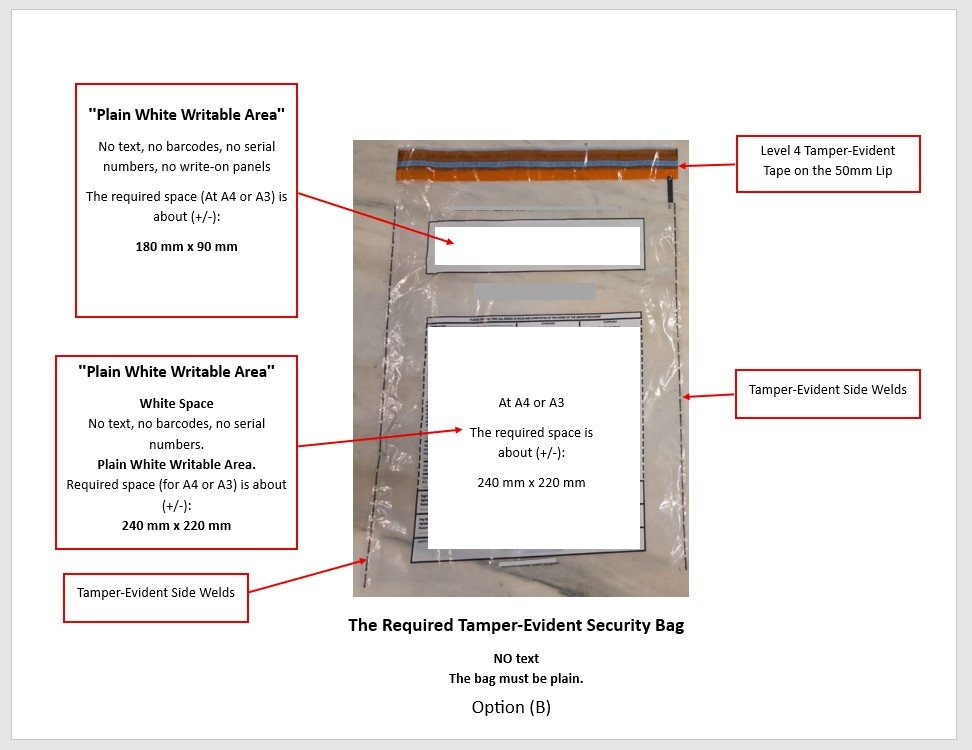
Custom evidence bags should not unintentionally repeat identifiers where unique numbering is required. EST and the buyer need an agreed data plan before printing variable information.
For evidence bags with barcode, confirm what the barcode represents. It may encode the bag’s serial number or another agreed identifier. Printed human-readable information should match the intended data relationship.
If a bag has a receipt, removable label or another matching identification area, specify whether those parts must carry the same number. Show the locations on the artwork and explain how staff will use them.
Custom evidence bags with QR codes require similar planning. A QR code can carry or link information, but the code itself does not create a complete tracking system. The buyer’s records and procedures determine how scanning supports the operation.
Use actual sample data when reviewing the design. A placeholder may not represent the final character length or code dimensions.
Code readability should be checked using the intended equipment and representative printed samples. Position, contrast, bag handling and the final layout can influence the result.
For multi-variant packing, include a method to identify styles without confusing them with unique bag numbers. Agreed carton or pack markings can help receiving staff locate the correct version.
The approved numbering plan for custom evidence bags should be retained with the artwork and order records. Clear data rules help prevent misunderstandings during reorders and future projects.
For reorders, confirm whether numbering for custom evidence bags continues from the previous range or begins a newly authorized series. The supplier should receive explicit instructions rather than infer the sequence from an old invoice. Buyers should also decide who approves the data and who verifies the matching information when bags arrive at their facility.
Plan Writable Fields, Handover Records and Multilingual Printing
The writable layout of custom evidence bags should follow the buyer’s actual documentation process. Adding many fields without understanding how staff complete them can create clutter rather than useful records.
Potential fields include a case reference, item description, date, collector or handler name, signature and destination. The institution should decide which fields are required and how much writing space each needs.
Custom evidence bags should be reviewed using realistic entries. A short demonstration word may fit a box that is too small for an actual description, name or reference number.
Where a buyer requests chain of custody evidence bags, distinguish packaging features from the complete custody record. Printed handover fields can support documentation, but accurate entries and controlled transfers remain part of the institution’s process.
A handover table may include releasing and receiving details, dates and signatures if required. Confirm the number of rows and whether records also exist in a separate system or document.
Custom evidence bags can include multilingual text, subject to layout and production review. Buyers should provide approved translations, especially for institutional names, legal wording and technical instructions.
Do not assume a language from the delivery country. Ask which languages staff need and whether one is primary. The language order should be visible on the approved drawing.
Writable areas require sample assessment with the intended writing tools. Check legibility and normal handling behavior under agreed conditions rather than promising compatibility with every pen or marker.
The print design should also leave security information and identifiers clear. A crowded writable panel should not obstruct the seal instructions or barcode.
EcoSecurityTape reviews these layout requirements alongside dimensions and construction. For custom evidence bags, approved wording and practical writing space help turn an attractive design into a usable form.
Consider where custom evidence bags will be completed and inspected. Staff may need to read forms while the bag is filled, so the layout should be evaluated in a representative state rather than only as a flat drawing. Checking essential text, writing panels and identifiers together can reveal spacing issues before production approval.
Review Artwork, Samples and Approval Criteria Before Production
Approval of custom evidence bags should cover both the drawing and the physical construction. Electronic artwork can confirm text and positions, but it does not establish bag strength or closure performance.
Give each drawing a style code and version reference. If the buyer requests a change, identify the affected variant and update the approval record.
For custom evidence bags, check dimensions, printed text, colors, logo, seal area, writable fields and data positions against the specification list. A vector logo is preferable for artwork preparation.
Preliminary design support can help buyers organize their information. The scope of artwork and sample services should be confirmed for the project before production.
Distinguish stock reference samples, custom samples and finished production bags. A reference bag may demonstrate a seal effect without matching the final thickness, dimensions or language layout.
Custom evidence bags should be evaluated against agreed criteria. Depending on the project, these may cover dimensions, seams, loading space, closure evidence, printed clarity, writing performance and code readability.
Use actual handling conditions and representative contents or approved substitutes where appropriate. Follow the buyer’s institutional testing requirements rather than assuming one demonstration proves suitability.
Photograph and record results for each variant. A passed test on one structure should not automatically approve a different size, film or seal arrangement.
For tamper evident evidence bags, state which opening effects are expected and how they will be checked. Record sample conditions so later results can be compared meaningfully.
Sample availability, customization charges where applicable, transportation and timing should be agreed separately. Label-sample policies should not automatically be applied to bag projects.
Final approval of custom evidence bags should identify the accepted artwork and construction, any remaining conditions and the authorized production quantity. Keeping those records together supports a clearer purchasing process.
Real Brazil, Indonesia and Saudi Arabia Inquiries: Preparing an RFQ
Recent inquiries for custom evidence bags demonstrate the need for project-specific information. They are useful purchasing examples, but they should be distinguished from completed orders or deliveries.
A Brazilian customer asked about four forensic evidence bag designs. This multi-variant request requires a separate quantity, dimension and artwork description for each style.
An Indonesian customer also contacted EST about customized evidence bags. The detailed structure, printing and order arrangement need confirmation according to that buyer’s requirements.
A Saudi Arabian forensic evidence bag project reached the quotation stage: the customer consulted EST, and a quotation was prepared. This does not establish that production began or delivery occurred.
For custom evidence bags, the starting MOQ is 5,000 pieces. Buyers requesting several designs should provide their per-style quantities so EST can confirm the applicable production arrangement.
An RFQ should include the intended contents, overall and usable dimensions, quantities, film requirements, closure effect, logo, languages, writable fields and data rules. Add sample expectations, delivery country and requested schedule.
Evidence bags with barcode also need the encoding requirements and any matching receipt or label relationship. A general request for “barcode tracking” is not enough to define the printed data.
EST reviews the information before confirming specifications and quotation terms. Questions should be resolved before the buyer approves final artwork.
Custom evidence bags may involve printing preparation, variable data and several bag-making requirements. Production time should be confirmed for the actual project rather than copied from label or cash-bag schedules.
The quotation and PI should identify each variant, quantities, approved requirements, payment terms and shipment arrangements.
These Brazil, Indonesia and Saudi Arabia inquiries show why organizing custom evidence bags as a documented project helps buyers obtain a more relevant quotation and compare proposals against the same requirements.
FAQs About Custom Evidence Bags
Q1: Can one order include several sizes and designs?
Yes, EST can review a multi-variant project. For custom evidence bags, provide dimensions, quantities, artwork and construction requirements separately for each style. Confirm how the 5,000-piece MOQ applies rather than assuming every combination of designs can share one total.
Q2: What dimensions and quantities should I provide?
State overall dimensions, usable loading space and any additional pockets or receipt areas. Include the quantity for every variant. Custom evidence bags should be reviewed against a dimensioned drawing so the closure area is not accidentally counted as usable space.
Q3: Can every bag have a unique serial number and barcode?
Unique identification can be reviewed according to the agreed data plan. Define prefixes, length, ranges and whether variants share a sequence. Custom evidence bags with repeated numbers on receipts or labels also need clear matching rules and code-readability checks.
Q4: Can bags include writable handover fields and several languages?
Yes, layouts can include buyer-approved fields and multilingual text. For chain of custody evidence bags, the institution should define the records required. Test writing space and intended tools, and approve translations before production. Bag printing does not replace accurate custody documentation.
Q5: Can I review samples before bulk production?
Contact EST to confirm suitable reference or custom samples. For custom evidence bags, clarify what each sample demonstrates and which specifications differ from the final design. Agree on testing, charges where applicable, transportation and approval criteria before relying on the results.
Q6: What determines the quotation and production schedule?
Dimensions, film, seals, printing, variable data, quantities and the number of variants affect project preparation. The MOQ starts at 5,000 pieces. EST confirms quotation and scheduling for custom evidence bags after reviewing requirements rather than promising a universal lead time.
Conclusion: Use a Clear Checklist Before Ordering Custom Evidence Bags
Custom evidence bags require agreement on dimensions, quantities, film, closure effects, identification data and printed records. Multi-design orders need individual specifications and approvals so one variant is not mistaken for another.
EST’s Brazil and Indonesia inquiries, together with the quoted Saudi Arabian project, illustrate different procurement discussions. They remain inquiry or quotation examples rather than completed-delivery claims.
The starting MOQ is 5,000 pieces, with multi-variant quantity arrangements confirmed during quotation. Artwork and sample approval should identify the exact requirements accepted for production.
Send your style list, dimensions, quantities, vector logo, numbering rules and delivery requirements to discuss custom evidence bags or request a quotation.
Email: info@ecosecuritytape.com
WhatsApp: +1 615 480 2757
Contact EcoSecurityTape
Download the Product Catalog
Related Articles About Evidence Bags
Explore these related guides to compare evidence bag applications, prepare technical specifications and evaluate suppliers before placing an order.
- Police Evidence Bags: Features, Uses & Buying Guide
- Forensic Evidence Bags: Chain of Custody, Types, and Selection Guide
- Forensic Evidence Bag Technical Specifications for Government Tenders
- Forensic Evidence Bag Supplier Qualification Checklist for Government Buyers

Focus on tamper evident packaging, free sample for test, small-batch MOQ, let’s have a talk.