
1. What Is Tamper Evident Technology?
Tamper-evident technology is a comprehensive security system that integrates special materials, structural design, and engineering strategies. Its core function is to leave clear, irreversible evidence whenever a product or package is accessed, opened, or tampered with without authorization—making unauthorized interference impossible to conceal.
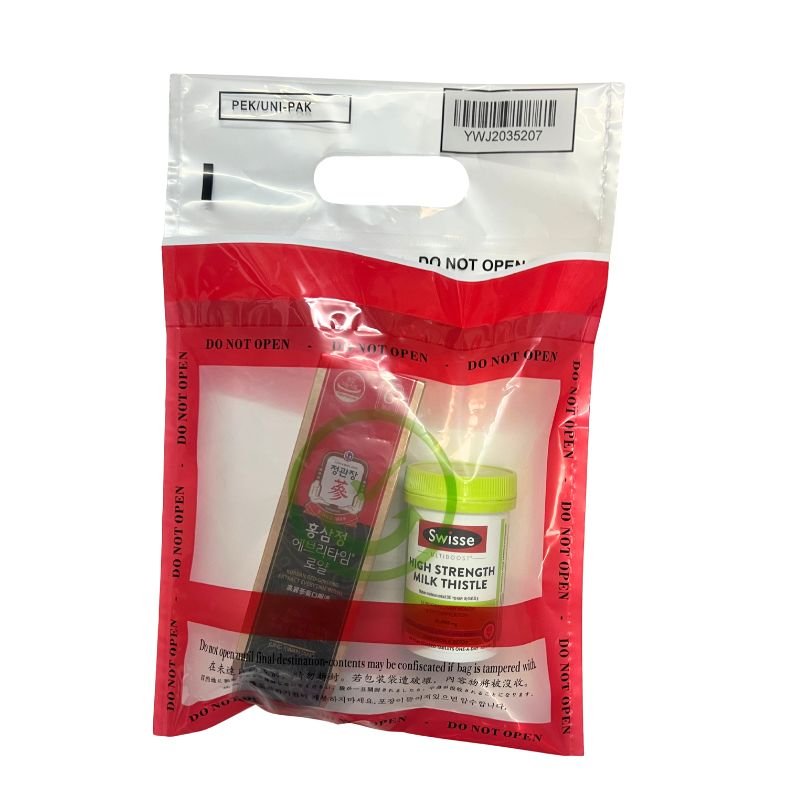
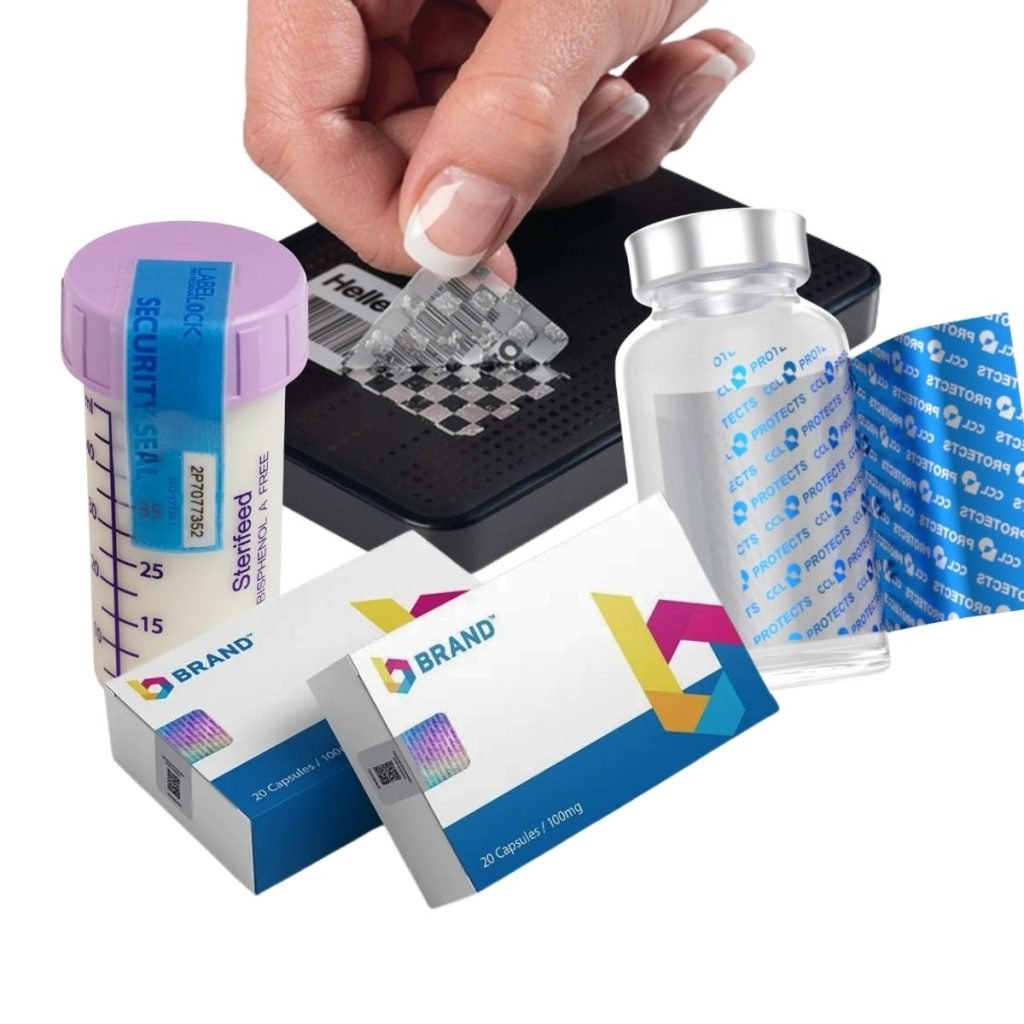
Tamper-evident technology takes various forms, including security labels, seals, tapes, destructible stickers, and specialized packaging films. Its fundamental design principle is “interference triggers visible warning.” This could mean physical damage, color change, or revealing hidden messages that prevent tampering from going unnoticed.
For instance:
Basic tamper-evident labels shatter into tiny pieces when peeled, making clean removal impossible.
Tamper-evident seals display “opened” messages when cut.
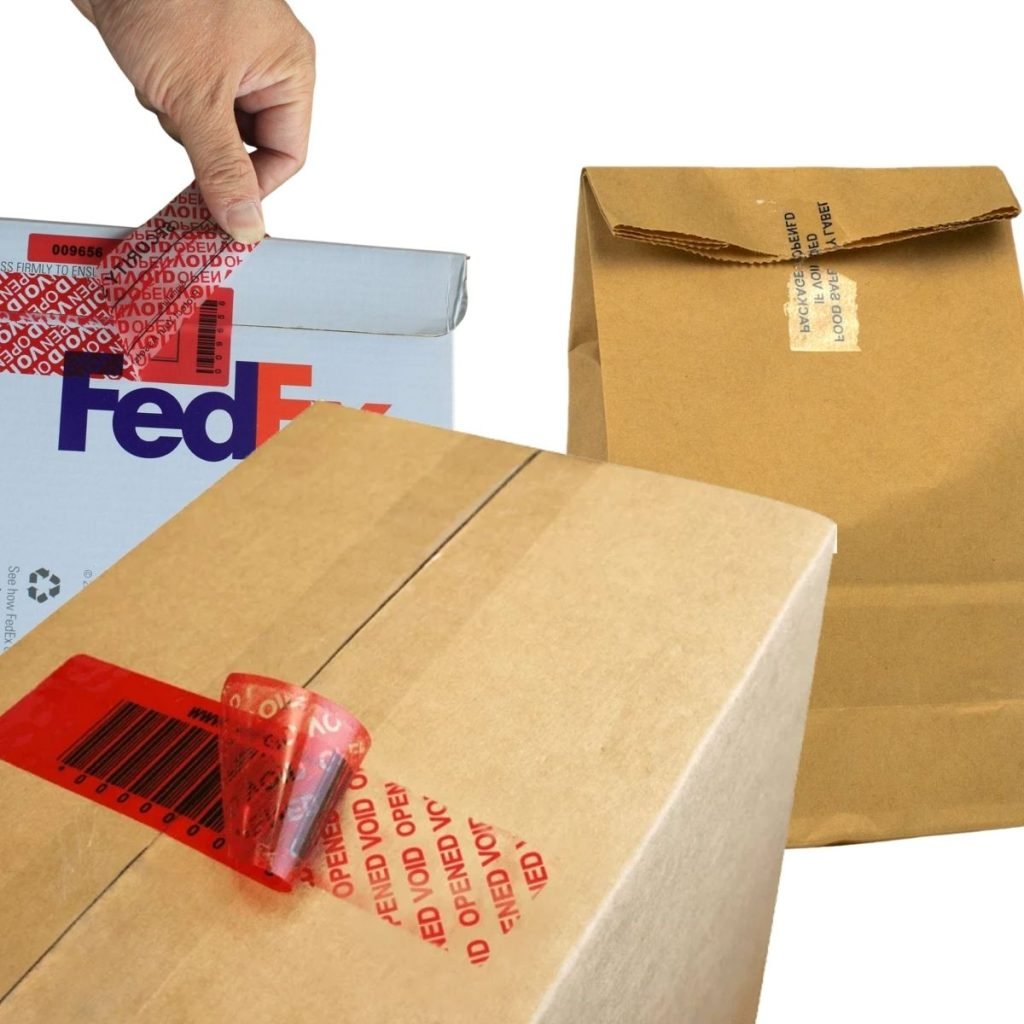
VOID labels leave a “VOID” pattern behind on the surface once removed.
These irreversible signs serve as visual proof that the item has been accessed.
This includes tamper evident labels, security seals, tamper proof tapes, destructible stickers, and specialized packaging films. These components are designed to either break, leave visible traces, or reveal hidden messages like “VOID” once disturbed.
A Strategic Tool for B2B Supply Chain Protection
Tamper-evident technology is not just a packaging accessory—it’s a strategic tool for business risk management across the supply chain:
Storage & Transportation: Deterring Theft and Unauthorized Access
A cross-border eCommerce client experienced high theft rates during international shipments. After switching to tamper-evident tape, the loss rate dropped from 12% to 0.8%. Thieves knew that opening the package would leave clear signs, alerting both the logistics provider and the recipient.
Product Traceability & Anti-Counterfeit Assurance
A premium headphone brand used tamper-evident labels with unique QR codes on its packaging. Consumers could scan to verify product authenticity and trace its supply chain origin—effectively reducing fake products sold through unauthorized channels.
Regulatory Compliance
Industries such as pharmaceuticals, finance, and electronics are required by law to use tamper-evident packaging for products like prescription drugs, sensitive documents, or high-value chips. This ensures full traceability from production to delivery and helps companies avoid fines or regulatory bans.
Legal Risk Mitigation
A chemical company once faced losses when a distributor opened and refilled packages with low-grade materials. Without tamper protection, they couldn’t prove it in court. After adopting tamper-evident seals, they successfully used broken seal evidence to pursue legal action and recover damages.
Building Trust with Partners and Customers
When customers receive goods with visible tamper indicators, they can instantly verify whether the items were accessed—reducing the need for repeated follow-ups or manual inspections and increasing mutual trust.
Industry Adoption: Now a Standard Across High-Security Sectors
Tamper-evident technologies are now widely adopted across various industries:
- Pharmaceuticals & Healthcare: Nearly all major pharmaceutical brands use tamper-evident solutions for vaccines, prescription drugs, and blood products. For example, COVID-19 vaccines are sealed with both external tamper-evident tape and micro-labels on vial caps that break upon opening.
- Electronics & 3C: Smartphones, laptops, and high-end cameras are secured with seals on ports, batteries, or packaging flaps to detect unauthorized access.
- Food & Beverage: Infant formula cans, imported wines, and health supplements often feature tamper-evident caps or sealing films. For example, formula cans have non-resealable rings to signal any previous opening attempt.
- Logistics & Finance: Cargo containers, confidential delivery envelopes, and bank cash transport cases all use one-time-use security seals with unique serial numbers that break upon opening.
Market Outlook: Growth Fueled by Security and Compliance
The global tamper-evident packaging market surpassed $20 billion USD in 2024, with an annual growth rate of over 6%. This trend is driven by increasing demands for product security and stricter regulatory frameworks worldwide.
Future Trends
Tamper-evident solutions are evolving with advanced technologies such as IoT and blockchain, enabling more intelligent, precise, and transparent supply chain protection.
IoT + Tamper-Evidence: Real-Time Alerts
Tamper seals embedded with IoT sensors can send instant alerts to central monitoring systems when unauthorized access is detected. For instance, in aerospace manufacturing, these smart seals have reduced tampering response time from 24 hours to 15 minutes.
Blockchain + Tamper-Evidence: Immutable Traceability
By linking a seal’s unique ID (QR code or chip) to a blockchain, companies can record every step of the product journey—from manufacturing and shipping to final delivery. This eliminates the risk of data manipulation and offers transparent, real-time proof to partners and consumers.
Material & Structural Innovation
Next-gen tamper solutions may include environmentally responsive materials that react to heat, chemicals, or humidity, revealing visible warnings when packages are exposed to abnormal conditions. Precision micro-lock mechanisms will also make tampering more difficult and damage more obvious.
Industries Driving Demand
- Pharmaceuticals
- Aerospace
- Luxury Goods
- High-End Manufacturing
These sectors, where product integrity is mission-critical, are expected to dominate demand for smart tamper-evident solutions.
By 2030, smart tamper-evident products will account for over 35% of the total market.

2. Why B2B Supply Chains Need Tamper Evident Technology Protection
From pharmaceuticals to electronics, B2B companies operate in highly regulated and high-stakes environments where product integrity is not optional—it’s critical. A single breach in packaging can compromise not only the product but also a company’s reputation, customer trust, and legal standing.
Tamper evident protection serves as a visible deterrent against unauthorized access, theft, or manipulation. Whether it’s a security label, void tape, or a tamper proof bag, these tools clearly indicate if an item has been opened or compromised during shipping, warehousing, or last-mile delivery.
For B2B supply chains, the need for this protection is driven by several factors:
- Compliance with Regulations: Industries such as pharmaceuticals, food, and aerospace must meet strict regulatory standards like FDA, EU MDR, and ISO 9001. Tamper evident solutions help companies pass audits and avoid costly recalls.
- Product Authentication: Custom security labels and serialized tapes reinforce brand credibility and prevent counterfeit goods from entering legitimate distribution channels.
- Operational Risk Reduction: By adding layers of visibility and accountability, tamper evident packaging mitigates liability risks and minimizes internal losses.
- Security Assurance for Partners: In multi-vendor logistics environments, clear indicators of tampering help pinpoint issues and build trust with global partners, distributors, and clients.
As global supply chains grow more complex and products pass through more hands, the demand for tamper evident technology continues to rise—not just for compliance, but as a proactive strategy for protecting business assets, maintaining trust, and ensuring long-term operational resilience.
3. Key Types of Tamper Evident Solutions
Tamper evident technology offers a wide range of packaging and labeling tools designed to deter unauthorized access and enhance product authentication across supply chains. These solutions vary in complexity, cost, and application, allowing B2B buyers to tailor their security strategy based on operational needs.
| Tamper Evident Product | Key Features | Typical B2B Applications |
|---|---|---|
| VOID Security Labels | Leave “VOID”/checkerboard residue when removed | Pharmaceutical packaging, electronics cartons, medical equipment |
| Destructible Vinyl Labels | Break into fragments on removal | Warranty seals, electronics, sensitive devices |
| Custom Security Tape | Printed logos/QR codes, high-strength adhesive | Carton sealing in logistics, branded retail packaging |
| Tamper Evident Bags | Permanent adhesive seal + serial numbers | Banking (money bags), pharma (sample transport), government use |
| Hologram Seals | Optical patterns + anti-copy features | Luxury goods, electronics, compliance-driven industries |
| RFID-Embedded Labels | Real-time tracking + database integration | High-value cargo, industrial equipment, customs documentation |
Advanced solutions like RFID chips, smart sensors, and multi-layer holographic labels are increasingly adopted in anti tamper packaging for industries requiring heightened security and traceability. These options provide not only tamper resistance but also enhanced digital integration for inventory management.
By selecting the right combination of security tape, labels, and traceable packaging, B2B buyers can build a robust defense system against tampering and counterfeiting while streamlining supply chain compliance.
4. Applications Across High-Security Industries
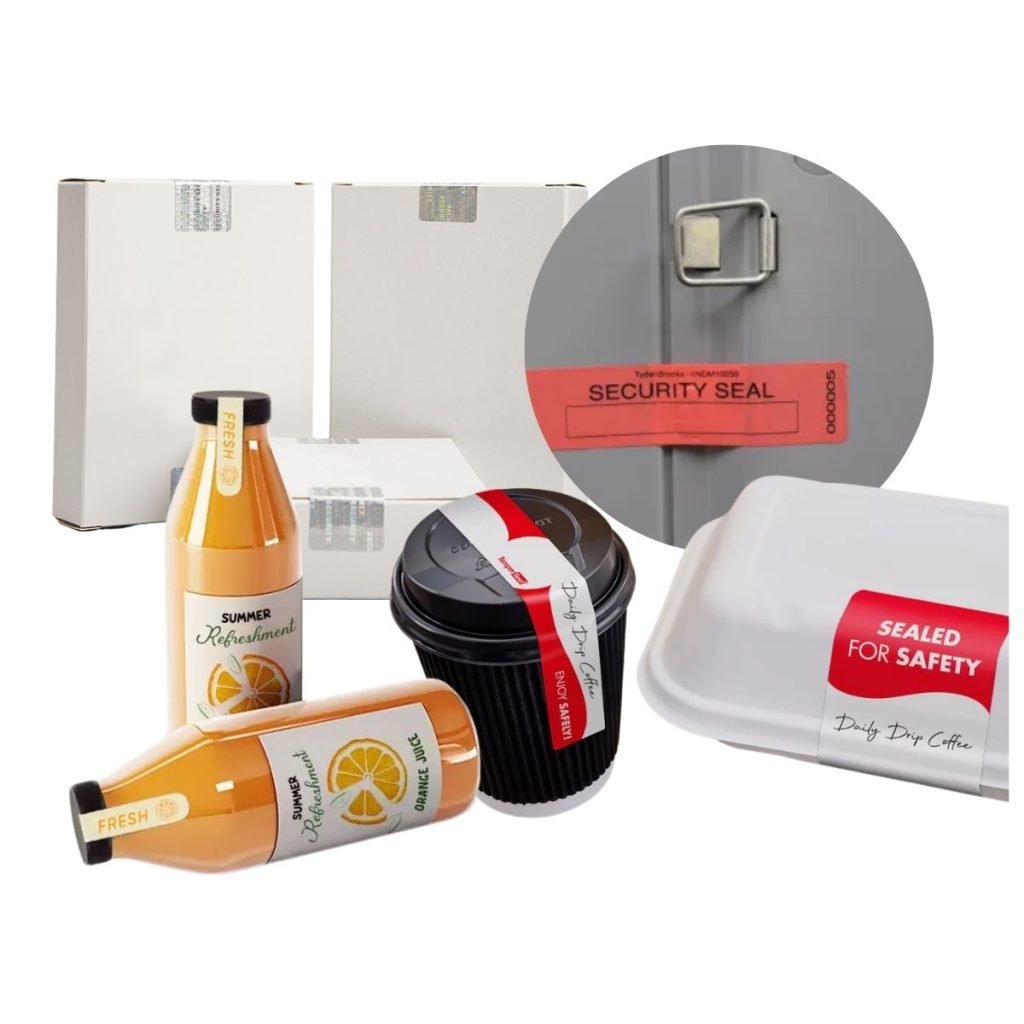
In industries where product authenticity and packaging integrity are mission-critical, tamper evident technology is not a “nice-to-have” feature—it is a regulatory, reputational, and risk management necessity. Whether it’s securing medication for patients or protecting classified documents in finance and government, tamper evident solutions offer visual proof of tampering and full-chain traceability to meet stringent industry demands.
Healthcare and Pharmaceuticals
The pharmaceutical industry faces some of the most rigorous demands for tamper evident protection—any breach, substitution, or contamination of medication directly threatens lives and invites multimillion-dollar fines or product recalls. The core value of tamper evident technology here is to lock down the drug distribution chain from end to end.
Key Applications:
- Prescription Drugs & Vaccines: Seals placed on aluminum vial closures and outer packaging boxes using ultra-destructible VOID labels and tamper evident tapes. One vaccine company used a combination of tamper evident strips and temperature-sensitive labels on its COVID-19 vaccine coolers—each seal bore a unique traceable code, and the temperature tag triggered an alert if conditions exceeded safe limits.
- Medical Device Packaging: Used on sterile packs and implantable devices (e.g., stents) with fragile tamper labels that shatter on tampering. Hospital staff can check seal integrity on arrival to verify the equipment has not been accessed or contaminated.
Case Study: A Chinese pharma company suffered losses when a distributor tampered with packaging and replaced pills with low-grade copies. After adopting VOID labels with batch-level QR codes, they eliminated counterfeit circulation and passed an FDA overseas audit with flying colors.
Compliance Standards: FDA (U.S.), GMP, and ISO 22382 require irreversible visual tamper indicators and traceable authentication.
Finance and Confidential Industries
Banks, securities firms, and government institutions face theft, fraud, and unauthorized access during storage or transport of sensitive items. Tamper evident solutions provide physical protection and digital traceability—making every touchpoint accountable.
Key Applications:
- Cash & Check Transit: Uses tamper evident deposit bags and one-time-use seals. For example, a state-owned bank uses RFID-tagged tamper seals on cash boxes. The seal is scanned upon pickup and delivery, and any break triggers a system alert.
- Confidential Documents & Tax Forms: Attach VOID security labels and QR traceable codes on envelopes or packaging. A government agency used such labels on procurement bids—scanning the code revealed receiving party and bid ID, while the VOID print warned if the envelope had been breached.
Value Delivered: Acts as a deterrent to insider threats and provides indisputable legal evidence in case of tampering. One investment firm successfully traced a leak back to a broken seal, avoiding litigation.
Government & Elections
Election ballots, classified documents, and public tenders demand the highest level of protection. Tamper evident solutions with irreversible indicators and unique serial numbers ensure trust in every step of the process.
Key Applications:
- Voting Systems: Ballot boxes use dual-layer protection—one-time tamper locks and external VOID labels with serials. Officials verify label integrity and seal numbers before unboxing to prevent ballot swapping.
- Classified Files: Use tamper evident seals combined with IoT modules. If forcefully accessed, the sensor triggers an alert to a monitoring platform, recording timestamp and GPS location.
Industry Requirements: Must meet government-grade certifications such as national secrecy compliance. The solution should resist force, prevent replication, and enable full traceability.
Electronics & OEM Manufacturing
For smartphones, high-value electronics, and OEM parts, tampering risks include “component swapping,” “warranty abuse,” and counterfeit resale. Tamper evident technology locks integrity at the packaging and product level.
Key Applications:
- Consumer Electronics: VOID tapes secure phone packaging; destructible labels cover SIM trays and battery ports. Buyers can verify unopened products, while brands distinguish genuine after-sales claims from tampered returns.
- OEM Supply Chains: Each part (e.g., automotive chips, smartphone screens) has VOID labels with serial codes. Any tampering during transit leaves a visible trace and enables point-of-failure investigation.
Case Study: A premium smartphone brand stopped dealers from secretly swapping original screens for fakes after deploying QR-coded tamper labels on packaging and device joints. Consumer complaints dropped by 78%.
Luxury & Beauty
Fake perfumes, bags, and skincare items are rampant in global markets. Combining tamper evident and anti-counterfeit technology provides visual assurance that deters fraudsters and reassures buyers.
Key Applications:
- Luxury Goods: Packages sealed with holographic VOID labels—removal destroys the hologram and reveals “VOID,” making counterfeiting extremely difficult. A French perfume brand used these on all boxes, enabling fast in-store authenticity checks.
- Cosmetic Bottles: Breakable tamper rings link cap and bottle. Consumers must snap the ring to open, and any broken seal at purchase suggests previous use or repackaging.
Impact: One beauty brand saw a 65% drop in fakes across retail and a 22% rise in returning customers after switching to dual-function tamper-evident authentication.
Logistics & Cross-Border Shipping
In global eCommerce and bulk logistics, theft, loss, or substitution are common. Tamper evident technology with checkpoint validation and visual proof creates an auditable chain of custody.
Key Applications:
- Cross-Border Parcels: Use QR-coded VOID tapes. Consumers scan the label on arrival to check transit data. If the tape shows signs of tampering, they can reject the package. A major cross-border retailer saw damage/fraud rates drop from 9% to 1.2%.
- Containers & Bulk Cargo: Heavy-duty tamper seals with RFID chips installed on container doors. Scans at each stage (customs, warehouse, client site) ensure seal integrity. A mining company that adopted this reduced theft to zero and improved logistics efficiency by 30%.
Innovation Note: Clients shipping cold chain or chemical goods now combine VOID labels with temperature or humidity sensors for dual protection and traceability.
🔗 For more insights on global trends in tamper-proof packaging and product security, refer to the OECD report on counterfeit and pirated goods, which highlights how widespread tamper evident technology can reduce global counterfeit losses by over 40%.
By implementing tamper evident technology, B2B buyers across these sectors can confidently secure their products, reinforce regulatory compliance, and protect customers from counterfeit risks.

5. Benefits of Tamper Evident Technology in B2B
Implementing tamper evident technology in B2B packaging goes beyond simple deterrence—it forms the backbone of a trusted, traceable, and compliant supply chain. Whether you’re shipping pharmaceuticals, sensitive electronics, or financial documents, these solutions offer measurable benefits across security, branding, and operations.
✅ Key Benefits for B2B Buyers
| Security & Authentication | Compliance & Regulation | Brand & Operational Value |
|---|---|---|
| Prevents tampering and unauthorized access | Meets ISO 9001, FDA, and GDPR requirements | Builds trust with distributors and end-users |
| Offers visible signs of intrusion (VOID messages, breakable seals) | Ensures proper documentation and audit trails | Reinforces professional image with custom logos and seals |
| Deters theft, counterfeiting, and diversion | Supports industry-specific mandates (pharma, fintech, defense) | Reduces return fraud and supply chain disputes |
📦 More Advantages
- Product Authentication
Labels with serialized codes, QR tags, or holographic elements allow verification at every step, ensuring product authenticity and traceability. - Theft & Diversion Prevention
By showing immediate signs of interference, security tape and tamper evident bags deter internal and external theft, especially in long logistics chains. - Regulatory Confidence
Governments and high-risk industries often require tamper evidence as a baseline for compliance. This includes ISO/IEC 21964 standards for data destruction and FDA 21 CFR 211.132 for drug packaging. - Brand Protection
Custom designs (like destructible vinyl or VOID labels with company logos) not only discourage counterfeiters but also communicate professionalism and quality to clients. - Operational Efficiency
Integrated tracking features (e.g., barcodes, batch numbers) simplify reconciliation and audits—minimizing human error while strengthening transparency across the supply chain.
With counterfeit risks and logistics fraud on the rise, tamper evident technology provides essential protection for any business managing sensitive, regulated, or high-value products.
6. How Tamper Evident Technology Works
The core logic of tamper evident technology seems simple—”once interfered with, traces must remain”—but it is underpinned by in-depth synergy between materials science, adhesive chemistry, and irreversible structural design.
It does not rely on complex electronic devices; instead, it uses an ingenious combination of “physical structure + chemical properties” to ensure that any unauthorized opening or tampering cannot be concealed.
It physically prevents restoration while providing intuitive warnings to users. Below is a breakdown of the working principles of tamper evident technology, supported by specific mechanisms, real-world scenarios, and implementation details:
Tamper Evident Technology Core Working Mechanisms
1. Pressure-Sensitive Adhesives: The Core of “Strong Bonding + Traceable Removal”
Pressure-sensitive adhesives are the “soul” of tamper evident labels. Their design focuses not on “maximum adhesion” but on “warning upon removal”—through specialized chemical formulations, the adhesive forms a strong bond with the packaging surface after application. When removed, it either leaves a permanent mark or damages the label itself, fundamentally eliminating the possibility of “restoration after removal.”
- Working Principle: The adhesive consists of a “surface bonding layer” and a “release layer.” After the surface bonding layer adheres to the packaging surface, it quickly penetrates into material gaps (such as the fiber gaps of cartons or micro-textures of glass) to form an irreversible bond. The release layer carries hidden messages like “VOID” or “OPENED”; during removal, the adhesive transfers these hidden messages to the packaging surface while the label substrate separates from the adhesive.
- Real-World Scenario: A pharmaceutical company uses custom pressure-sensitive adhesives for its medicine bottle seal labels. When applied to glass bottles, the labels remain intact despite vibrations and temperature fluctuations during transportation. However, any attempt to peel off the label causes the adhesive to transfer the “VOID” text completely onto the glass surface, leaving a thin, unremovable adhesive film. Even if someone tries to reattach the label, the visible “VOID” trace is instantly recognizable by consumers and pharmacies.
- Scenario Adaptation: Adhesive formulations are precisely adjusted for different packaging materials—medium-low adhesion for paper packaging to avoid damaging the container during removal, and high adhesion for smooth surfaces like metal or plastic to ensure effective traceability.
2. Destructible Films/Papers
The core design of these materials is “physical structural fragility.” Through specialized processes, the label substrate loses toughness and shatters or tears upon tearing or peeling, making it impossible to retain integrity and physically preventing “reapplication after removal.”
- Working Principle: Materials such as ultra-fragile vinyl or directionally stretched paper are used. During production, fiber alignment is controlled so that the material can only withstand slight contact. When force is applied perpendicular to the fiber direction, it instantly shatters into small pieces or tears into irregular strips that cannot be spliced back together.
- Real-World Scenario: A precious metal distributor applies destructible tamper evident labels to gold and silver ingot packaging. The labels use ultra-fragile film—any attempt to peel them off causes the film to shatter into rice-sized fragments, making complete removal impossible, let alone reapplication. Even if counterfeiters try to replace the labels, the broken substrate remains on the packaging, serving as irrefutable evidence of tampering.
- Scenario Adaptation: Ideal for scenarios with “zero tolerance for tampering” such as pharmaceuticals, precious metals, and classified documents. It is more deterrent than mere traceability, as it relies on physical destruction for protection.
3. Heat-Seal/Security Tapes
Heat-seal technology and security tapes focus on “forming a permanent seal.” Through heat or specialized adhesives, the tape fuses with the packaging, requiring destruction of either the packaging or the tape itself for removal—concealed restoration is impossible.
- Working Principle: Heat-seal tapes require a heat sealer to melt the hot-melt adhesive inner layer, triggering a chemical reaction with packaging materials (e.g., plastic films, cartons). After cooling, a strong “molecular bond” forms, and removal can only be achieved through cutting or tearing. Security tapes use a “high-adhesion + fiberglass reinforcement” design; the embedded fiberglass mesh causes “thread-drawing” during removal, and the tape cannot be peeled off intact—only broken into segments, leaving obvious damage traces.
- Real-World Scenario: A food company uses heat-seal security tapes for vacuum-packed snacks. After heat-sealing, the tape fuses completely with the packaging film; consumers must tear the tape open, leaving irregular torn edges that cannot be re-sealed. Any attempt to replace it with regular tape is immediately identifiable due to material and seal differences. A cross-border e-commerce company uses fiberglass-reinforced security tapes for packages—thieves once tried to cut the tape with a blade, but the fiberglass mesh tangled the blade, preventing smooth cutting. The obvious cutting traces were detected during logistics security checks.
- Scenario Adaptation: Suitable for food packaging, cross-border logistics, and industrial component packaging—scenarios requiring “high-strength sealing + visible damage traces”—effectively resisting concealed disassembly with tools like blades and scissors.
4. Color-Shifting & Holographic Technologies
These technologies combine “visual anti-counterfeiting + tamper evidence.” Their hard-to-replicate optical effects prevent counterfeiters from copying tamper evident markers while making tampering intuitively visible.
- Working Principle: Color-shifting inks contain specialized light-sensitive or temperature-sensitive pigments that display one color at room temperature and shift irreversibly to another when exposed to UV light or temperatures exceeding 40°C. Holographic technology uses laser engraving to create 3D patterns with hidden micro-brand logos or QR codes—barely visible to the naked eye and impossible for counterfeiters to replicate accurately.
- Real-World Scenario: A premium liquor brand uses temperature-sensitive color-shifting inks for its bottle cap tamper evident labels. Normally red, the label turns black irreversibly when heated above 45°C (e.g., by counterfeiters using heat guns for non-destructive opening), allowing consumers to instantly identify tampering. The label also integrates a holographic pattern—shining a phone flashlight reveals a brand-exclusive logo, further preventing counterfeit label production. A cosmetics brand’s holographic tamper evident stickers hide micro “Genuine” text; counterfeit stickers can only replicate the general outline, not the micro-text—consumers can distinguish authenticity with a magnifying glass.
- Scenario Adaptation: Perfect for luxury goods, premium cosmetics, and liquor—industries at high risk of counterfeiting. It provides dual protection against tampering and counterfeiting, safeguarding product authenticity.
5. Smart Layered Structures
This is the core mechanism of high-end tamper evident solutions. Multiple layers work synergistically to leave physical tampering traces while enabling digital traceability of anomalies—ideal for high-value, high-compliance scenarios.
- Working Principle: A typical structure consists of a “destructible surface layer + hidden verification layer + digital traceability layer.” The surface layer (destructible film) shatters upon removal; the middle layer prints invisible QR codes or verification codes (readable only with specialized equipment); the bottom layer (pressure-sensitive adhesive) transfers “VOID” traces during removal. The digital traceability layer connects to blockchain or IoT platforms—scanning the code displays the product’s circulation trajectory, and the system automatically alerts if “physical trace anomalies + digital trajectory mismatches” occur.
- Real-World Scenario: An aerospace component manufacturer uses smart layered tamper evident labels for engine core component packaging. The surface layer shatters upon removal; the middle layer’s invisible QR code is only readable by authorized maintenance personnel; the bottom layer leaves “VOID” traces. The built-in RFID chip connects to the airline’s logistics system—each link from the factory to installation requires code scanning to confirm integrity. If the chip shows “opened” or the QR code is unreadable, the component is immediately intercepted, preventing substandard replacement parts from being installed and ensuring flight safety. A medical device company integrates “smart layers + temperature sensors” into heart stent packaging—recording transportation temperatures while preventing tampering. Hospitals reject shipments if temperatures are abnormal or labels are tampered with, ensuring device quality.
- Scenario Adaptation: Suitable for aerospace, high-end manufacturing, medical devices, and military industries—scenarios requiring “comprehensive tamper protection + digital traceability + compliance evidence.”
The essence of tamper evident technology lies in creating “irreversible physical changes” and “visible trace retention,” making tampering extremely costly. Whether for product replacement, counterfeiting, or unauthorized access to classified items, tamper evident mechanisms leave undeniable evidence.
For enterprises, selecting the appropriate tamper evident mechanism means building a “targeted protection barrier” based on risk levels, turning tamper evident technology into a true “invisible guardian” of business security.
⚙️ Visual Examples of Tamper Evidence
| Technology | Tamper Response | Use Cases |
|---|---|---|
| VOID adhesive label | Leaves “VOID” text on removal | Pharma packaging, electronics |
| Destructible vinyl seal | Breaks into flakes when tampered with | Luxury packaging, software licenses |
| Tamper evident bag | Cannot be resealed once opened | Medical kits, financial documents |
| Color-shift ink | Changes color if label is peeled or exposed | Government permits, certificates |
| QR code + serial tracking | Identifies mismatched or reused packaging items | Track-and-trace across supply chains |
With these mechanisms in place, tamper evident packaging serves as a reliable safeguard for inventory integrity and customer confidence—critical in B2B sectors where losses from tampering can be severe and reputation-damaging.
7. Innovation Trends in Tamper Evident Packaging
Tamper evident technology is not a one-size-fits-all solution—it evolves to meet the unique demands of each industry. Below are key industries that rely heavily on tamper evident packaging, with specific examples of how the technology is applied to enhance security, trust, and regulatory compliance.
🏥 Pharmaceutical & Healthcare
- Use Case: Sealing medication blister packs, hospital test kits, and specimen bags.
- Need: Prevent contamination, ensure patient safety, and comply with FDA/ISO standards.
- Example: Tamper evident pharmacy bags with serial numbers and barcode scanning for drug tracking.
💰 Financial Institutions & Government
- Use Case: Protecting currency bags, ballots, tax files, and audit reports.
- Need: Prevent document tampering, ensure audit trail integrity, and enforce chain-of-custody.
- Example: Security tapes with VOID features used to seal tax return envelopes or ballot boxes.
📦 Electronics & Consumer Goods
- Use Case: Preventing the resale of tampered or refurbished electronics as new.
- Need: Safeguard OEM parts and detect unauthorized access during shipment.
- Example: Destructible vinyl seals and custom printed labels used on electronics packaging.
🛍️ Luxury Goods & Cosmetics
- Use Case: Protecting premium perfumes, watches, jewelry, and designer apparel.
- Need: Combat counterfeit replicas and assure buyers of product authenticity.
- Example: Hologram labels with color-shifting effects and anti-peel layers.
🌐 Logistics & E-commerce
- Use Case: Sealing shipping cartons and warehouse pallets during fulfillment and delivery.
- Need: Deter package tampering in transit and facilitate returns verification.
- Example: Tamper evident tapes and traceable packaging for courier and 3PL partners.
| Industry | Tamper Evident Solution | Security Purpose |
|---|---|---|
| Pharmaceuticals | Tamper-proof bags, barcode-sealed pouches | Ensure drug integrity & compliance |
| Government/Finance | VOID tapes, serialized document bags | Maintain document chain-of-custody |
| Electronics | Destructible security stickers, QR labels | Detect unauthorized access & fraud |
| Luxury Goods | Holographic labels, sealed cosmetic cartons | Prevent counterfeiting & protect brand image |
| Logistics/E-Commerce | Reinforced security tape with shipment IDs | Monitor packages from warehouse to delivery |
By tailoring tamper evident technology to sector-specific risks, B2B companies not only prevent loss but also enhance transparency, customer trust, and regulatory readiness across their entire supply chain.
8. Choosing the Right Tamper Evident Partner
Tamper evident technology is most effective when tailored to your specific products, packaging workflow, and industry compliance requirements. B2B buyers today expect more than off-the-shelf solutions—they require flexibility in design, format, and function to match their operational needs.
Customization begins with material selection. Whether you need destructible vinyl for high-security labels, PET film for durability, or thermal paper for sensitive environments, the right substrate is critical for performance. Similarly, adhesive strength can be tailored to different surfaces, from smooth plastics to corrugated boxes.
Print customization is also a key feature of modern tamper evident solutions. B2B buyers can add logos, warning messages, unique serial numbers, or even multilingual instructions. For higher traceability, QR codes, barcodes, or holographic patterns can be embedded into the design.
EcoSecurity Tape offers full OEM/ODM services to support specific use cases such as:
- Cold-chain pharmaceuticals requiring moisture-resistant security seals
- Government ballot bags with double sealing and audit trail codes
- E-commerce brands needing serialized shipping tape for returns validation
By customizing your tamper evident packaging, you can ensure regulatory compliance (e.g., ISO, FDA, GDPR), strengthen brand identity, and enhance product authentication—while also improving operational efficiency across your supply chain.
9. FAQ about Tamper Evident Technology
Q1: What’s the difference between tamper evident and tamper proof packaging?
Tamper evident packaging is designed to show clear signs when opened or altered, while tamper proof packaging aims to prevent any access altogether. In B2B use, tamper evident solutions are preferred because they provide a balance of security, traceability, and practicality across large-scale supply chains.
Q2: Can tamper evident solutions be customized for small batches or low MOQs?
Yes. Many suppliers, including EcoSecurity Tape, offer low MOQ options for startups, pilot projects, or industries with frequent design changes. Customization can include sizes, materials, adhesives, and serialized printing even for smaller order volumes.
Q3: Are tamper evident technologies compliant with international regulations?
Absolutely. Leading products are designed to meet standards such as ISO 9001, RoHS, and FDA guidelines—especially in sensitive industries like pharmaceuticals, food, and electronics. Learn more about ISO standards here (external link to ISO.org).
Q4: What materials are commonly used for tamper evident packaging?
Tamper evident technologies use a wide range of materials, including:
- Destructible vinyl – breaks apart when removed
- VOID films – reveal hidden text or patterns
- Permanent adhesives – leave residue upon removal
- PET and kraft paper – for high-strength applications
The choice depends on your product’s value, packaging type, and environmental conditions during transit or storage.
10. Final Thoughts
Tamper evident technology is no longer a niche option—it is a strategic necessity for B2B businesses in high-risk and highly regulated sectors. Whether you’re in pharmaceuticals, fintech, government, or electronics manufacturing, deploying the right tamper evident packaging solution can safeguard your supply chain, ensure compliance, and protect your brand integrity.
At EcoSecurity Tape, we provide a full suite of tamper evident technologies—from VOID labels to custom-printed security bags, tamper proof tapes, and smart tracking solutions. With OEM/ODM support, low MOQs, global shipping, and adherence to ISO, FDA, and RoHS standards, we help you secure your products at every stage of the journey.
📩 Ready to upgrade your packaging security?
Request a free sample or consult our team to tailor a tamper evident solution that fits your industry needs.
👉 Explore our tamper evident products
👉 Contact us at info@ecosecuritytape.com or via WhatsApp
Looking to the future, tamper evident technology is set to evolve further. Integration with smart technologies like IoT and blockchain will enable real-time tracking and immutable traceability, making supply chains even more transparent and secure. The demand for such advanced solutions will surge, especially in industries where product integrity is paramount.
Ready to elevate your packaging security and stay ahead in an increasingly complex risk landscape? Reach out to EcoSecurity Tape today.
Request a free sample or consult our team to tailor a tamper evident solution that fits your industry needs.
Explore our tamper evident products or contact us at info@ecosecuritytape.com or via WhatsApp.

Focus on tamper evident packaging, free sample for test, small-batch MOQ, let’s have a talk.