What are Tamper Proof Stickers
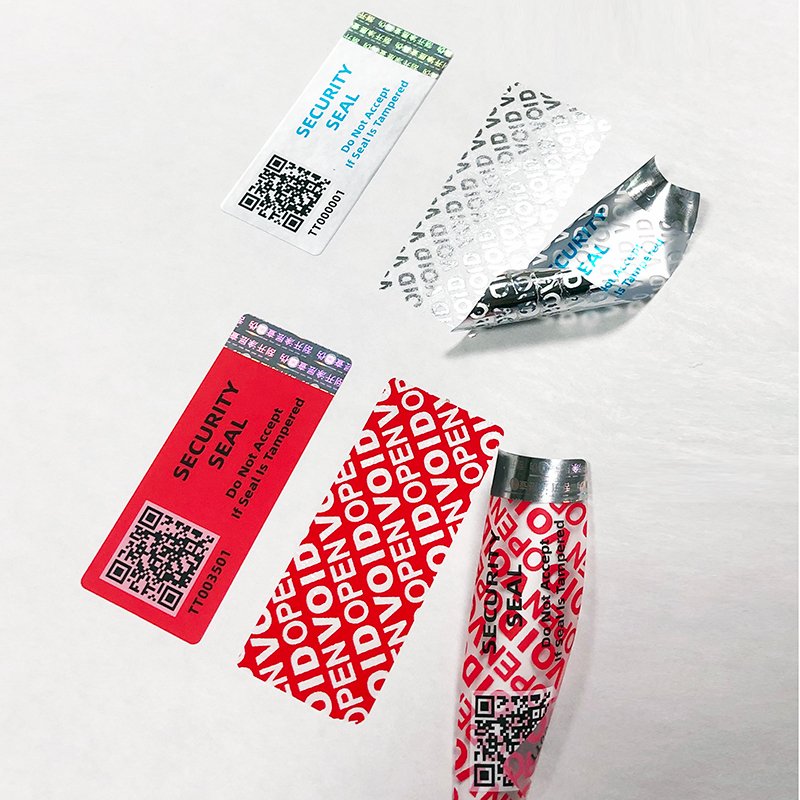
Tamper proof stickers are security labels designed to show visible evidence when a package, product, document, or device has been opened, removed, or interfered with.
For B2B buyers, they are commonly used on electronics, pharmaceuticals, cosmetics, warranty seals, logistics cartons, asset labels, and retail packaging to prevent unauthorized access and product substitution.
Depending on the application, tamper proof stickers can be made as full-transfer VOID labels, partial-transfer labels, non-transfer labels, destructible vinyl labels, or custom printed security seals with serial numbers, barcodes, QR codes, logos, and warning text.
This guide explains the main types, material options, printing methods, adhesive choices, and production process for custom tamper proof stickers.
If you need custom sizes, brand printing, serial numbering, barcode/QR code tracking, or samples before bulk production, this page will help you choose the right sticker structure.
Need custom tamper proof stickers for your products? Contact us for free sample.
How Tamper Proof Stickers Work
Tamper proof stickers work by making unauthorized opening or removal visible. Once applied to a product, package, carton, or device, the label cannot usually be removed cleanly without leaving signs of interference.
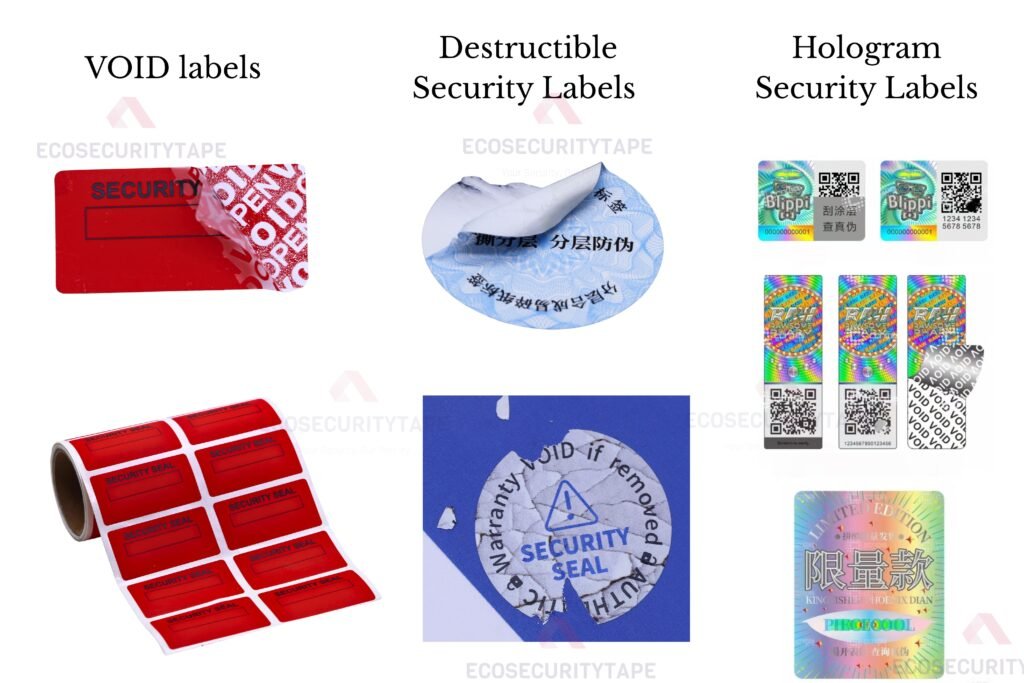
Depending on the material structure, a tamper proof sticker may leave a “VOID” message, break into small pieces, transfer adhesive residue, or show surface damage after removal. This helps buyers, inspectors, warehouse teams, and end users quickly identify whether the item has been opened or altered.
Common constructions include PET VOID film, destructible vinyl, security paper, polyester film, and pressure-sensitive security adhesive. For higher security applications, stickers can also include serial numbers, barcodes, QR codes, holographic effects, UV ink, or custom warning text.
For B2B buyers, the key is not only how the sticker looks, but whether the material, adhesive, residue level, and tamper effect match the target surface and use scenario.
Types of Tamper Proof Stickers
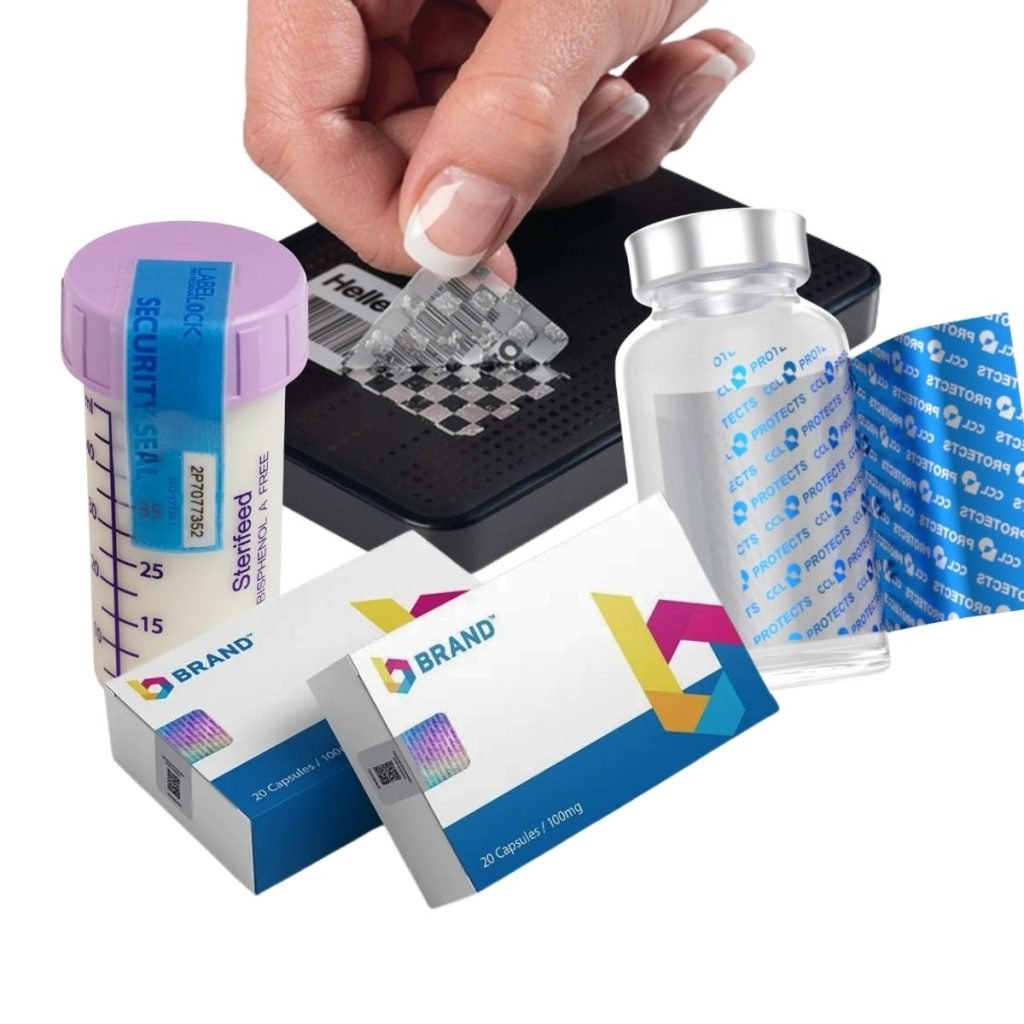
Tamper proof stickers can be made with different materials and tamper-evident effects. The right choice depends on the application surface, security level, removal effect, and product industry.
According to ISO 22382:2018, proper use of security labels plays a vital role in fraud prevention and product integrity.
| Type | Tamper Effect | Best For |
|---|---|---|
| VOID Labels | Leaves “VOID” message or residue | Electronics, cartons, warranty seals |
| Destructible Vinyl Labels | Breaks into small pieces when removed | Devices, components, pharmaceuticals |
| Holographic Seals | Visual authentication + anti-counterfeit effect | Luxury goods, documents, branded products |
| Tamper-Evident Tape & Seals | Shows warning text or pattern after opening | Shipping boxes, envelopes, files |
| Security-Cut Labels | Tears along pre-cut lines | Food, beverage, medical packaging |
Need custom tamper proof stickers for your product or packaging? Send us your label size, surface material, security effect requirement, and logo artwork. EcoSecurityTape can help recommend the right material, adhesive, and tamper-evident structure for your application.
The video below shows how tamper proof stickers work in factory and warehouse.
Designing Custom Tamper Proof Stickers
Designing custom tamper proof stickers is not only about adding a logo. For B2B packaging projects, the design should match the application surface, tamper-evident effect, adhesive strength, label size, printing method, and traceability requirements.
| Design Factor | What to Confirm |
|---|---|
| Application surface | Plastic, paper box, glass, metal, painted surface |
| Tamper effect | VOID residue, non-residue, destructible, security cut |
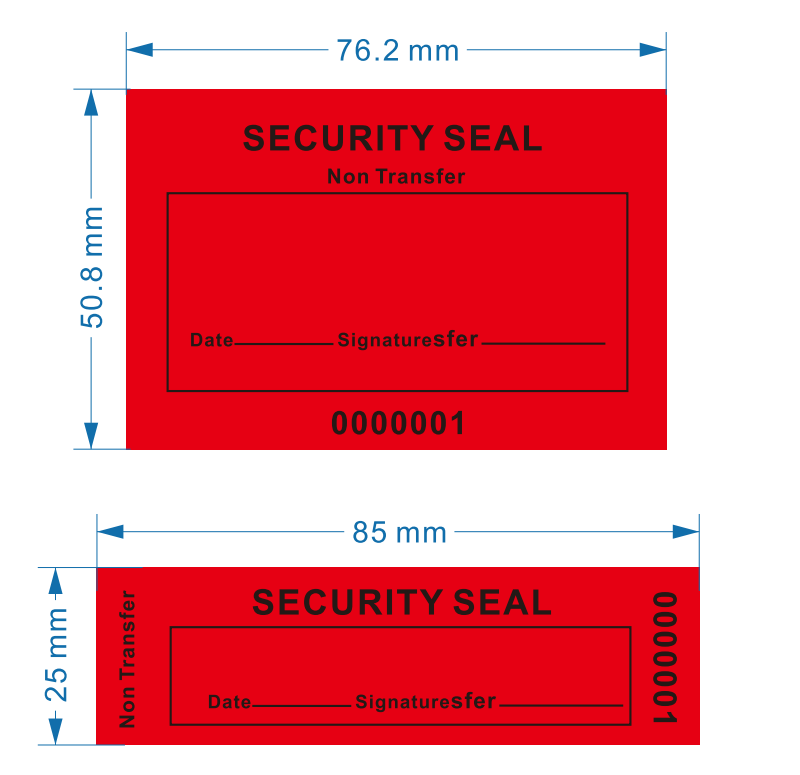
| Label size and shape | Rectangle, round, custom die-cut, roll label |
| Printing content | Logo, warning text, serial number, barcode, QR code |
| Adhesive strength | Permanent, high-tack, removable, temperature-resistant |
| Security features | Hologram, UV ink, micro text, hidden pattern |
| Packaging use | Warranty seal, box seal, bottle seal, document seal |
| Testing requirement | Peel test, surface test, sample approval before bulk order |
Request a Free Tamper Proof Sticker Consultation
Looking for the right security label for your products?
Our engineers can help you choose the most suitable tamper-evident solution based on your packaging, application surface, and security requirements.
✔ Free material recommendation
✔ Free security structure advice
✔ Custom logo & serial numbering
✔ OEM & ODM manufacturing
✔ Sample available before bulk production
📧 Email: info@ecosecuritytape.com
💬 WhatsApp: +1 615 480 2757
Contact us today to discuss your custom tamper proof sticker project.
Manufacturing Process of Tamper Proof Stickers
The production of tamper proof stickers is a sophisticated process, designed to create products that meet high standards of security and durability. This involves several stages, from material selection to the application of advanced printing and security features, followed by meticulous quality control.
Material Selection
The first stage in the manufacturing process involves choosing the right materials. Materials like polyester and vinyl are popular choices due to their durability and adaptability to various surfaces and environmental conditions. These materials are selected based on the product’s specific needs, such as resistance to water, UV light, or abrasion.
Printing Techniques
Once materials are selected, the next step is to employ advanced printing techniques that ensure high-quality and secure outputs. Digital printing is often used for its ability to handle detailed graphics and small print runs efficiently. For larger batches, flexographic printing might be used due to its speed and cost-effectiveness. During this phase, special security inks such as UV-reactive or thermochromic inks are used. These inks change color under different lighting or temperature conditions, adding an extra layer of security against tampering.
Incorporating Security Features
Incorporating unique security features is critical to the effectiveness of tamper-proof stickers. Features like holographic images, microtext, or sequential numbering are integrated during the printing process. Holograms, for instance, are very difficult to replicate and provide a visual cue of authenticity. Microtext, which is text printed so small that it requires magnification to read, adds another layer of difficulty for counterfeiters.
Applying Adhesives
The choice of adhesive is crucial as it must securely bond the sticker to its substrate while maintaining the integrity of the tamper-evident features. Adhesives may be pressure-sensitive, requiring some force to apply but providing a strong hold once set. The adhesive layer must also react in a specific way when tampered with, such as leaving behind a pattern or text like “VOID” on both the sticker and the product surface.
Die Cutting and Finishing
After printing, the stickers are shaped into their final form through a process called die cutting. This process can be tailored to produce various shapes and sizes, and to incorporate features like perforations which are part of the tamper-evident design. Perforations might be designed to tear in a particular pattern when an attempt is made to remove the sticker, clearly indicating tampering.
Quality Control
Each batch of stickers undergoes rigorous testing to ensure that they adhere properly, maintain their integrity under environmental stresses, and that all security features function correctly. Tests might include peel tests, aging tests under various light and temperature conditions, and tests to assess the readability of barcodes and microtext.
Packaging and Shipping
Finally, once the tamper proof stickers have passed all quality checks, they are packaged in a way that protects them from damage and environmental factors until they reach the customer. This stage is crucial to ensure that the stickers arrive in perfect condition, ready to be applied to products.
Real-World B2B Applications of Custom Tamper-Proof Stickers
Selecting a tamper-proof sticker involves more than choosing a material or printing a logo. Buyers must consider the application surface, inspection process, acceptable residue, order quantity and required evidence after removal.
The following examples are based on recent EcoSecurityTape customer projects. Customer names and confidential artwork are not disclosed.
Small-Batch Destructible Paper Labels for a U.S. Exhibition
A U.S. customer required only 500 custom destructible paper labels for an initial sample test. The labels were designed for small plastic product bags that would be used during an exhibition in Denver.
Although the trial quantity was small, EcoSecurityTape helped the customer prepare the preliminary label layout free of charge. The customer provided the required warning text, approximate dimensions and application details, and we arranged the information into a production-ready visual layout for approval.
A destructible paper structure with permanent adhesive was selected because the customer did not want the labels to be removed intact. If someone attempts to peel off the label, the paper tears into pieces, making reuse difficult.
The project also had a limited delivery window before the exhibition. After artwork and payment confirmation, the estimated production time was approximately 3–5 working days, followed by express delivery to the United States.
This project demonstrates that a buyer does not always need to begin with thousands of labels. When the selected material and production process allow, a 500-piece trial order can help the buyer test:
- Adhesion to the actual plastic bag
- Printed warning-text readability
- Label dimensions and placement
- Destructible performance after removal
- Suitability for future repeat orders
Repeat Order for Industrial Equipment Inventory in Switzerland
A Swiss customer initially purchased tamper-evident VOID security tape from EcoSecurityTape. After using the tape, the customer was satisfied with its visible tamper-evident performance.
Approximately one month later, the same customer returned with a new requirement for custom security labels. The labels were intended for boilers and other large industrial equipment during stocktaking and inventory inspections.
A numbered non-transfer label structure was selected. The labels supported equipment identification while helping inspectors determine whether a label had been removed, replaced or interfered with. Because the labels were used on large equipment, keeping the application surface relatively clean after removal was also an important consideration.
This repeat order shows how one tamper-evident product can lead to another application after the customer has tested the security performance and developed confidence in the solution.
For industrial equipment and inventory-control labels, buyers should confirm:
- Metal, painted or coated application surface
- Indoor or outdoor use
- Operating temperature
- Label size and placement
- Serial-number sequence
- Required residue after removal
- Exposure to oil, dust, moisture or cleaning chemicals
Testing the label on the actual equipment surface is recommended before a larger rollout.
Non-Transfer Security Labels for U.S. Automotive Parts
Another U.S. customer needed non-transfer security labels for automotive parts. This was the customer’s first order with EcoSecurityTape, and the buyer was initially unsure which label structure would be suitable.
During the project discussion, we shared multiple label photos and tamper-evident examples through WhatsApp. These references allowed the customer to compare different materials, colors, shapes and removal effects without first preparing a complete technical specification.
After reviewing the available options, the customer selected a suitable non-transfer label and proceeded with the order.
The label was intended to provide visible evidence of removal without leaving a prominent VOID message on the automotive component. Depending on the inspection procedure, this type of label can support:
- Automotive part identification
- Warranty inspection
- Replacement-part management
- Maintenance records
- Detection of unauthorized label removal
- Serial-number or barcode tracking
Automotive parts may be made from plastic, coated metal, glass or textured materials. Buyers should therefore provide photos of both the product and the intended label position. When possible, physical testing should be completed before bulk production because a label that works well on smooth metal may perform differently on a textured plastic component.
Warranty Labels for Battery Repair Businesses in Brazil
EcoSecurityTape is also discussing a tamper-evident warranty-label project with a Brazilian customer serving the battery-repair market. This project is still under evaluation and has not yet been presented as a completed order.
According to the customer’s application requirements, Brazil has substantial demand for replacing batteries in used mobile phones and laptop computers. Repair businesses need a practical way to identify completed service work and determine whether a repaired device, battery or access area has been opened again during the warranty period.
A small custom warranty label can be applied after the repair is completed. If the customer or another repair provider later opens the protected position, the label can break or display visible tamper evidence.
Potential applications include:
- Mobile phone battery replacement
- Laptop battery replacement
- Repair-shop warranty management
- After-sales service inspection
- Device maintenance records
- Identification of repeated access after repair
Depending on the device surface and warranty procedure, the repair business may choose:
- Destructible paper labels
- Ultra-destructible vinyl labels
- VOID security labels
- Non-transfer security labels
- Numbered warranty seals
- Labels with a logo, date, barcode or QR code
Because mobile phones and laptop components have limited application space, the label dimensions must be carefully evaluated. Adhesive strength, operating temperature, battery heat, surface texture and acceptable residue should also be confirmed before production.
The project is currently moving through product selection and order discussion. It illustrates the growing B2B opportunity for custom warranty labels in electronics repair, refurbished-device and replacement-battery markets.
What These Customer Projects Demonstrate
These examples show that custom tamper-proof sticker projects do not always begin with a large order or a complete technical drawing.
A buyer may start with:
- A small 500-piece trial order
- A photo of the product surface
- A logo and warning message
- A reference label image
- A required serial-number sequence
- A description of the inspection process
EcoSecurityTape can help organize these requirements, share relevant non-confidential product examples and prepare a preliminary label layout for approval.
Before requesting a quotation, buyers should provide the application surface, dimensions, quantity, artwork, required tamper-evident effect, numbering requirements and delivery destination. These details help determine whether a destructible, VOID, full-transfer, partial-transfer or non-transfer label is the most suitable option.
FAQ: Tamper Proof Stickers
How Do Tamper Proof Stickers Show Evidence of Removal?
The removal effect depends on the label structure. Destructible labels tear into pieces, full- or partial-transfer labels reveal a VOID message, and non-transfer labels display evidence on the label without transferring the security message to the surface.
Can Tamper Proof Stickers Be Customized?
Yes. We can customize the size, shape, color, logo, warning text, VOID message, serial number, barcode and QR code. If you do not have production-ready artwork, EcoSecurityTape can prepare a preliminary label layout for approval.
Can Tamper-Proof Stickers Be Used on Different Surfaces and Environments?
They can be designed for plastic, glass, metal, cartons and coated surfaces. The material and adhesive should be selected according to surface texture, temperature, moisture, UV exposure and chemicals. Testing on the actual surface is recommended before bulk production.
Do Tamper-Proof Stickers Leave Residue When Removed?
It depends on the structure and adhesive. Full-transfer labels leave a visible security message, while non-transfer labels keep the message on the label. However, non-transfer does not always mean completely residue-free, so buyers should confirm their surface and residue requirements.
How Long Does It Take to Produce Custom Tamper-Proof Stickers?
Many standard custom label orders can be produced within approximately 3–5 working days after artwork and payment confirmation. Special materials, variable data, custom samples or complex finishing may require additional time. International shipping time is calculated separately.
Why Choose EcoSecurityTape
EcoSecurityTape supports B2B buyers who need tamper proof stickers without committing to an unnecessarily high MOQ. Depending on the material, size and printing process, trial orders can start from 500 pieces. We prepare preliminary artwork free of charge based on the customer’s logo, warning text and dimensions. Available stock samples can also be supplied free for surface testing; the buyer only covers the courier cost. This helps confirm adhesion, residue and removal performance before production.
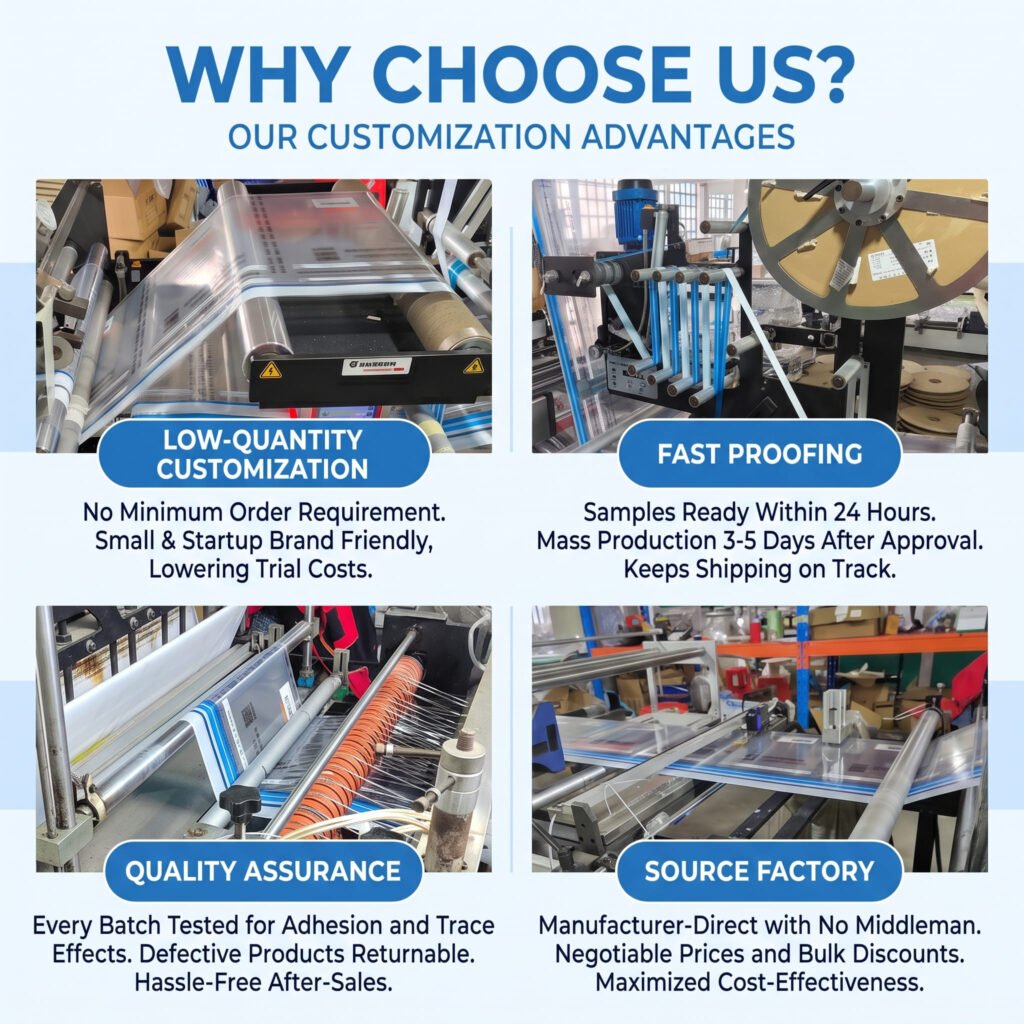
For most standard custom tamper evident stickers, production takes approximately 3–5 working days after artwork and payment confirmation. Express shipping normally reaches most European and North American countries within 5–7 days, subject to customs clearance. Our security label printing options include logos, warning messages, serial numbers, barcodes and QR codes. Buyers can also choose different void label materials, including full-transfer, partial-transfer and non-transfer structures.
Recent projects demonstrate this flexibility. A U.S. exhibition customer started with only 500 destructible paper labels, and we prepared the label layout free of charge. A Swiss customer returned approximately one month after purchasing VOID security tape to order numbered non-transfer labels for inventory inspections on boilers and other large equipment. Another first-time U.S. customer selected a non-transfer label for automotive parts after reviewing multiple application photos with us through WhatsApp. We are also discussing warranty labels with a Brazilian customer serving mobile phone and laptop battery-replacement businesses.
Each tamper proof label application is evaluated according to the surface, inspection process, residue limits and required removal effect, helping buyers reduce testing and purchasing risks.
Contact EcoSecurityTape
Custom tamper-proof stickers should be selected according to the application surface, required removal effect, residue limits and inspection process. EcoSecurityTape provides destructible, VOID, full-transfer, partial-transfer and non-transfer label options, with custom logos, warning text, serial numbers, barcodes and QR codes.
Need help choosing the right label? Send us your product photos, dimensions, quantity and application requirements. We can recommend a suitable structure and prepare a preliminary label layout for approval.
Email: info@ecosecuritytape.com
WhatsApp: +1 615 480 2757
Related Tamper-Evident Label Guides
Explore these guides to compare label materials, removal effects and customization options:
- Custom Tamper-Evident Security Labels
Compare destructible, full-transfer, partial-transfer and non-transfer label solutions for different surfaces. - Custom VOID Labels for Product Security
Learn how VOID labels work and how to choose the right transfer effect, adhesive and printed design. - Ultra-Destructible Vinyl Labels
Explore labels that break into small pieces when removed, suitable for warranty seals and product packaging. - Non-Transfer Holographic VOID Security Labels
Discover non-transfer options for automotive parts, electronics and high-value surfaces where prominent residue is undesirable.

Focus on tamper evident packaging, free sample for test, small-batch MOQ, let’s have a talk.