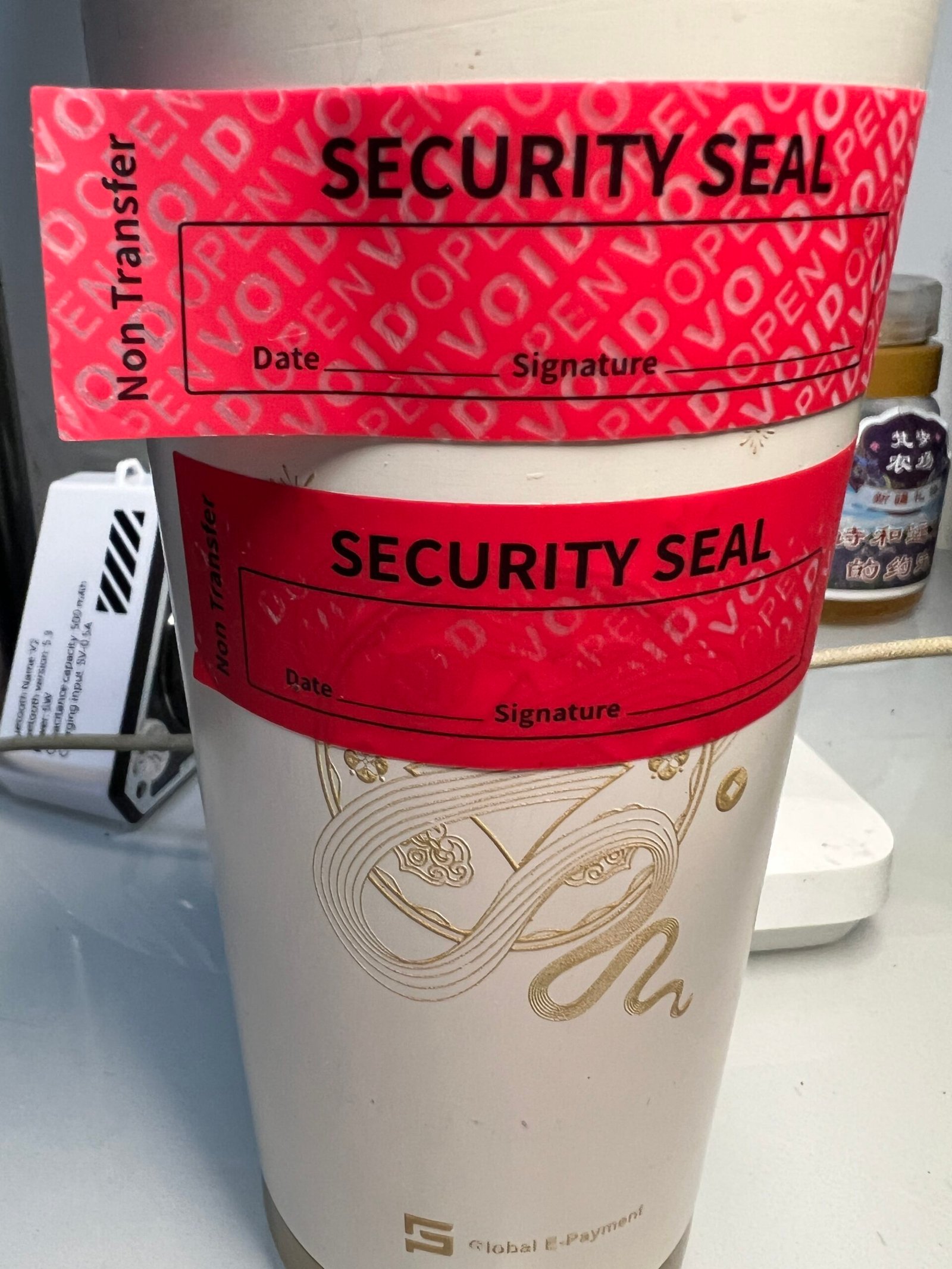
What Are Non Transfer Tamper Evident Labels?
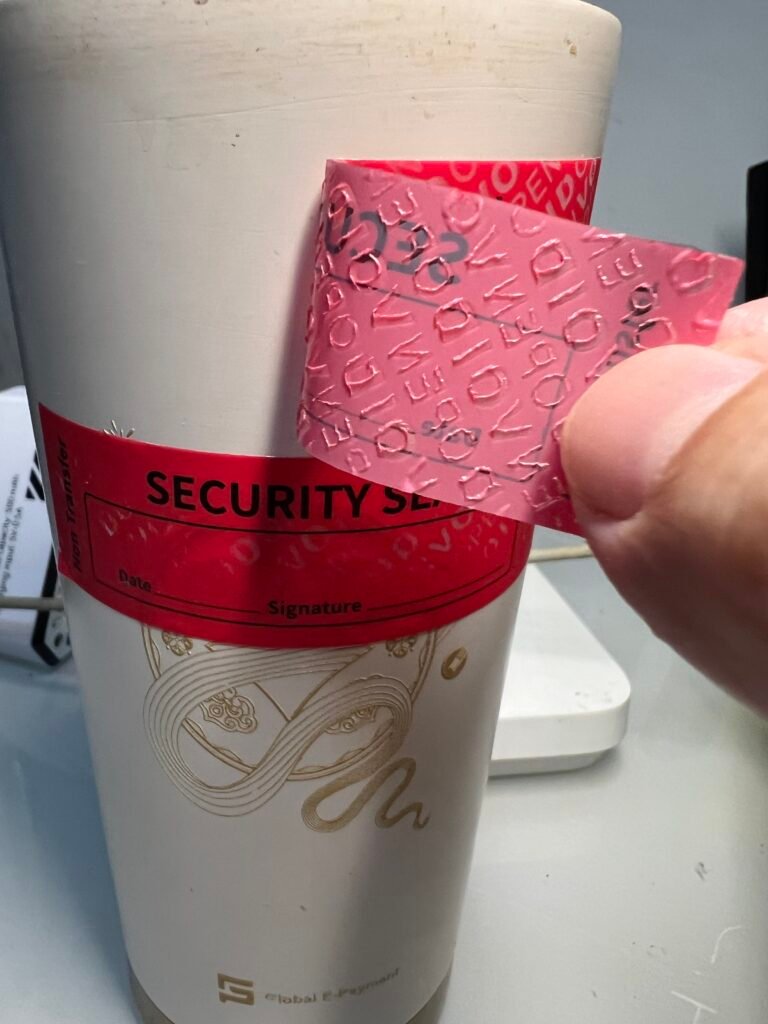
Non transfer tamper evident labels are adhesive security labels designed to reveal an opening message within the label construction when peeled, rather than intentionally leaving a security pattern on the application surface. They are useful when buyers need visible evidence of removal while limiting marks on equipment housings, components or reusable assets. However, non-transfer construction does not guarantee residue-free removal on every surface.
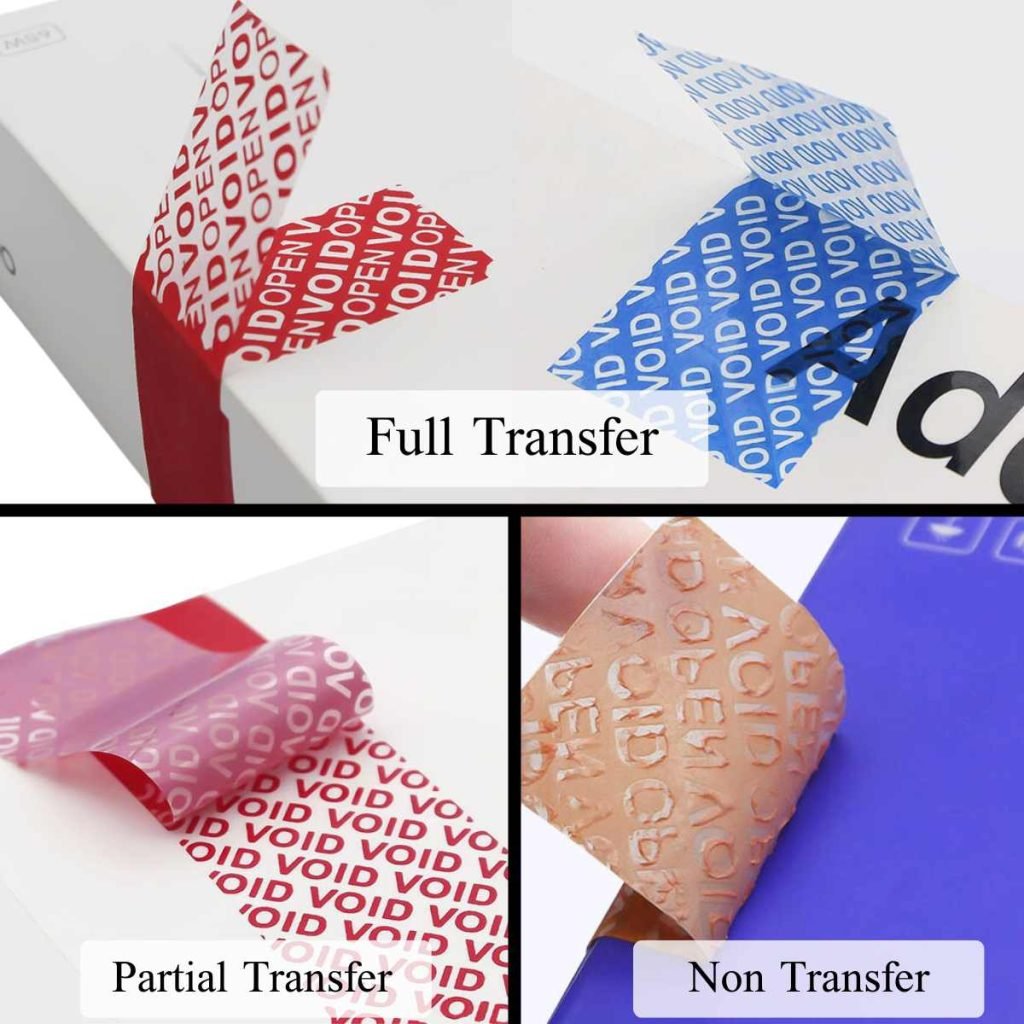
The distinction between three common constructions is straightforward. Full-transfer labels leave the security pattern on the surface after removal. Partial-transfer labels leave part of the pattern on the surface, with corresponding changes on the removed label. Non transfer VOID labels display the opening evidence within the label instead of deliberately transferring that pattern. Actual results depend on the selected product, surface and application conditions.
Surface printing and opening evidence are also different. A logo, barcode, serial number or warning message is normally visible before application. The hidden VOID or OPENED message develops when the label is disturbed. Custom non transfer labels can combine these functions, but printed wording alone does not establish tamper evidence.
Used as equipment security labels, these products help staff inspect approved access points or component housings. Used as tamper evident asset labels, they can connect an identification number with an inventory record while indicating possible removal.
These functions should not be confused with authenticity verification. A label may show interference or identify an asset without proving that the underlying product is genuine. Buyers should therefore confirm the required identification, removal effect and sample performance before ordering.
How Non Transfer VOID Labels Reveal Opening Attempts
Non transfer VOID labels use a security construction that changes visibly when the label is peeled from a suitably bonded surface. The separation occurs within the label structure, revealing a message such as VOID or OPENED VOID, rather than intentionally depositing a security pattern onto the equipment.
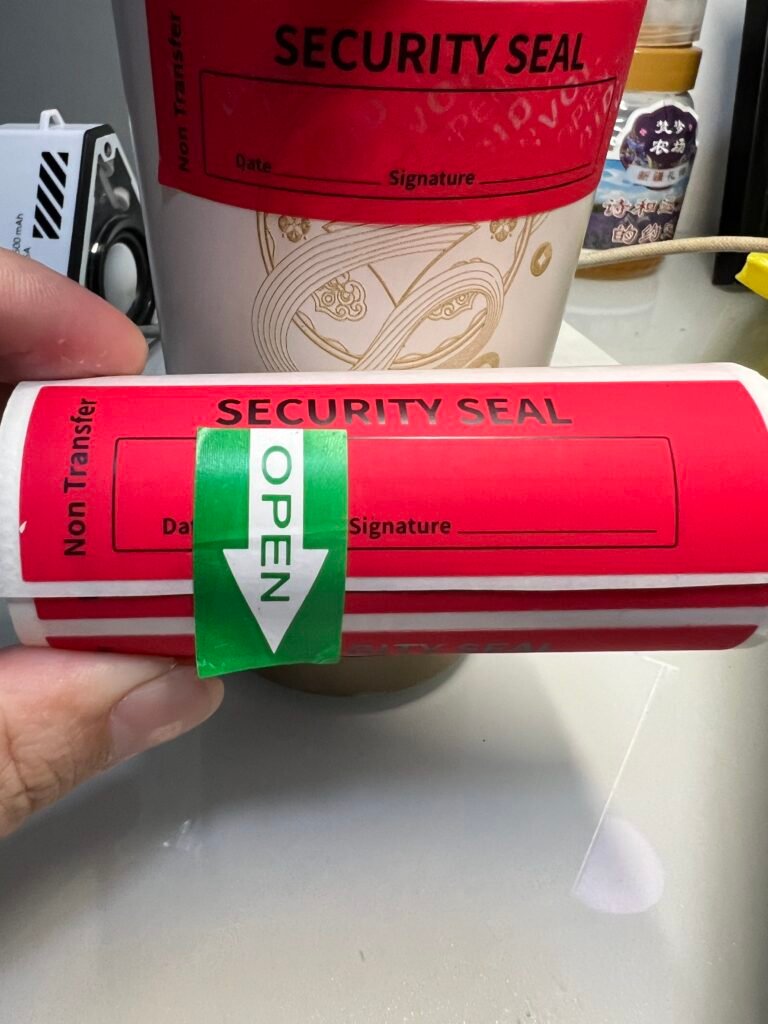
Before removal, the label may display a logo, serial number or printed warning. Once disturbed, the opening message becomes visible within the label. Pressing it back down should not restore its original appearance when the product has activated correctly. Nevertheless, these labels provide evidence of interference; they do not physically prevent every removal attempt or guarantee that unauthorized access cannot occur.
The revealed wording can be customized. Common generic messages include VOID and OPENED VOID. Buyers requesting custom non transfer labels can discuss alternative wording, such as OPEN, a company name or an approved security message. The available layout, character size and production requirements must be confirmed separately from the label’s ordinary surface printing.
Reliable activation depends on adequate adhesion. Dust, oil, moisture, textured coatings or incompatible plastics may prevent sufficient bonding. Removing a label too soon after application may also produce weak or incomplete opening evidence. Buyers should follow the recommended application conditions and dwell time for the selected material.
For equipment security labels, test both the visible message and surface condition after removal. When used as tamper evident asset labels, inspect the security effect alongside the asset number and associated records. EST recommends testing non transfer tamper evident labels on actual equipment before approving customized production.
Non Transfer vs Partial Transfer vs Full Transfer Labels
Choosing between transfer effects depends on where buyers want opening evidence to appear and how the surface will be maintained afterward. Non transfer tamper evident labels display the security message within the label, while partial-transfer and full-transfer constructions intentionally leave a security pattern on the application surface.
| Comparison | Non Transfer Labels | Partial Transfer Labels | Full Transfer Labels |
|---|---|---|---|
| Evidence location | Within the removed label. | On both the surface and removed label. | The security pattern transfers to the surface. |
| Surface residue | No intentional pattern transfer; adhesive residue remains possible. | Part of the security layer remains. | The transferred security layer remains. |
| Cleanup requirements | May reduce cleanup, subject to testing. | Remaining traces may require removal. | Transferred material requires an appropriate cleaning method. |
| Equipment maintenance | Worth evaluating for reusable housings where surface marking is undesirable. | Useful when maintenance teams need evidence on both parts. | Useful when visible evidence must remain after label removal. |
| Selection conditions | Confirm activation and acceptable residue on the actual finish. | Confirm pattern clarity and coating compatibility. | Confirm surface compatibility and acceptable cleanup. |
Non transfer VOID labels are not universally residue-free. Surface coatings, adhesive compatibility, temperature and time after application can affect removal. Likewise, stronger adhesion does not automatically mean better performance if it damages the equipment finish.
Before selecting equipment security labels, test the opening message, remaining residue and surface condition. EST can help buyers compare custom non transfer labels with alternative constructions based on their application requirements.
Need help choosing a transfer effect? Send your surface photographs, label dimensions and quantity to EST. Suitable stock samples are available free of charge for testing; customers cover shipping.
WhatsApp: +1 615 480 2757
Email: info@ecosecuritytape.com
Applications Across Boilers, Automotive Parts and Equipment
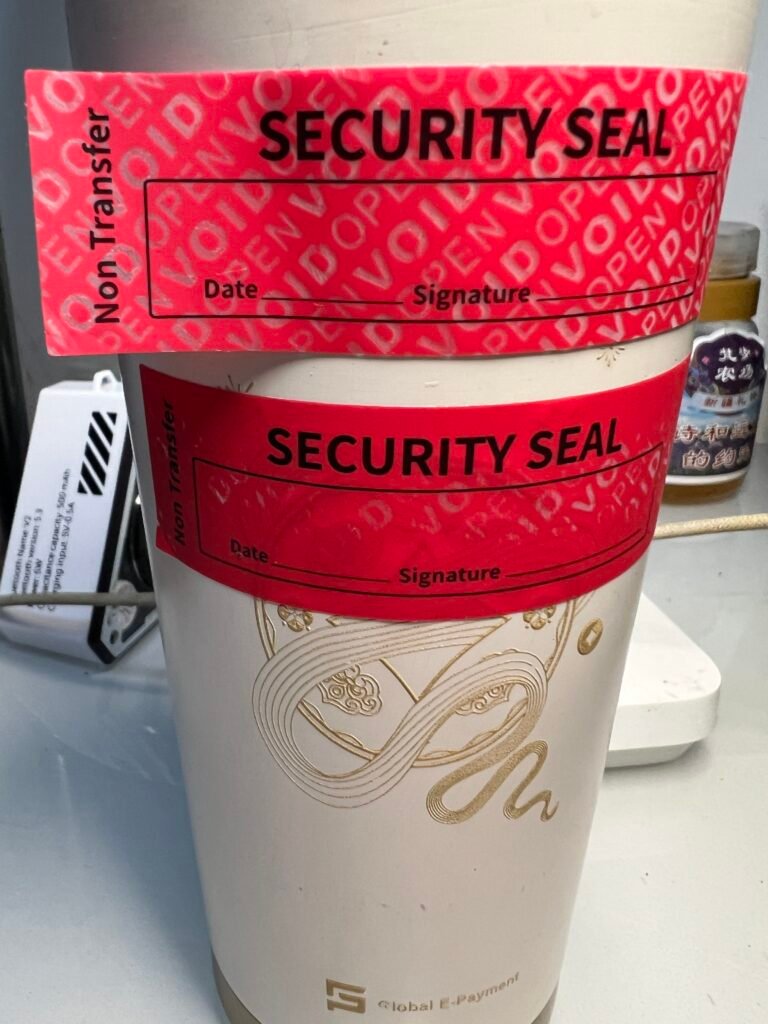
Non transfer tamper evident labels can support equipment identification and opening checks where buyers prefer security evidence within the label rather than a transferred pattern on the surface. EST has received orders from customers in Switzerland, the United States and France for different equipment applications. Quantities range from hundreds to thousands, with both customer-logo and non-logo designs.
| Application | EST Customer Experience | Purpose and Selection Considerations |
|---|---|---|
| Boiler equipment identification | A Swiss customer ordered 5,000 labels for boiler-equipment asset inventory. | Associate equipment with inventory records and indicate possible label removal. Confirm the external application surface and operating conditions. |
| Automotive parts | A U.S. customer ordered 2,000 non-transfer labels for automotive parts. | Support component identification and removal checks. Evaluate adhesion, residue and available label space on the actual part. |
| Equipment inspection openings | A French customer placed an order for labels used across equipment access points. | Make opening attempts more noticeable when the label bridges an approved panel joint. Confirm placement and maintenance requirements. |
| Other equipment housings | Potential applications can be reviewed against customer specifications. | Assess surface finish, curvature, cleaning exposure and inspection procedures before selecting a construction. |
These projects demonstrate different purchasing needs rather than one universal specification. Some buyers require custom non transfer labels with a company logo, while others prefer generic designs. EST can support both approaches and prepare preliminary artwork free of charge using the customer’s approved dimensions, wording and identification requirements.
For tamper evident asset labels, printed numbers or barcodes can connect the equipment to a customer-maintained record. For equipment security labels, placement across an access point helps make disturbance visible. Neither function independently verifies product authenticity.
Importantly, boiler-related use does not establish suitability for hot pipes, steam lines or heated surfaces. Non transfer VOID labels must be evaluated for the actual application and service temperatures. EST recommends sample testing before buyers approve a new surface, design or operating environment.
Asset Identification with Logos, Serial Numbers and Barcodes
Non transfer tamper evident labels can combine visible security features with information used for asset identification. A company logo identifies the organization, while a unique serial number distinguishes individual equipment or components. Barcodes and QR codes provide a scannable version of an identifier or other customer-approved information.
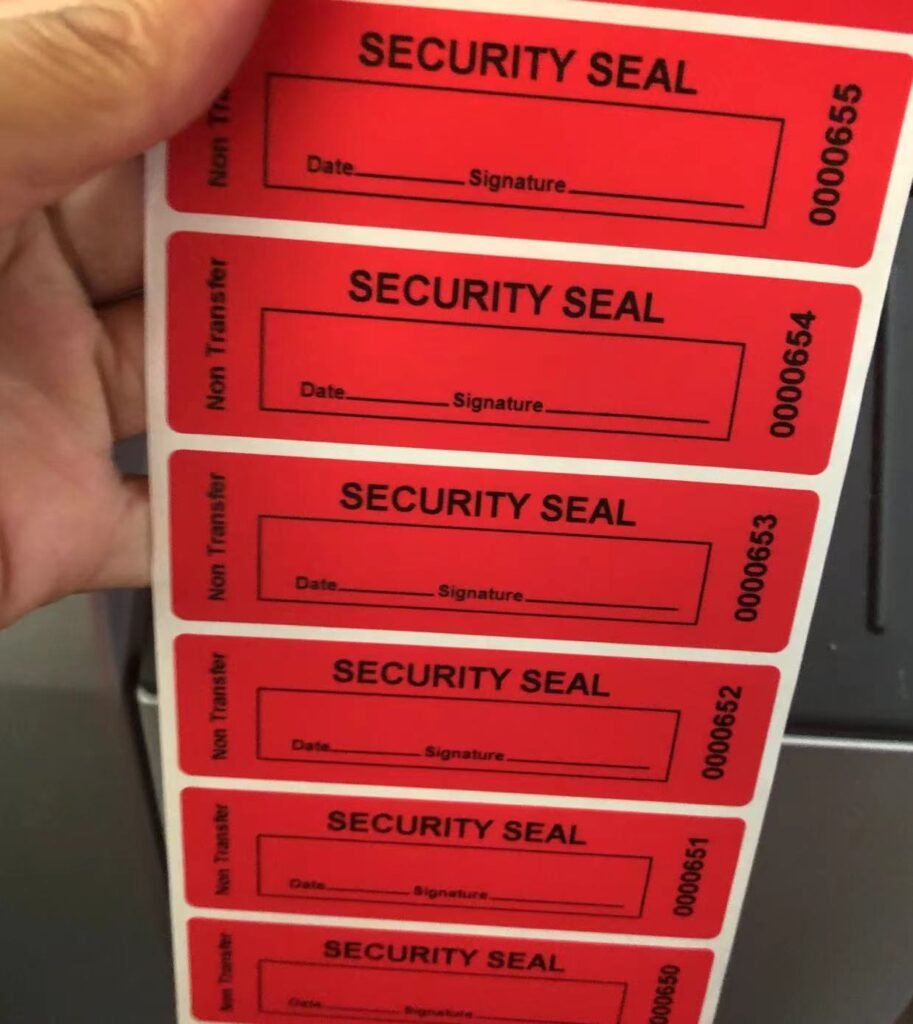
For projects such as the Swiss customer’s boiler-equipment inventory, tamper evident asset labels can help connect each item with an asset register. Before application, the customer assigns a unique number and records the equipment description, location, responsible department and maintenance details. During inventory checks, staff scan or enter the number, compare the record with the physical equipment and inspect the label for opening evidence.
Custom non transfer labels can also include writable fields for installation dates, inspection dates or staff initials. EST can reserve suitable writing space, but buyers should test their chosen pen for drying, readability and resistance to routine handling.
To enter identifiers into an asset-management system, customers can manually create records or import an agreed number list using the system’s supported format. A scanner then reads the printed code into the appropriate field. EST and the buyer should confirm encoded content, barcode format, numbering sequence and print readability before production.
Printing a code does not automatically create a database connection. Likewise, equipment security labels bearing logos or QR codes do not independently prove authenticity. Where authentication is required, non transfer VOID labels may form one layer alongside controlled numbering and a customer-managed verification system. A standard QR code alone is not protection against copying.
How to Test Non Transfer Labels on Actual Equipment
Testing non transfer tamper evident labels begins with identifying the application surface. Glass, metal, acrylic, wood and plastics have different surface characteristics, so one adhesive may not perform equally well on every material. Coatings, roughness, curvature and contamination can also affect bonding and removal.
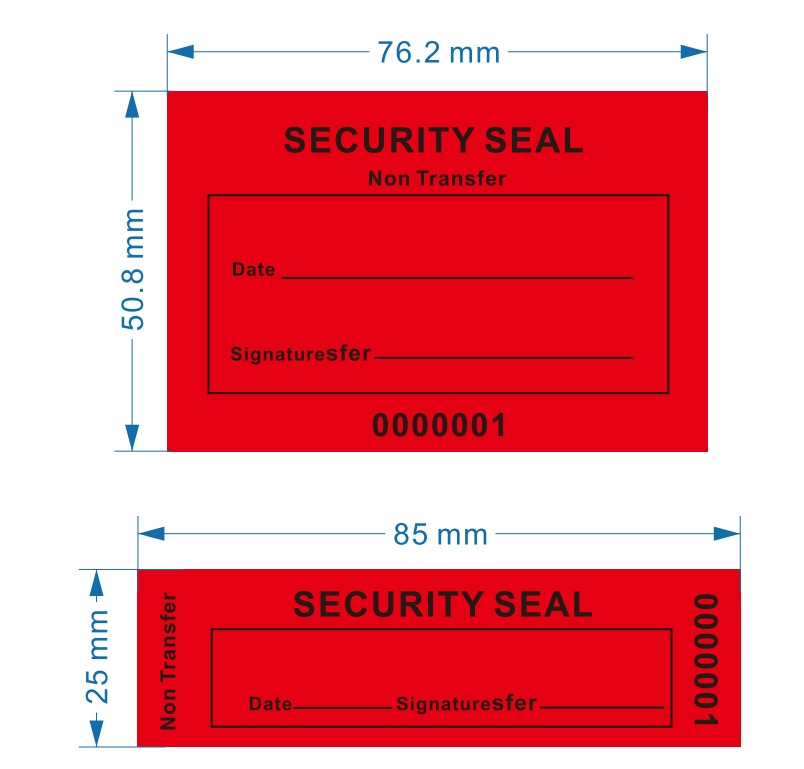
Share the application before ordering. Send EST photographs, surface material, proposed dimensions and expected handling conditions. For wood, specify whether it is bare, painted or varnished; for plastics, provide the material type when known. EST can recommend label dimensions, thickness and adhesive options for evaluation. Thicker material or stronger adhesive is not automatically better, particularly on curved surfaces where stiffness may encourage edge lifting.
Clean, apply and allow bonding time. Prepare the surface using a compatible cleaning method and let it dry. Apply the sample with consistent pressure, then wait for the product-specific dwell time recommended by EST. Do not assume immediate removal represents normal performance.
Peel, photograph and record. Check VOID message clarity, adhesive residue, surface damage, adhesive stringing and edge lifting. Photograph the label and surface before and after removal. Record the application temperature, dwell time and removal conditions so results can be compared.
Include realistic temperature exposure. Tropical heat, cold climates and temperature changes during transport may require different adhesive constructions. Distinguish the temperature during application from the temperature during use, and consider condensation or humidity. Country alone does not define these conditions. Buyers should test non transfer VOID labels under representative conditions before approving bulk production, especially where equipment moves between indoor, outdoor or refrigerated environments.
EST Customer Projects and the Custom Ordering Process
EST’s non transfer tamper evident labels projects include 5,000 labels for a Swiss customer’s boiler-equipment inventory, 2,000 labels for a U.S. automotive-parts customer and a French customer’s equipment-access application. Buyers contact us by email or WhatsApp to discuss dimensions, surfaces and identification requirements. Several projects progressed to orders after a few focused discussions, although confirmation time varies with complexity.
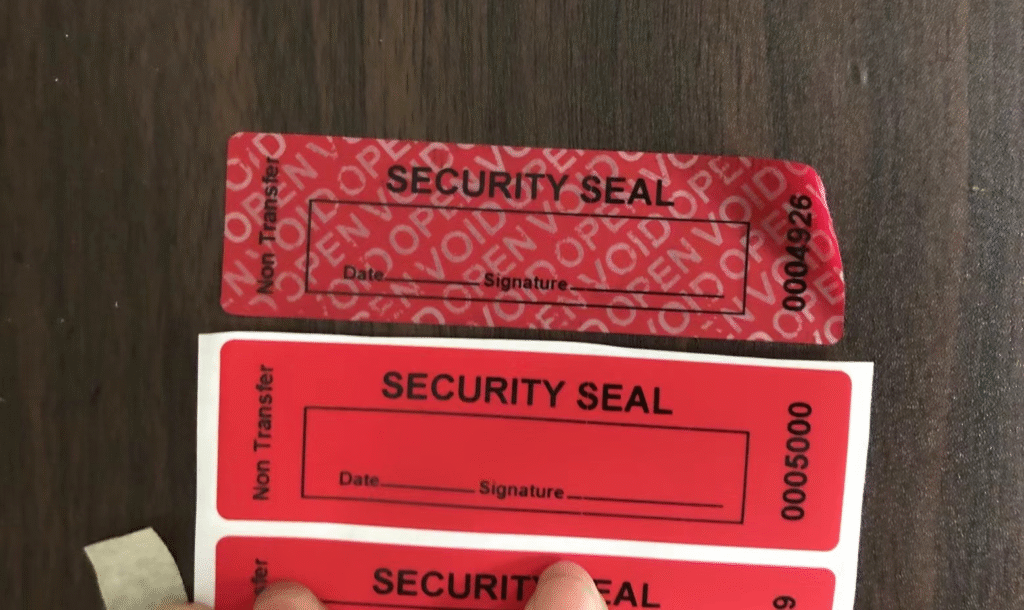
Small orders support practical trials. Basic custom non transfer labels can start from 200 pieces, subject to specifications. This helps buyers who initially need limited quantities rather than a large production run. Unit prices depend on quantity, material, printing and finishing requirements.
Online marketplaces such as Amazon can be convenient for standard products, but individual listings may not offer the logo, dimensions or numbering a project requires. EST focuses on OEM customization, preparing preliminary artwork free of charge using the buyer’s vector logo, approved wording and dimensions. Customers can choose branded or generic designs without assuming that every requirement needs the same construction.
Samples help buyers decide. Suitable stock non transfer VOID labels are available free of charge for evaluation; customers cover shipping. These samples help assess adhesion, opening evidence and residue before customization. Custom-made samples may involve separate charges.
For equipment security labels, EST confirms the application surface and proposed placement. For tamper evident asset labels, we also review serial-number sequences, barcode content and writable fields. After specifications and artwork are approved, EST issues a formal pro forma invoice. Production begins after the agreed payment, with delivery and balance arrangements documented in the PI.
EST also supports multiple settlement currencies, subject to confirmation, including euros for European buyers, U.S. dollars for American buyers and Vietnamese dong for Vietnamese customers. Appropriate currency options can simplify payment and reduce unnecessary conversions, while bank charges and exchange-rate movements may still apply.
Why Choose EST for Non Transfer Tamper Evident Labels?
EcoSecurityTape combines flexible quantities, competitive pricing and practical customization support for buyers of non transfer tamper evident labels. These advantages help new customers and small businesses evaluate a product before committing to larger purchases, while supporting established buyers with bulk requirements.
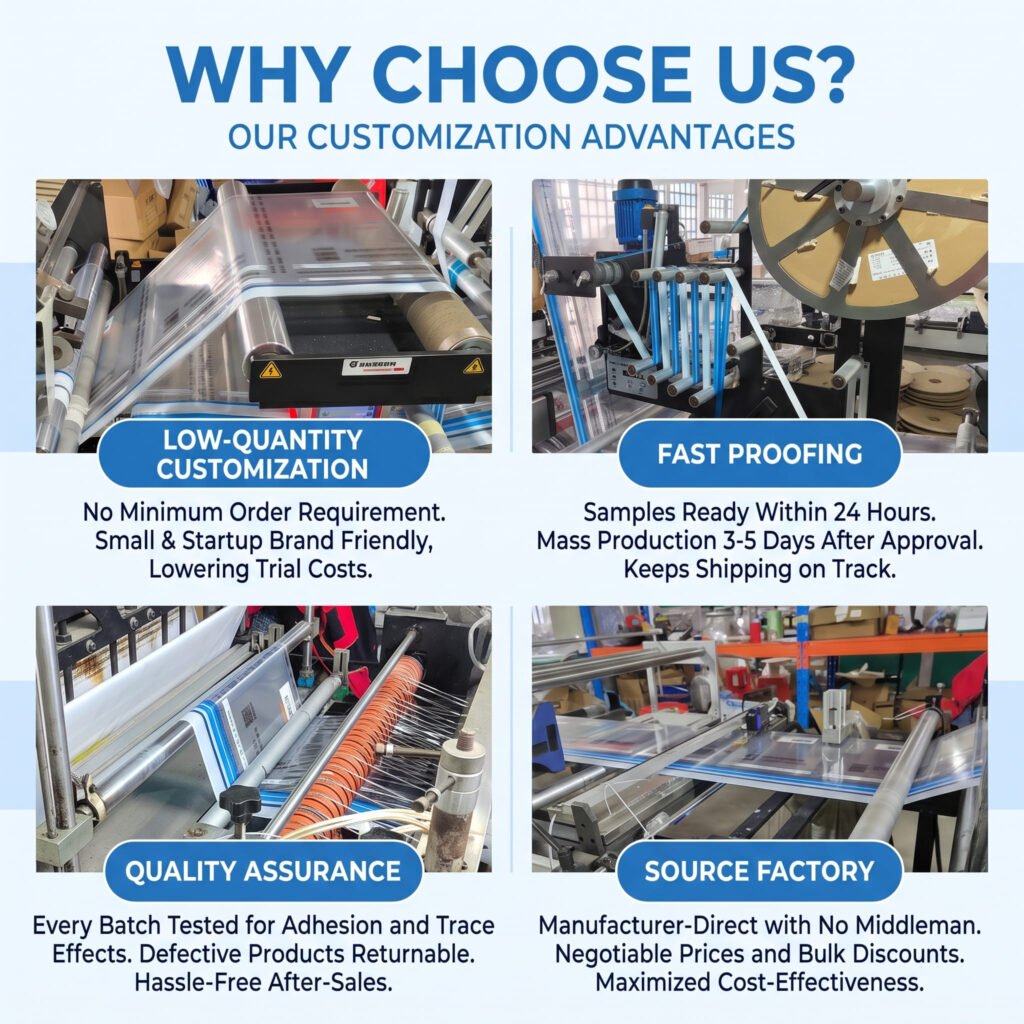
Low MOQ and flexible quantities: Basic custom orders can start from 200 pieces, subject to specifications. Customers can begin with a manageable trial quantity and increase purchasing as their requirements develop. Larger orders generally benefit from lower unit prices as production setup costs are spread across more labels.
Free samples and preliminary design: Suitable stock samples are available free of charge, with customers covering shipping. EST also prepares preliminary artwork free of charge using approved logos, wording and dimensions. This helps buyers review their custom non transfer labels before production.
Convenient international payment: Multiple settlement currencies are supported, subject to confirmation. Customers can discuss suitable currency options to simplify transfers and reduce unnecessary conversions.
Support beyond the first order: EST works with both small-batch buyers and customers planning larger equipment-label programs. A successful trial can establish approved specifications for repeat production. By combining sample evaluation, clear artwork and quantity-based quotations, we help customers build a purchasing arrangement that can grow with their business.
FAQs About Non Transfer Tamper Evident Labels
Q1: Can someone remove a label and attach it to another item?
Correctly activated non transfer tamper evident labels retain visible opening evidence after removal. Reattaching the label should not restore its original appearance. However, performance depends on adequate bonding and suitable conditions. A security label supports inspection; it does not make substitution physically impossible.
Q2: Can I print my own information on blank labels?
Selected custom non transfer labels may be supplied with blank areas for customer printing. Compatibility depends on the face coating, printer, ribbon or ink, and operating temperature. Send EST your printer model and printing requirements before ordering. Test print quality and the security effect together.
Q3: Will the hidden VOID message be readable on a very small label?
Small dimensions can limit character size and the amount of security pattern visible after removal. Narrow labels may reveal only part of a repeating message. EST can review the proposed dimensions and layout, but buyers should approve physical samples rather than judge readability from artwork alone.
Q4: Can non-transfer labels replace my existing asset identification plates?
Not automatically. Tamper evident asset labels can supplement identification records, but may not match the durability or information requirements of a metal plate. Do not cover or replace mandatory manufacturer markings. Confirm the asset’s service conditions and identification requirements before changing formats.
Q5: How should unused labels be stored?
Keep equipment security labels in their protective packaging under the storage conditions specified for the supplied material. Avoid direct sunlight, moisture and excessive heat. Ask EST to confirm shelf life, particularly when purchasing stock for multiple locations or infrequent use.
Q6: What should I check before placing a repeat order?
Confirm whether the surface, artwork, numbering sequence, quantity or operating conditions have changed. Keep an approved sample and reference the previous order number. For non transfer VOID labels, re-evaluate samples when specifications change, and agree on numbering continuity to avoid duplicate identifiers across batches.
Conclusion: Select Non Transfer Labels Through Application Testing
Choosing non transfer tamper evident labels starts with understanding the application surface, operating environment and required opening evidence. Glass, metal, acrylic, wood and plastics may need different adhesive constructions. Label dimensions, thickness and application conditions also influence bonding, edge lifting and removal performance.
For equipment access checks, confirm that the security message becomes clearly visible after removal. For asset identification, define the logo, serial numbers, barcodes and writable fields needed to connect each item with your records. Non transfer VOID labels do not guarantee residue-free removal on every surface or independently prove product authenticity.
EcoSecurityTape supports projects ranging from small trial orders to larger equipment-label programs. Basic custom orders can start from 200 pieces, subject to specifications, with free preliminary artwork and suitable stock samples for evaluation. Customers cover sample shipping; custom sampling charges are confirmed separately.
Send EST your surface photographs, label dimensions, quantity, printing requirements and delivery country. Our team can recommend options for testing and prepare a project-specific quotation. Approving samples on actual equipment helps establish clear expectations before bulk production.
Email: info@ecosecuritytape.com
WhatsApp: +1 615 480 2757
Product Catalog: Download the EST Product Catalog

Focus on tamper evident packaging, free sample for test, small-batch MOQ, let’s have a talk.