Similarities & Differences Between Security Labels and Tapes
In high-value product protection systems—covering anti-counterfeiting, tamper evidence, and anti-diversion—security labels and security tapes are two core solutions. The topic of security labels vs security tape is essential for brands aiming to build a complete, end-to-end packaging security strategy.
However, many customers tend to confuse security labels vs security tape during the selection process. This can lead to choosing the wrong material or format, resulting in ineffective protection, compromised product appearance, or reduced operational efficiency. In reality, while security labels vs security tape have distinct differences, they also share several important similarities. Only by clearly understanding both can businesses select the most suitable solution for their specific application scenarios.
Based on years of experience in tamper-evident packaging, EcoSecurityTape provides a comprehensive comparison of security labels vs security tape, combining practical case studies and real customer needs. This guide aims to help you fully understand their differences and similarities, and ultimately choose the right security label solution to solve your packaging security challenges.
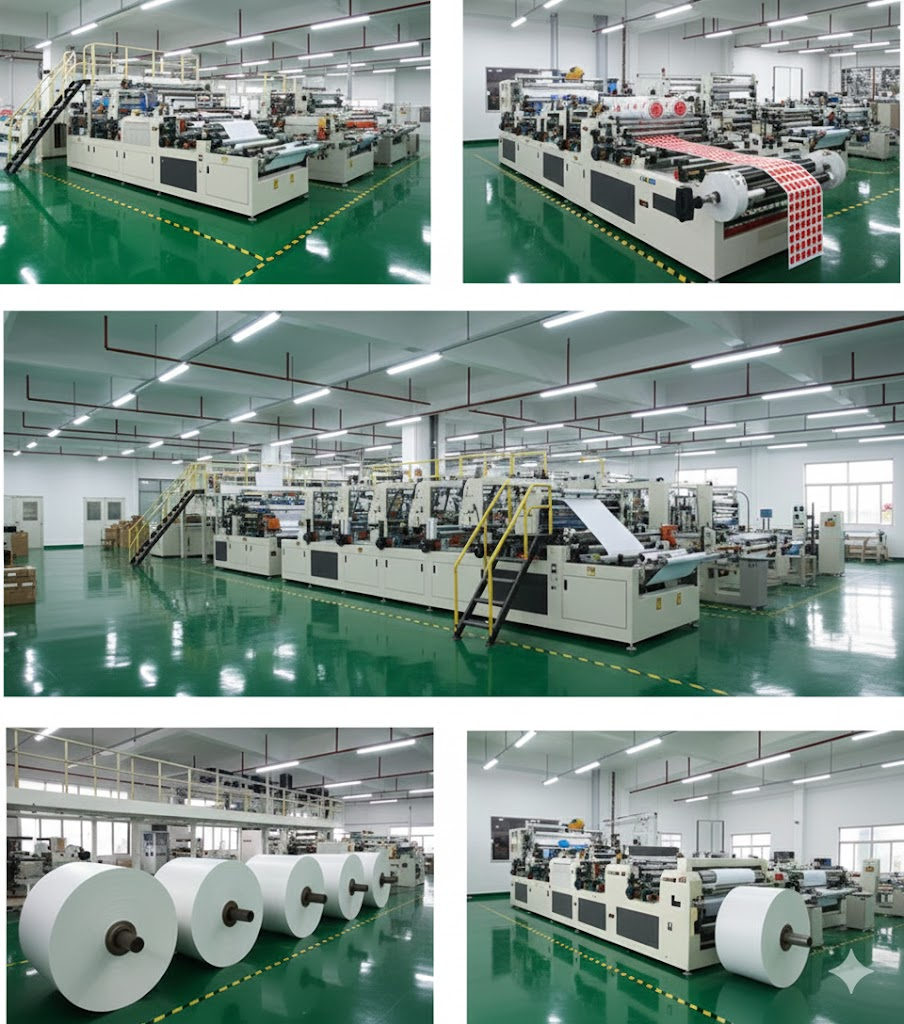
Structural Difference: Continuous Rolls vs. Die-Cut Individual Units
One of the most fundamental aspects in understanding the difference between security labels and security tape lies in their structural form.
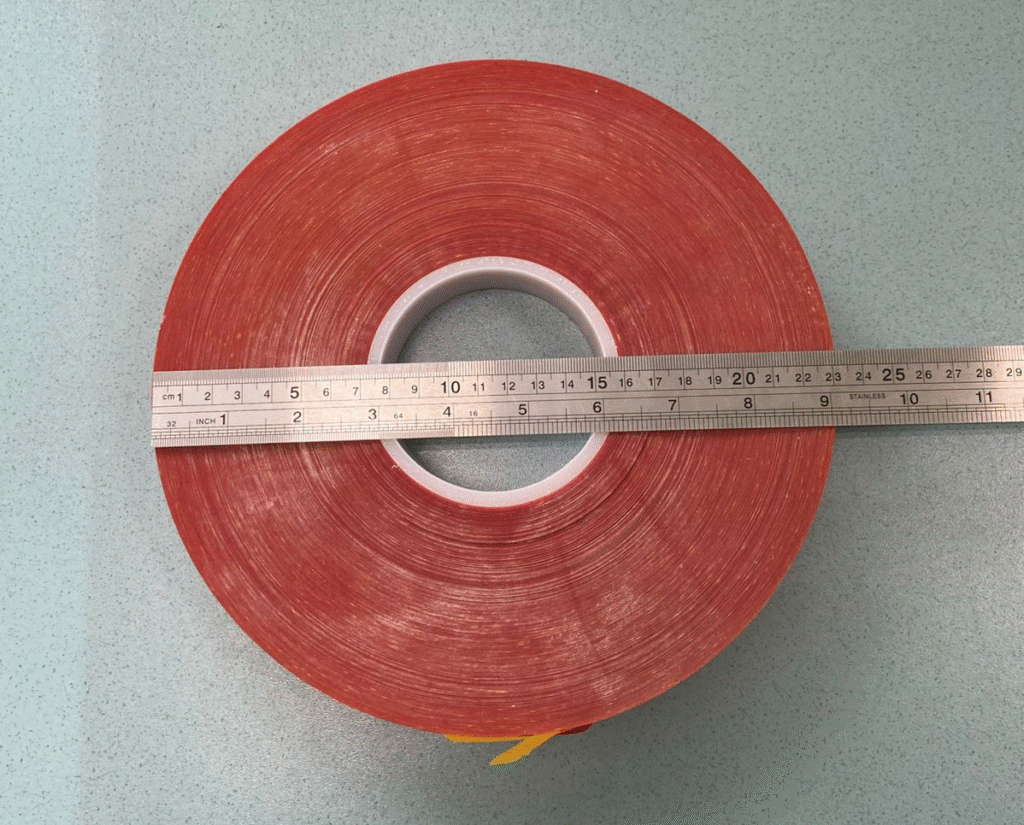
Security tape is produced as a continuous roll with no breaks or individual cut units. The entire tape maintains a uniform material structure, adhesive layer, and tamper-evident feature throughout. It is supplied as a fixed-width, long roll—such as 3 cm wide and 1200 meters in length—ready for direct use without any secondary die-cutting process. This continuous format is a key point when analyzing the difference between security labels and security tape.
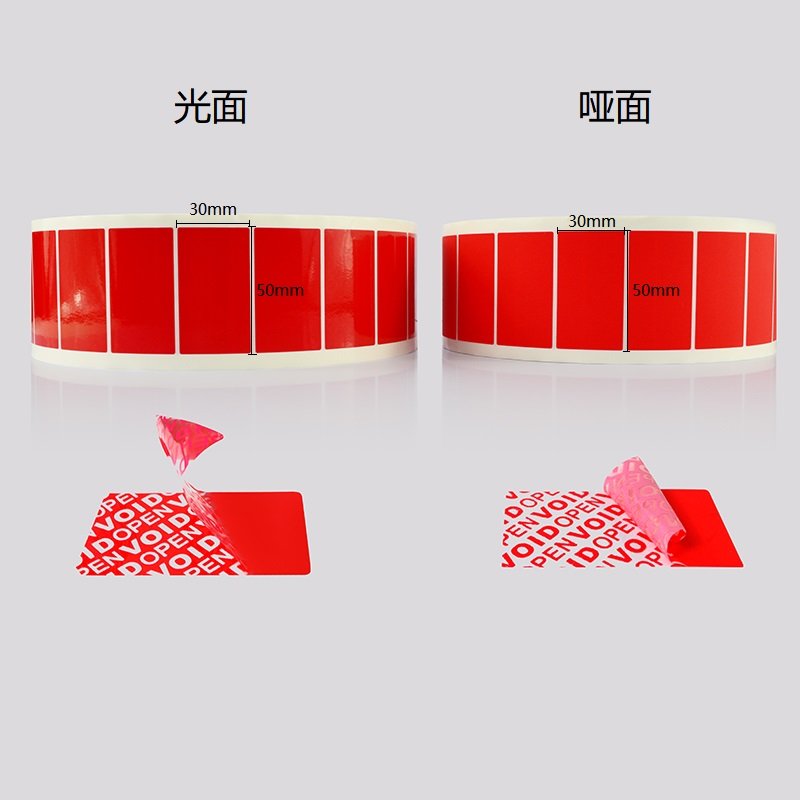
In contrast, security labels are manufactured as individually die-cut units. The production process starts with a large master roll, which is then processed through die-cutting and waste removal to create fixed-size, separate labels. These labels are neatly arranged on a release liner, forming a structure of “one liner roll with multiple individual labels.” Each label functions as an independent tamper-evident unit and can be peeled off and applied separately. This modular format further highlights the difference between security labels and security tape.

This structural distinction is the most intuitive and critical factor in the difference between security labels and security tape, as it directly determines their application methods and processing logic. If customers misunderstand this difference, it can easily lead to incompatibility with automated equipment and inefficiencies in production workflows.
Usage Difference: Full Coverage Sealing vs. Point-Specific Identification
Another critical aspect when comparing tamper evident labels vs tape is their application logic in real-world scenarios.
Security tape is designed for full-coverage sealing. It is primarily used for large-area, continuous protection, such as sealing security bags, carton packaging, or long-strip closures. By applying the tape across the entire opening, it creates a complete barrier against tampering, cutting, or unauthorized access. Any attempt to open or damage the package will leave visible evidence, making tamper detection immediate and intuitive. This full-surface protection approach is a defining characteristic in the comparison of tamper evident labels vs tape, especially in logistics and transportation environments.
In contrast, tamper evident labels focus on point-specific identification rather than full coverage. They are applied only to critical areas, such as package edges, closure points, screw holes on devices like iPads, warranty seals on gaming consoles like Xbox, or locking points on premium gift boxes. This targeted application allows brands to secure key access points without covering large surfaces. As a result, tamper evident labels vs tape differ significantly in how they balance protection and presentation.
Additionally, tamper evident labels offer greater flexibility in design and branding. They can be customized in shape, size, and printing to match product aesthetics, ensuring that security measures do not interfere with the visual appeal of high-end products. This is particularly important in industries such as electronics, luxury goods, and premium packaging, where appearance plays a crucial role. In these cases, choosing between tamper evident labels vs tape is not only about security performance but also about maintaining brand image and user experience.
Overall, understanding the application differences between tamper evident labels vs tape helps businesses select the right solution—whether they need full-package protection or precise, discreet tamper evidence at key points.
Different Tamper Protection: Overall Damage vs. Point-Specific Evidence
When it comes to tamper resistance and anti-opening mechanisms, security tape and security labels follow fundamentally different protection logics. Understanding this distinction is essential when selecting the right security label solution for your packaging needs.
Security tape is designed for overall, full-surface protection. Once the tape is cut, torn, or tampered with, it will show large-area damage, often revealing clear “VOID” messages or irreversible surface distortion. This damage cannot be repaired locally, making it impossible to reseal the package without visible evidence. As part of a comprehensive security label solution, this approach effectively prevents unauthorized opening and resealing, offering strong visual warnings and broad protection coverage—ideal for logistics, shipping cartons, and security bags.
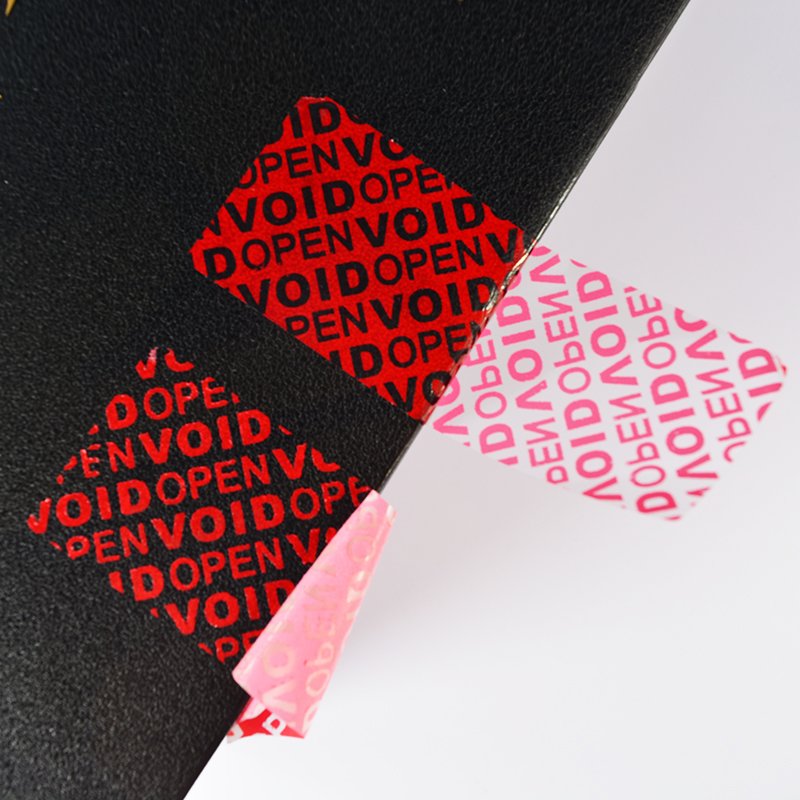
In contrast, security labels operate on a point-specific protection logic. They are applied only to critical areas, and once removed or tampered with, they leave a permanent mark—such as a VOID pattern or destructible residue—only at that specific location. The rest of the packaging remains intact and visually unaffected. This makes security labels a more refined security label solution, especially suitable for high-end products where maintaining packaging aesthetics is crucial.
Additionally, security labels can be engineered with various tamper-evident technologies, including partial transfer, full transfer, or destructible materials, allowing brands to tailor their security label solution based on risk level and application scenario. This flexibility ensures that businesses can achieve both effective anti-counterfeiting and premium visual presentation.
Overall, whether you choose full-area protection with security tape or localized tamper evidence with labels, selecting the right security label solution depends on your product value, packaging design, and security requirements.
Different Processing Specifications and Production Logic
From a manufacturing perspective, security tape and security labels differ significantly in processing workflow and production constraints. Understanding these differences is essential when evaluating a suitable security tape solution or label-based approach for your business.
Security tape follows a relatively straightforward production process. With a release liner, it can be produced directly into long jumbo rolls—up to 1200 meters—without the need for die-cutting or waste removal. After slitting into the required widths, it is ready for shipment. This streamlined process makes a security tape solution highly efficient and cost-effective for large-scale applications. However, linerless (no release liner) security tape is typically limited to shorter rolls, usually under 100 meters, due to adhesive surface contact that causes sticking and deformation.
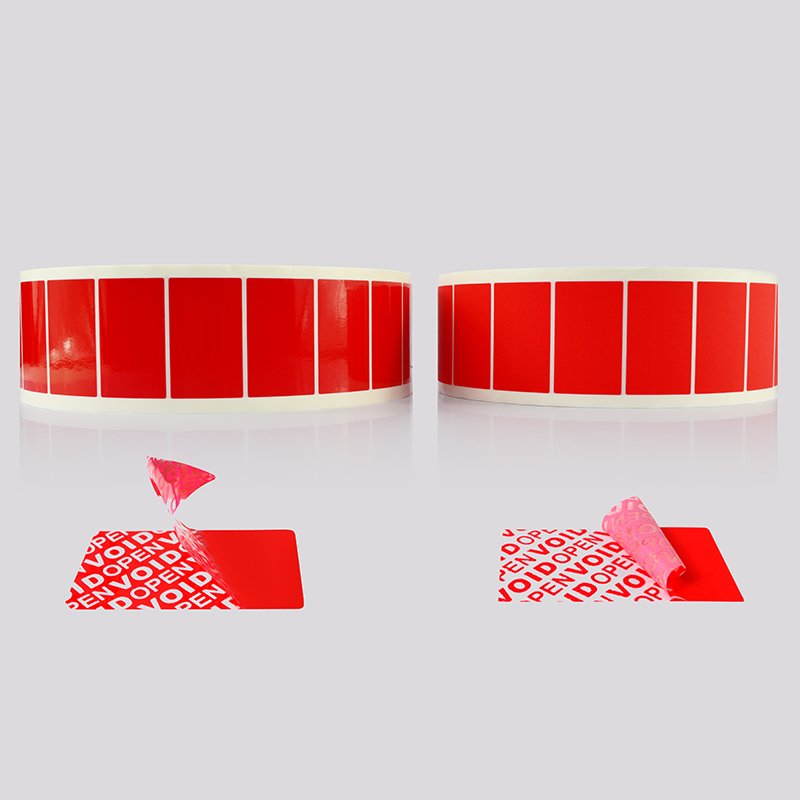
In contrast, security labels require a secondary converting process. Production begins with a large master roll, which must then go through die-cutting, matrix stripping (waste removal), and slitting to create individual labels. While the master roll can also reach lengths of up to 1200 meters, finished label rolls are typically converted into 200–1000 meter lengths to ensure compatibility with automatic labeling machines. Compared to a security tape solution, this process involves more steps, tighter tolerances, and a slightly longer production cycle.
It is important to note that both products share the same fundamental principle regarding roll length: achieving long continuous lengths depends on the use of a release liner. Without it, adhesive layers will bond to the substrate, making long रोल production impossible. This applies equally to both security tape solution designs and label-based formats.
Overall, if your priority is production efficiency and large-area application, a security tape solution offers clear advantages. If you require precise application, branding flexibility, and compatibility with labeling systems, security labels—despite their more complex processing—may be the better choice.
Different Application Scenarios and Pain Point Solutions
In real-world applications, security labels vs security tape serve very different scenarios and address distinct pain points. Choosing the right security label solution depends on whether the priority is large-scale protection or precise, product-level security.
Security tape is better suited for full-package protection in logistics and bulk transportation. It is widely used for carton sealing, high-volume shipments, and security bags—such as cross-border logistics cartons, premium food bulk packaging, and tamper evident courier bags. A well-designed security tape solution helps prevent unauthorized opening, cutting, and product diversion during transit. Its continuous application also makes it highly compatible with automated sealing systems, improving operational efficiency while ensuring consistent tamper evidence across large surfaces.
In contrast, security labels are ideal for high-value individual products, precision items, and brand-focused applications. For example, premium whisky brands like The Dalmore often use tamper evident seals on bottle necks, while luxury watch brands such as Patek Philippe apply labels on watch boxes for warranty and authenticity control. Similarly, high-end chocolate brands like Läderach use point-specific labels on gift boxes to ensure product integrity without compromising packaging aesthetics.
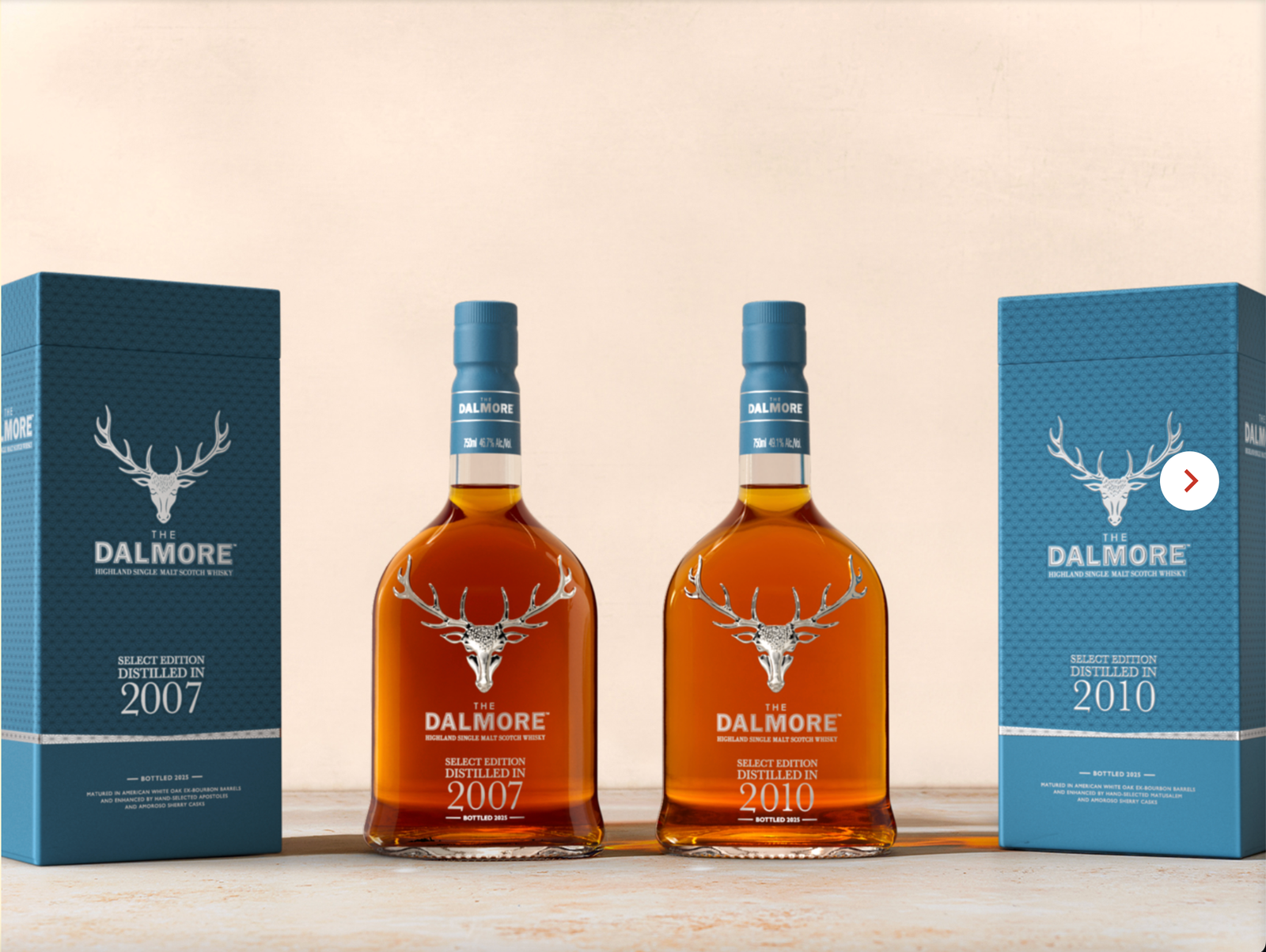
These applications highlight how a tailored security label solution can address key challenges such as anti-counterfeiting, warranty protection, and brand traceability. Unlike tape, labels provide discreet, localized protection—making them especially suitable for premium products where visual presentation is critical. By combining functionality with design flexibility, a customized security label solution allows brands to maintain both security performance and high-end appearance.
For a more comprehensive understanding, you can also explore our full guides on security label and tape systems, where we break down advanced security label solution strategies for different industries and packaging requirements.
Core Similarities Between Security Labels and Security Tape
Although there are many differences between security labels vs security tape, they share the same underlying logic and core functions as essential tamper-evident protection solutions.
First, the core anti-tampering principle is identical. Both products are based on tamper evident and tamper proof technologies. Once removed, opened, or damaged, they leave permanent and irreversible evidence—such as VOID messages, material destruction, or residue transfer—effectively preventing reuse and eliminating the risk of resealing without detection. This shared mechanism is fundamental in any reliable security label solution.
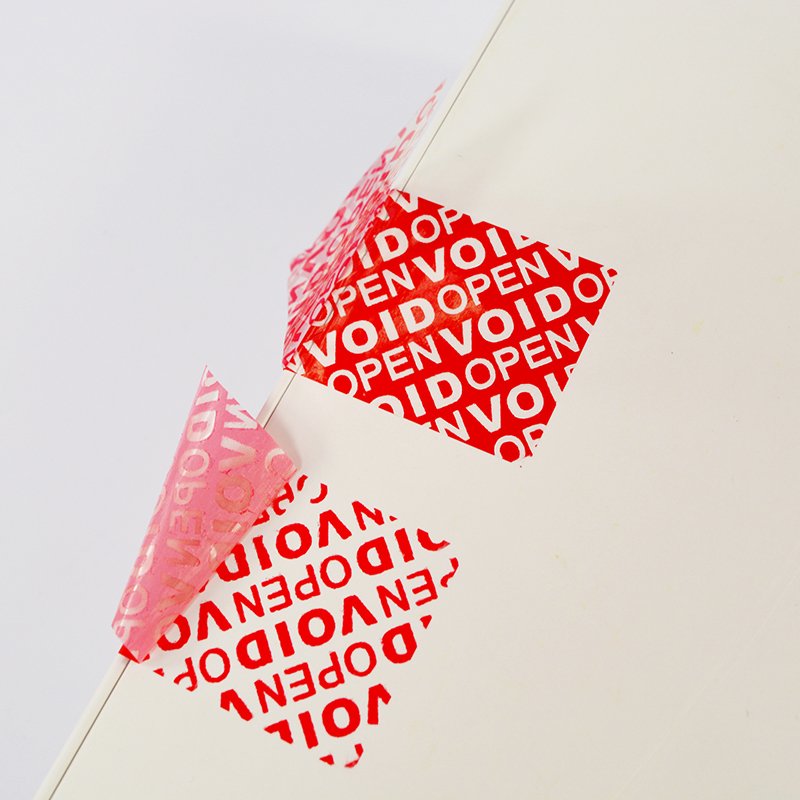
Second, the production length limitation follows the same principle. With a release liner, both security labels and security tape can be produced in long rolls (e.g., up to 1200 meters). Without a liner, both are typically limited to shorter rolls (around 100 meters) due to adhesive surface contact. The silicone-coated release liner plays a critical role in isolating the adhesive layer, preventing sticking and deformation during winding and storage. This technical similarity is often overlooked when comparing security labels vs security tape, but it directly impacts manufacturing feasibility.
Third, the core purpose is the same. Both solutions are designed to address key risks such as counterfeiting, unauthorized opening, product substitution, and gray-market diversion. Whether applied as a full-coverage security tape solution or a point-specific label, they serve to protect product authenticity, maintain supply chain integrity, and reinforce brand trust.
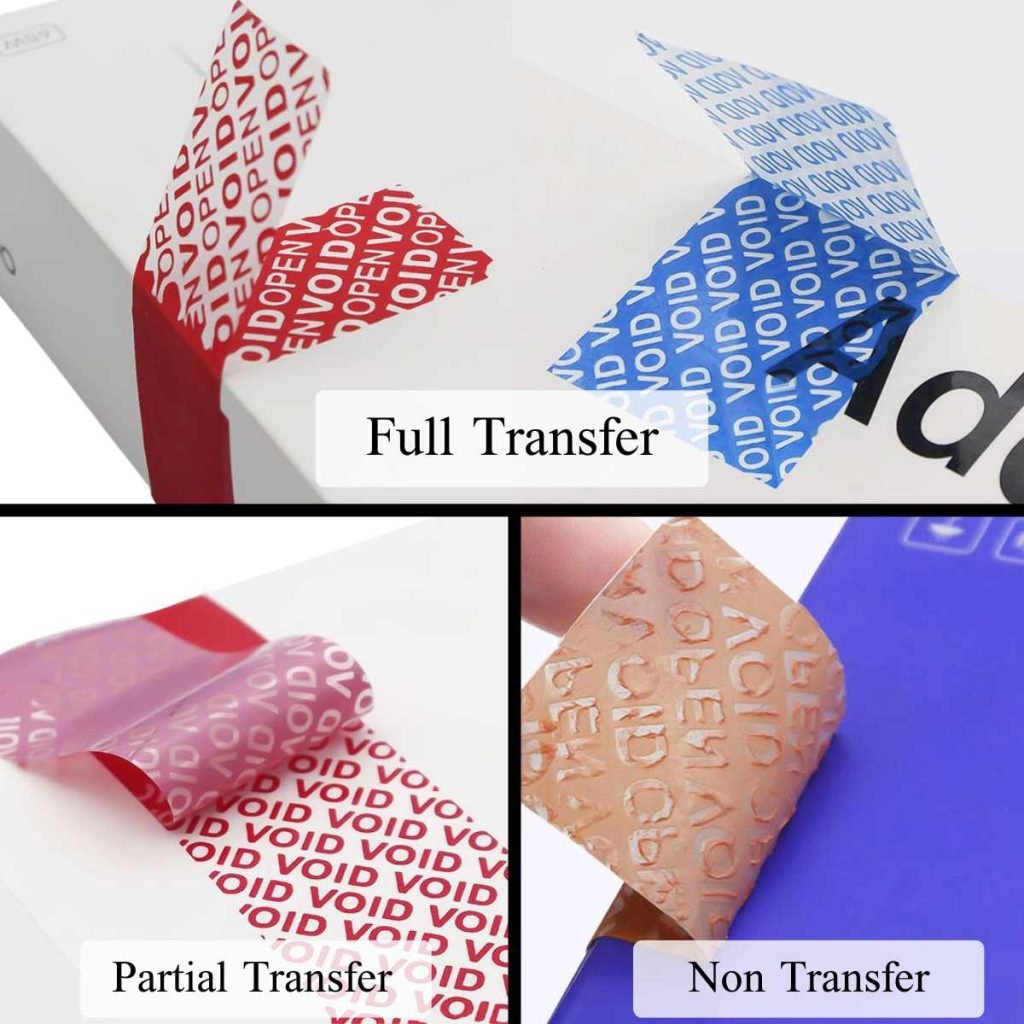
Finally, the customization capabilities are highly aligned. Both security labels and security tape can be tailored in terms of size, material (PET, PE, BOPP, etc.), tamper effects (full transfer, partial transfer, VOID patterns), and printing technologies (serial numbers, QR codes, holograms). This flexibility allows businesses to build a comprehensive security label solution that fits the unique requirements of different industries—from logistics and pharmaceuticals to luxury goods and electronics.
In summary, while security labels vs security tape differ in structure and application, they are built on the same technical foundation and share a common goal: delivering reliable, visible, and irreversible tamper evidence to protect high-value products throughout the supply chain.
Combining Case Security Labels and Security Tape
In practice, many premium brands choose to use both security labels and security tape together to build a complete, end-to-end protection system. This combined approach leverages the strengths of each product—point-specific control and full-area sealing—to form a comprehensive security label solution.
For example, Scotch whisky brands like The Dalmore apply tamper evident security labels on the bottle neck to ensure single-item authenticity and prevent unauthorized opening. At the same time, security tape is used to seal outer cartons, protecting against tampering, cutting, and product diversion during logistics and distribution. This dual-layer security label solution effectively safeguards both individual products and bulk shipments.
Similarly, premium Swiss chocolate brand Läderach uses security labels on individual gift boxes to maintain product integrity and high-end presentation, while applying security tape to shipping cartons for secure bulk transportation. This combination ensures both visual appeal at the consumer level and reliable protection throughout the supply chain—demonstrating the flexibility of a well-designed security label solution.
In the luxury watch sector, brands such as Patek Philippe utilize security labels on watch boxes and accessories for warranty control and anti-tampering purposes. Meanwhile, security tape is used on outer logistics packaging to prevent unauthorized access during transit. By integrating both methods, brands can implement a layered security label solution that protects high-value goods at every stage.
Overall, combining security labels and security tape enables businesses to achieve both precise, point-level tamper evidence and full-area sealing protection. This integrated security label solution covers the entire lifecycle—from production and packaging to transportation and retail—effectively addressing risks such as counterfeiting, product substitution, and unauthorized opening while maintaining brand value and customer trust.
Contact Us
If you are still unsure whether to choose security labels or security tape, or if you have specific requirements for customized sizes, materials, or tamper-evident features, feel free to contact us for professional guidance. We specialize in creating tailored security label solution strategies based on your product application, helping you achieve the best balance between protection, efficiency, and visual presentation.
With years of experience in high-end tamper-evident packaging, we provide one-stop design and manufacturing services for both Security Labels and Security Tape. Our solutions are widely used in industries such as premium spirits, luxury goods, and high-end food packaging. From precise product selection to avoiding common application mistakes, our team helps you build a complete security label solution that protects brand authenticity, prevents tampering, and safeguards consumer trust.
You can contact us via:
Email: info@ecosecuritytape.com
WhatsApp: +1 615 480 2757
Reach out to request free samples, discuss your project requirements, or receive expert recommendations. You can also download our product catalog to explore our full range of tamper-evident packaging solutions and find the right security label solution for your business.

Focus on tamper evident packaging, free sample for test, small-batch MOQ, let’s have a talk.