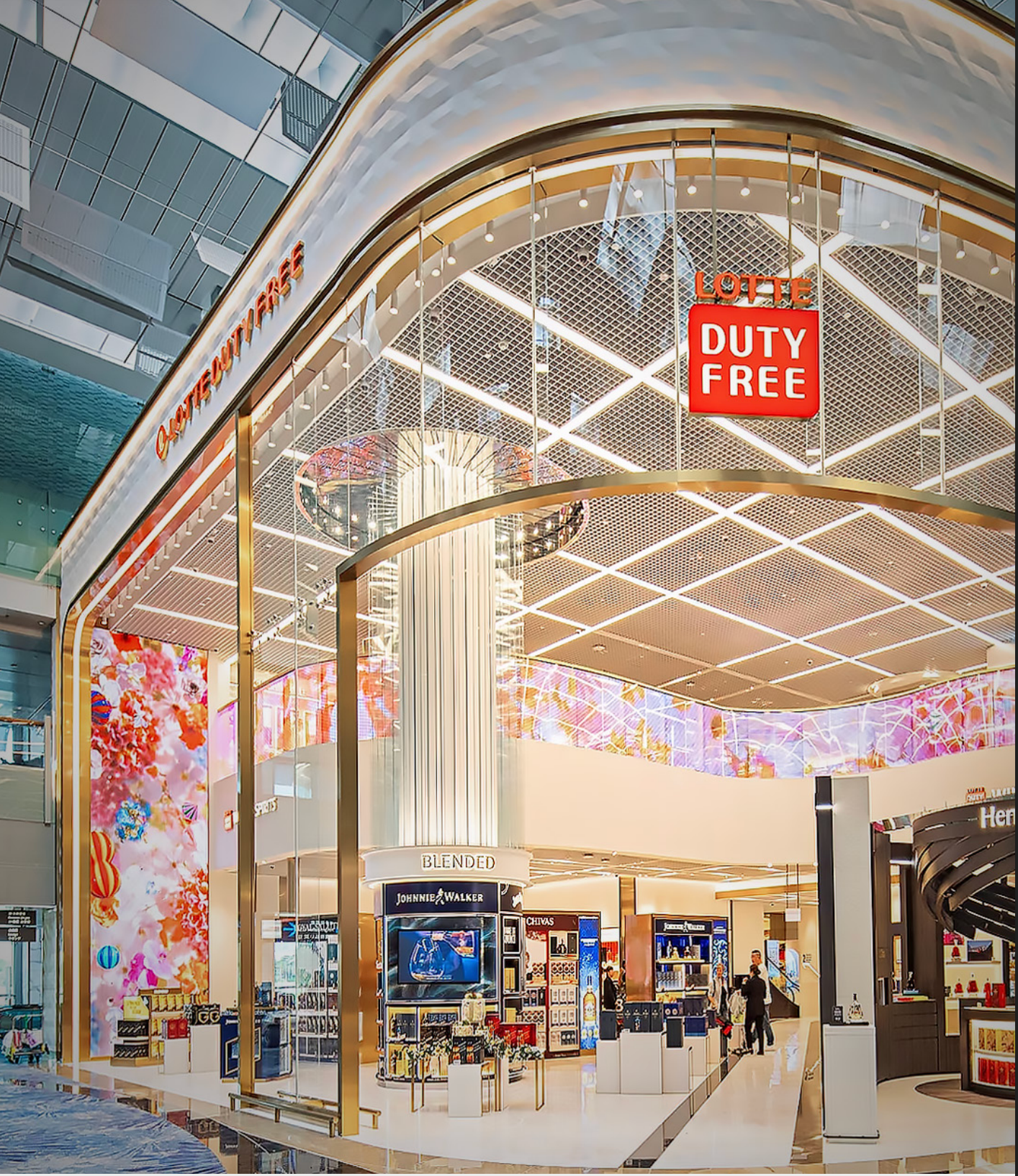
Korean Duty Free Packaging Analysis
Within the global travel retail ecosystem, Korea’s duty free industry holds a strategically important position.
Supported by world-class airport infrastructure, highly centralized duty free operators, and strict regulatory oversight, Korea has developed a mature operational framework where korean duty free packaging plays a critical role beyond basic retail presentation.
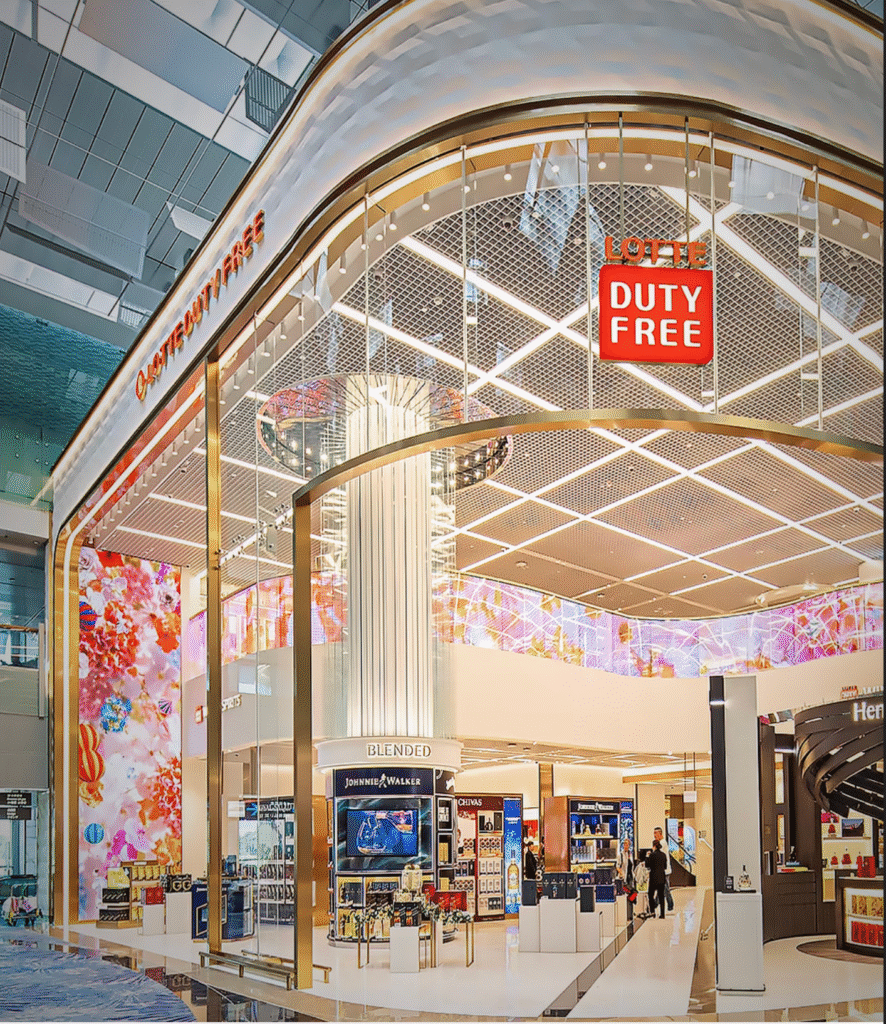
From an airport security perspective, packaging is a prerequisite for smooth transit.
At major international hubs such as Incheon International Airport, duty free packaging must comply with liquid restrictions (LAGs), tamper-evident requirements, and traceability standards. Non-compliant packaging can lead to confiscation during transfer screening, even when products are purchased through authorized duty free channels—directly impacting passenger satisfaction and retailer credibility.
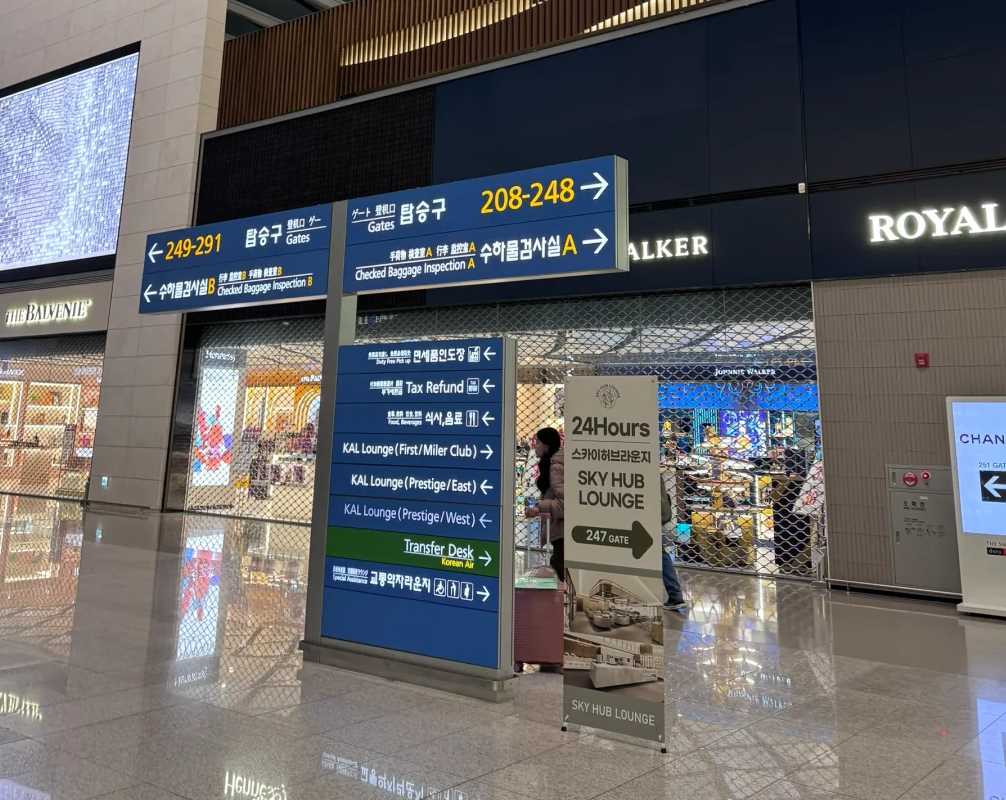
At the group-operation level, korean duty free packaging is part of standardized governance.
An analysis of recent financial disclosures and sustainability reports from Lotte Duty Free, Shilla Duty Free, and Hyundai Duty Free shows a shared strategic focus on airport duty free as the most sustainable and profitable channel. This focus necessitates packaging systems that are standardized, scalable, and compliant across multiple airports rather than localized or ad hoc solutions.
From an industry trend perspective, duty free packaging is evolving toward a “compliance + risk control + sustainability” model.
Beyond meeting ICAO and IATA security requirements, Korean duty free operators are increasingly integrating recyclable materials, resource efficiency, and low-carbon logistics into packaging decisions. As a result, future korean duty free packaging will function not only as a compliance tool, but also as a visible component of ESG-driven travel retail strategies.
Against this backdrop, this article draws on publicly available financial and sustainability data from Korea’s leading duty free groups to examine the compliance framework, operational practices, and innovation direction of Korean duty free packaging—offering practical insights for airport retailers and packaging solution providers alike.
Lotte Duty Free Market
As one of the largest and most internationally established duty free operators in Korea, Lotte Duty Free plays a central role in the global travel retail ecosystem.
An analysis of publicly disclosed financial and sustainability reports shows that its strategy is built around airport-focused operations, global scalability, and strict compliance management. Within this framework, the duty free bag functions as a core component of korean duty free packaging, directly supporting security, transit compliance, and passenger confidence.
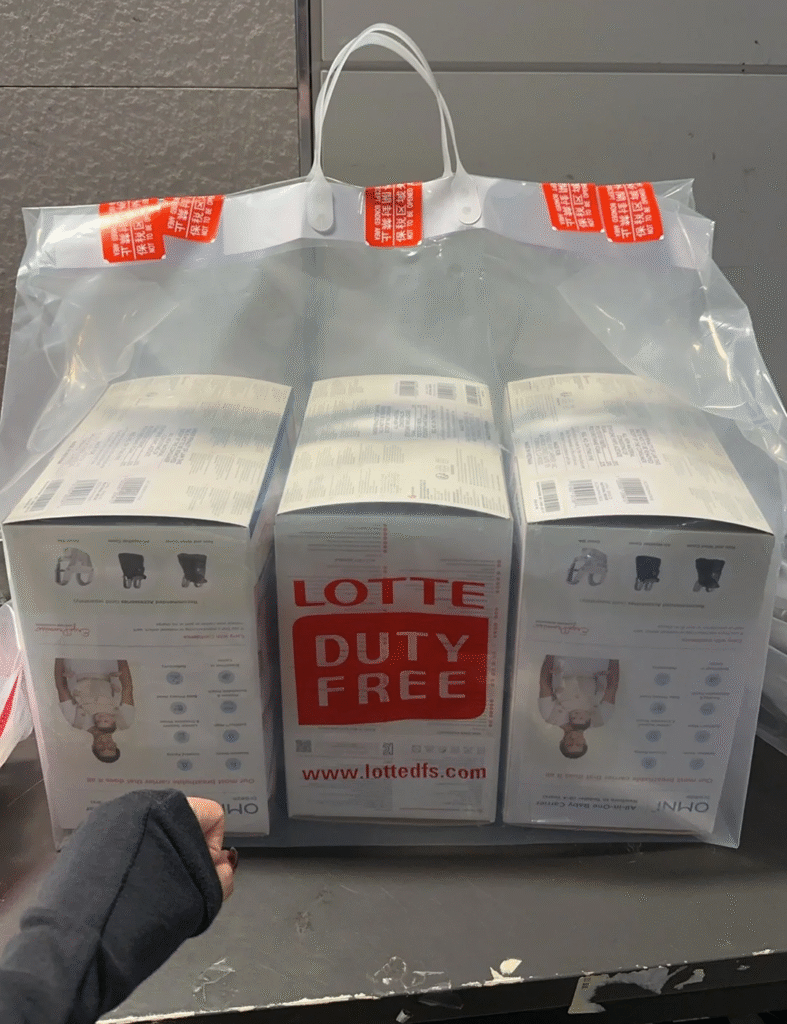
From a market structure perspective, airport duty free remains the most critical and resilient business segment for Lotte Duty Free.
Major hubs such as Incheon International Airport and Gimpo Airport have once again become key revenue drivers. In these environments, the duty free bag is no longer a simple shopping carrier, but a STEB-compliant packaging tool designed to meet aviation security and transit screening requirements. As a result, korean duty free packaging relies heavily on standardized duty free bags to ensure smooth passenger transfers.
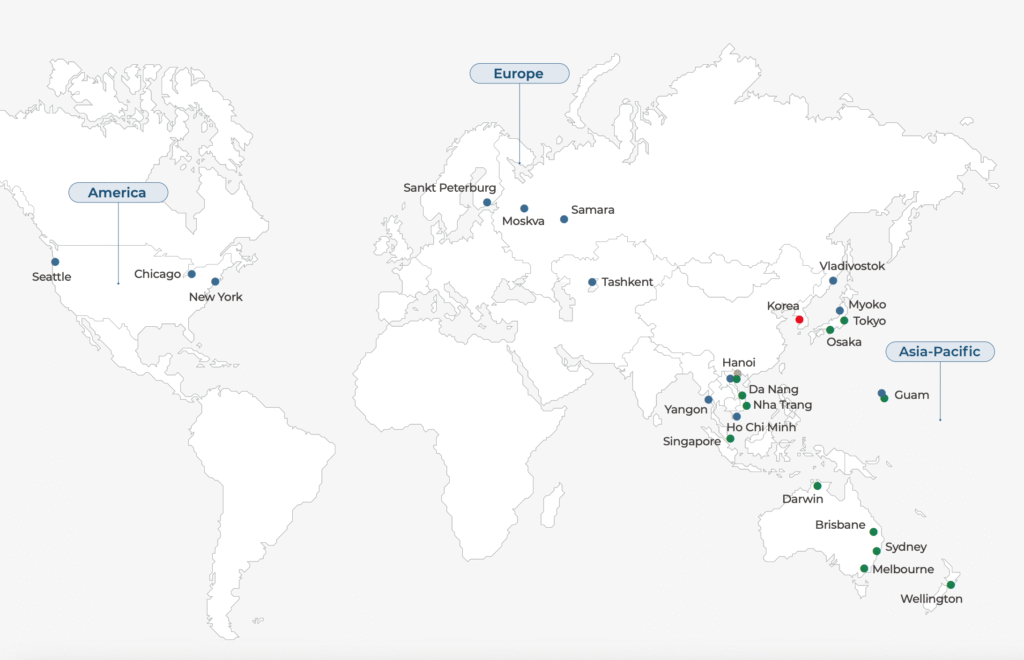
From a global expansion standpoint, the Lotte Duty Free market extends far beyond Korea.
With airport operations across Singapore, Australia, Japan, and Southeast Asia, Lotte Duty Free operates under multiple aviation security regimes. This international footprint requires highly standardized duty free bag designs, allowing korean duty free packaging systems to remain consistent and compliant across different airports and jurisdictions.
In terms of product mix, Lotte Duty Free focuses heavily on high-value and compliance-sensitive categories.
Spirits, cosmetics, luxury goods, and premium accessories dominate sales. These products face elevated transit risks, making tamper-evident duty free bags with traceability and receipt visibility essential elements of korean duty free packaging in real-world operations.
From a sustainability perspective, duty free bags are increasingly integrated into Lotte Duty Free’s ESG strategy.
Logistics optimization and material improvements outlined in sustainability disclosures indicate that future korean duty free packaging will evolve toward recyclable materials and lower-carbon designs, while maintaining strict security and compliance performance—an approach closely aligned with EcoSecurityTape’s expertise in tamper-evident duty free bag solutions.
Overall, the Lotte Duty Free market represents a compliance-driven, airport-centric operating model in which the duty free bag serves as a critical functional asset.
Within this model, korean duty free packaging provides the standardized framework that enables duty free bags to perform their role across global airport environments.
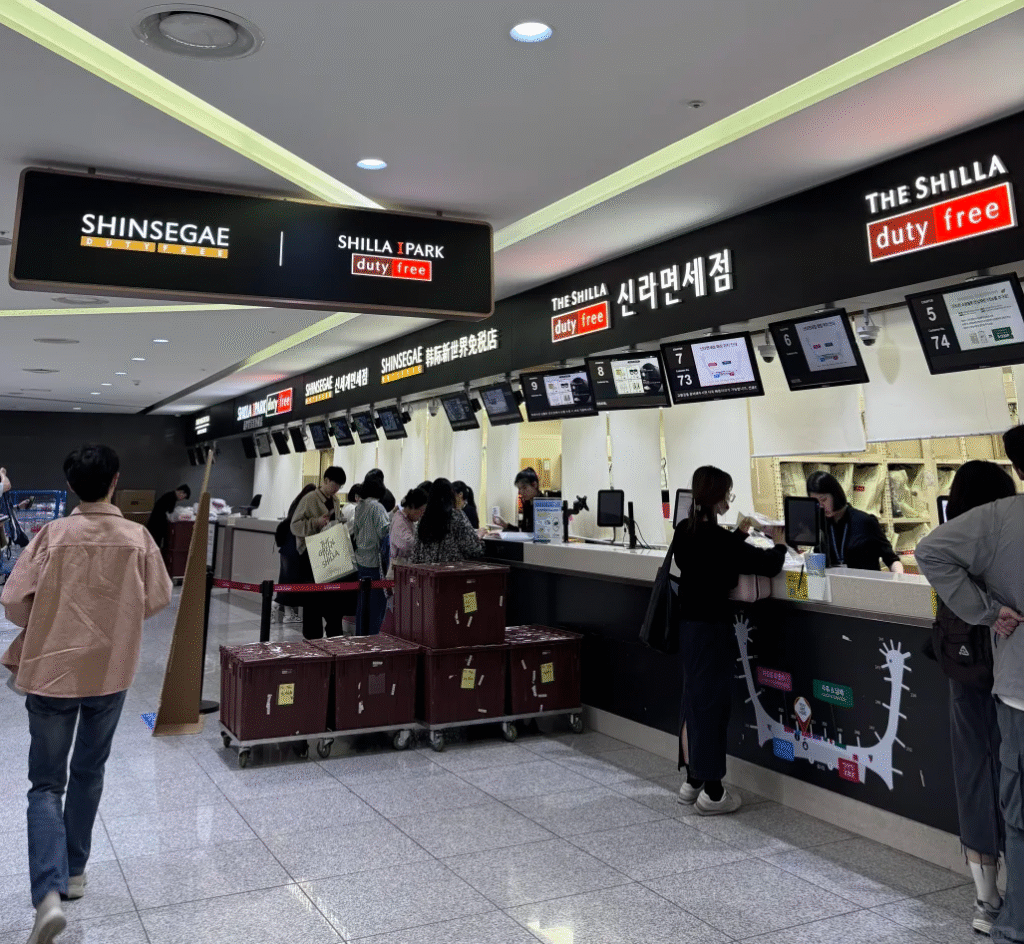
Shilla Duty Free Market
As one of Korea’s three major duty free operators, Shilla Duty Free plays a significant role in the airport duty free and Asia-Pacific travel retail market, as reflected in its recent financial disclosures and sustainability reports.
At the group level, Shilla Duty Free operates under Hotel Shilla’s integrated compliance, information security, and risk management framework. This governance structure directly shapes the standardized approach to korean duty free packaging, positioning the shilla duty free bag as a regulated compliance asset rather than a standalone retail accessory.
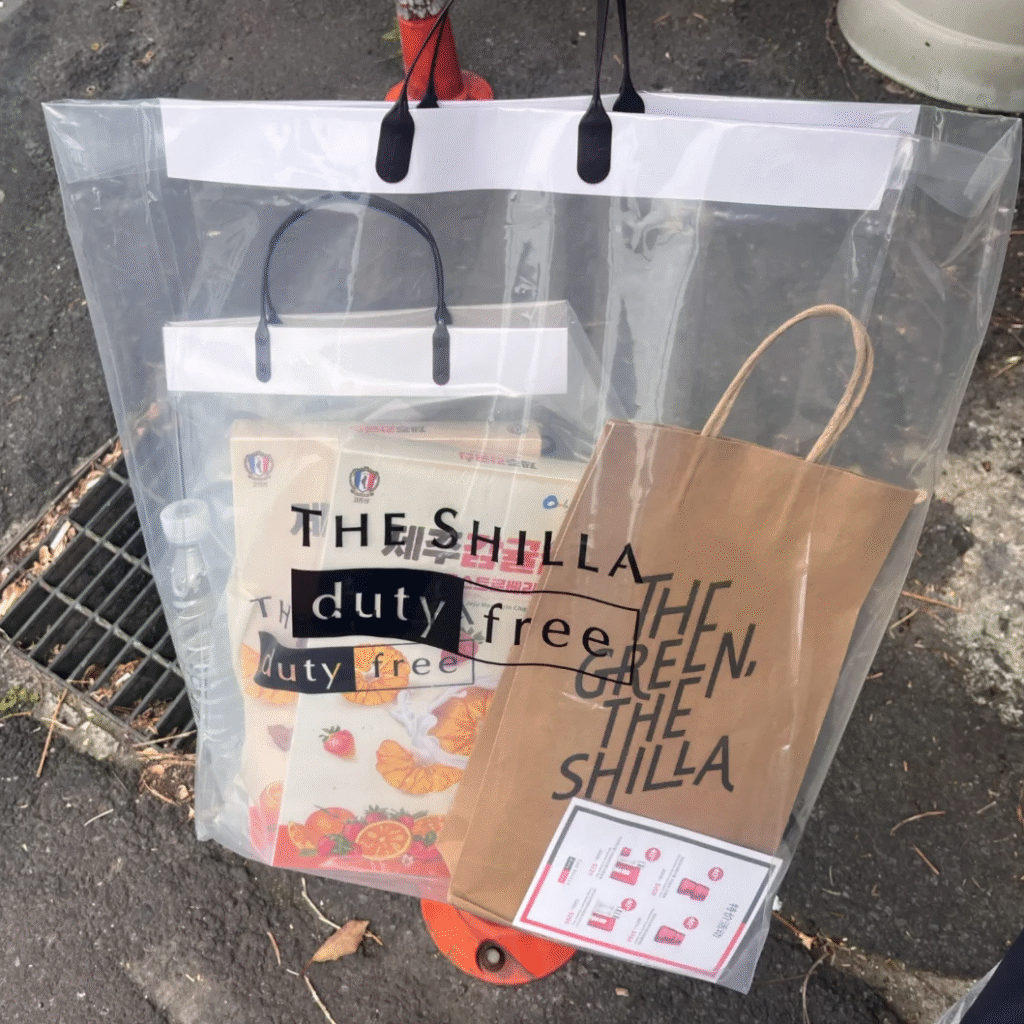
From a market structure perspective, airport duty free forms the core of Shilla Duty Free’s business strategy.
Financial disclosures indicate that key revenue is generated from major aviation hubs such as Incheon International Airport, with further expansion into high-traffic transfer points including Singapore Changi, Hong Kong, and Macau. In these environments, the shilla duty free bag functions as an essential component of korean duty free packaging, designed to comply with aviation security and transit screening requirements.
In terms of product mix and risk control, Shilla Duty Free is strongly positioned in premium cosmetics, fragrances, and luxury goods.
These high-value items are particularly sensitive to liquid restrictions, tampering risks, and product substitution during transit. The “premium service” and “risk management” capabilities emphasized in Shilla Duty Free’s reports rely heavily on standardized shilla duty free bag solutions—featuring tamper-evident seals, receipt visibility, and clear compliance markings. This operational logic closely mirrors that of the lotte duty free bag, highlighting shared best practices within korean duty free packaging systems.
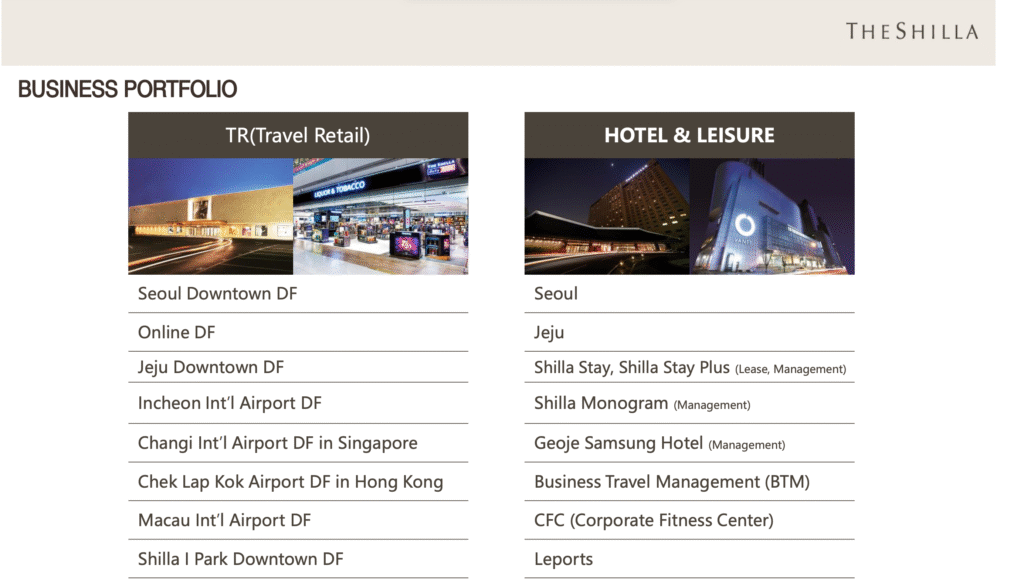
From an international operations perspective, Shilla Duty Free’s overseas footprint reinforces the need for consistent packaging standards.
Operating across both domestic and international airports requires a unified korean duty free packaging framework capable of meeting diverse aviation security and customs regulations. As a result, shilla duty free bag design prioritizes traceability, auditability, and scalability over frequent visual changes, aligning with the standardized approach seen across leading Korean duty free operators.
From a sustainability and long-term development standpoint, Shilla Duty Free is increasingly integrating packaging into its ESG strategy.
Sustainability disclosures highlight ongoing efforts to improve logistics efficiency, material selection, and environmental performance. Future shilla duty free bags are therefore expected to combine ICAO- and IATA-compliant security features with recyclable materials and sustainable design principles—an approach well aligned with EcoSecurityTape’s expertise in tamper-evident and compliant duty free packaging solutions.
Overall, the Shilla Duty Free market represents a mature, airport-centric operating model built on standardized compliance infrastructure.
Within this framework, the shilla duty free bag, alongside the lotte duty free bag, serves as a critical functional element of korean duty free packaging, supporting secure product movement, regulatory compliance, and consistent passenger experience across global airport environments.
Hyundai Duty Free Market
As a relatively late entrant into Korea’s airport duty free sector, Hyundai Duty Free has been actively reshaping its market position through strategic restructuring and operational focus.
Based on recent financial disclosures from Hyundai Department Store Group, Hyundai Duty Free is transitioning away from loss-making downtown duty free operations and placing increasing emphasis on airport duty free channels. This strategic shift elevates the importance of korean duty free packaging and establishes a clear functional role for the hyundai duty free bag within its operational framework.
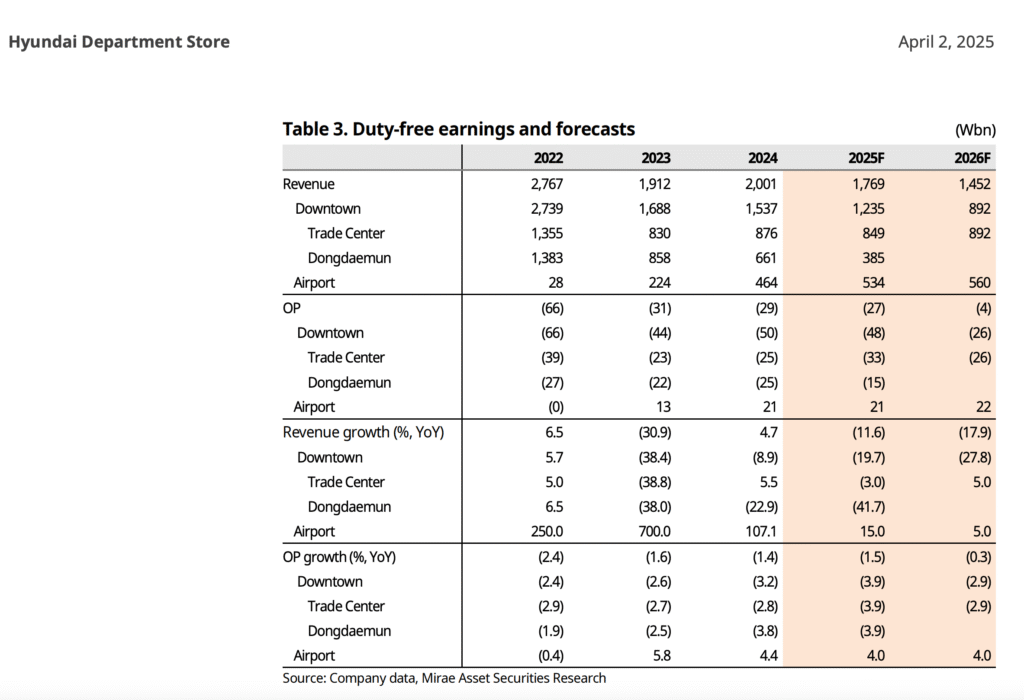
From a market structure perspective, Hyundai Duty Free is consolidating resources around airport duty free operations.
Financial reports indicate that downtown duty free stores have generated persistent losses, while airport duty free remains the only segment with sustainable operating performance. As a result, the hyundai duty free bag is no longer treated as a marketing-driven shopping carrier, but as a compliance-oriented component within the broader korean duty free packaging system, designed to meet airport security and transit requirements.
In terms of product mix and risk exposure, Hyundai Duty Free is focusing on high-margin and compliance-sensitive categories.
Cosmetics, fragrances, luxury goods, and premium fashion items dominate its duty free assortment. These products face heightened risks during cross-border transit, increasing reliance on hyundai duty free bag solutions with tamper-evident seals, secure closure, and clear compliance visibility—key characteristics of standardized korean duty free packaging.
From an operational efficiency standpoint, functionality outweighs decoration in Hyundai Duty Free’s packaging strategy.
Management disclosures emphasize cost control and efficiency improvements as pathways toward breakeven performance. Consequently, Hyundai Duty Free favors standardized, scalable, and compliance-stable hyundai duty free bag solutions, closely aligning with established korean duty free packaging practices adopted by larger industry leaders.
From an industry benchmarking perspective, Hyundai Duty Free is rapidly aligning with airport duty free standards set by Lotte and Shilla.
Rather than developing a separate packaging framework, Hyundai Duty Free adopts similar security, compliance, and sustainability principles. Accordingly, the hyundai duty free bag, together with the lotte duty free bag and shilla duty free bag, represents different implementations within the same korean duty free packaging ecosystem.
Overall, the Hyundai Duty Free market reflects a pragmatic, airport-centric operating model focused on compliance and efficiency.
Within this model, the hyundai duty free bag serves as a critical infrastructure element, while korean duty free packaging provides the standardized, scalable framework that enables secure and compliant duty free operations across Korea’s airport network and beyond.
Korean Duty Free Packaging Common Features
In the Korean duty-free industry, leading operators such as Lotte Duty Free, Shilla Duty Free, and Hyundai Duty Free may differ in scale and market focus, but they share a highly consistent approach to korean duty free packaging. This consistency reflects long-term experience in serving international travelers and complying with global aviation security standards.
Compliance First
In Korea’s duty-free system, packaging is designed primarily for aviation compliance rather than marketing.
Major duty-free retailers commonly adopt STEB-compliant duty free bags to meet ICAO and IATA requirements, ensuring liquid products can pass through multiple security checks during international transfers.
As a result, korean duty free packaging functions as part of the global aviation security infrastructure, not merely retail packaging.
Standardization Operations
High standardization is a defining feature of korean duty free packaging.
Bag structure, size, and sealing methods remain consistent across different stores, airports, and countries, enabling efficient, low-risk global operations and easy recognition by security personnel.
Tamper Evidence Requirement
For Korean duty-free retailers, tamper evidence is non-negotiable.
A duty free bag must clearly show irreversible signs once opened, preventing resealing, substitution, or contamination during transit. This principle underpins the widespread adoption of tamper-evident packaging solutions.
Visibility in Security Checks
Information visibility is a key design priority in korean duty free packaging.
Receipts and product details are easily visible without opening the bag, allowing security officers to verify compliance quickly and reducing delays during airport transfers.
Support Compliance
Although brand recognition is important, Korean duty-free retailers deliberately limit visual complexity on duty free bags. Logos and colors are applied carefully to ensure they do not interfere with transparency or security inspection.
Sustainability Without Compromising Compliance
While sustainability initiatives are increasingly incorporated into korean duty free packaging, such as recyclable materials and reduced plastic usage, compliance and security performance always take precedence over environmental considerations.
Industry Insight
Overall, the shared characteristics of packaging used by Korea’s leading duty-free groups highlight a mature market that prioritizes aviation security, regulatory compliance, and operational efficiency. In this context, korean duty free packaging has evolved into essential infrastructure supporting global duty-free operations, setting a benchmark for the international travel retail industry.
Korean Duty Free Packaging Differences
While Lotte Duty Free, Shilla Duty Free, and Hyundai Duty Free follow the same regulatory framework, their approaches to korean duty free packaging differ significantly due to variations in business structure and strategic focus.
Lotte Duty Free Packaging
Lotte Duty Free prioritizes global consistency in its packaging strategy.
Its duty free bags are designed to function as standardized infrastructure across multiple countries and airports, ensuring seamless compliance and operational stability worldwide.
Shilla Duty Free Packaging
Shilla Duty Free places stronger emphasis on protecting premium goods.
Within its korean duty free packaging system, duty free bags serve not only as compliance tools but also as visible proof of product integrity for luxury and cosmetic brands.
Hyundai Duty Free Packaging
Hyundai Duty Free’s packaging strategy is closely aligned with airport operations.
Duty free bags are optimized for fast handling, quick inspection, and cost efficiency, supporting high-throughput airport retail environments.
Differences in Procurement and Management
- Lotte: centralized, long-term supply-focused procurement
- Shilla: performance-driven selection with attention to detail
- Hyundai: efficiency- and cost-oriented sourcing for airport use
Different Paths in Packaging Evolution
Although sustainability is a shared objective, each group adopts it at a different pace and priority. However, compliance and tamper evidence remain non-negotiable across all korean duty free packaging solutions.
Industry Insight
Ultimately, the differences in packaging among Korea’s leading duty-free retailers reflect strategic choices rather than regulatory divergence. Within a unified compliance framework, korean duty free packaging supports global expansion, premium brand protection, and airport efficiency in distinct yet complementary ways.
Korean Duty Free Packaging Insights and Innovation
Based on the financial reports and sustainability disclosures of Korea’s three major duty-free groups—Lotte Duty Free, Shilla Duty Free, and Hyundai Duty Free—a clear industry message emerges: the competitive core of duty-free retail is shifting decisively toward airport and transfer-driven scenarios. In this context, korean duty free packaging, especially the duty free bag, is no longer a secondary retail accessory but a form of operational infrastructure that directly affects compliance, efficiency, and risk control.
Airport-Centric Operations
Airport duty-free retail has become the most stable and compliance-sensitive growth channel.
Financial data from Hyundai Duty Free, in particular, shows a structural pivot toward airport operations, where real passenger flow and conversion are concentrated. This trend reinforces a fundamental requirement for korean duty free packaging: packaging must ensure that duty-free goods can pass secondary screening and international transfers without being opened, delayed, or confiscated.
In practice, the duty free bag is increasingly designed as an “aviation compliance interface,” not a visual merchandising tool.
Group-Level Governance
Lotte and Shilla’s group reports consistently position duty-free operations within broader compliance, internal control, and information security frameworks.
This governance structure has direct implications for korean duty free packaging:
- Packaging specifications are centrally managed and highly standardized
- Materials and structures must be auditable and traceable
- Duty free bags must deliver consistent performance across regions and airports
As a result, packaging evolution in Korea tends to be cautious in appearance but extremely stable in compliance architecture.
High-Value Product Protection
Shilla Duty Free’s revenue concentration in premium cosmetics, fragrances, and luxury goods highlights another key insight.
For high-value items, risks related to tampering, substitution, or opening disputes are significantly magnified. Consequently, korean duty free packaging is expected to provide:
- Strong, irreversible tamper evidence
- Clear visual confirmation of unopened status
- Reduced ambiguity for both security officers and passengers
In this role, the duty free bag functions not only as a compliance tool but also as visible proof of product integrity.
Innovation Direction 1: From “Compliant Bags” to Evidence-Based Compliance
The next stage of korean duty free packaging innovation is not visual complexity, but evidentiary clarity.
Future duty free bags will increasingly emphasize:
- Seal evidence: clearer, irreversible tamper-indicating structures
- Receipt visibility: high-transparency, standardized receipt pockets
- Information consistency: alignment between bag, receipt, and purchase context
The objective is simple: enable security personnel to make a compliance judgment within seconds, without opening the bag.
Innovation Direction 2: Digital Traceability as the Next Interface
Lotte Duty Free’s global footprint points toward digital traceability as a logical evolution.
Emerging korean duty free packaging solutions may integrate:
- Serialized QR codes or unique bag identifiers
- Linkage between packaging, purchase time, store location, and airport
- Advanced options such as QR-based anti-counterfeit layers or RFID in high-risk scenarios
This transition would transform the duty free bag from a passive container into an active traceability interface.
Innovation Direction 3: Sustainable Materials Without Compromising Compliance
All three groups emphasize ESG goals, yet duty free bags remain a high-compliance product category.
The industry consensus is clear: sustainability cannot come at the expense of security or performance. Practical innovation paths for korean duty free packaging include:
- Gradual increases in PCR content while maintaining transparency and strength
- Mono-material designs to improve recyclability
- Lightweight engineering without reducing tear resistance, sealing reliability, or low-temperature performance
In this context, sustainability is an engineering optimization challenge rather than a radical material replacement.
Innovation Direction 4: Operational Efficiency for High-Throughput Airports
Hyundai Duty Free’s airport-focused strategy underscores the importance of operational efficiency.
For korean duty free packaging, this translates into:
- Faster sealing and simpler packing procedures
- Lower error rates through standardized structures
- Improved handling performance, such as reinforced handles and leak resistance
These features may appear understated, but they directly affect queue times, staff productivity, and customer satisfaction in airport environments.
Innovation Direction 5: From Packaging Supply to Integrated Solutions
As duty-free groups globalize and professionalize, their expectations of packaging suppliers evolve.
Rather than sourcing bags alone, they increasingly seek integrated korean duty free packaging solutions that include:
- STEB-compliant structural design and tamper-evident technology
- Multi-size configurations with flexible MOQs
- A clear sustainability upgrade roadmap
- Customizable serialization or QR coding for future traceability
This shift elevates the role of the supplier from material provider to compliance and risk-management partner.
Industry Conclusion
Insights drawn from the financial and sustainability reports of Korea’s leading duty-free groups reveal a consistent direction:
the future of korean duty free packaging lies at the intersection of aviation compliance, operational efficiency, evidentiary clarity, and sustainable engineering. In this environment, the duty free bag has evolved into a critical infrastructure component supporting the global duty-free ecosystem.
EcoSecurityTape: Support Korean Duty Free Packaging
As regulatory standards in Korea’s duty-free industry continue to tighten, korean duty free packaging has evolved into a critical component of aviation compliance, brand risk management, and ESG implementation. Through duty free bags, tamper-evident tapes, and security sealing solutions, EcoSecurityTape provides reliable and scalable packaging systems tailored for airport duty-free environments.
Compliance Readiness: A Stable Foundation for Korean Duty Free Packaging
EcoSecurityTape designs its products with compliance as the starting point.
Materials and structures are developed to align with Korean food safety regulations and resource circulation policies, while meeting the safety expectations of the duty-free sector:
- Non-toxic materials suitable for food, cosmetics, and alcohol packaging
- Biodegradable or recyclable options aligned with plastic reduction initiatives
- Structural compatibility with duty free bags and security sealing applications
This enables EcoSecurityTape solutions to integrate seamlessly into standardized korean duty free packaging systems.
Security Protection: End-to-End Safety from Duty Free Bags to Seals
In airport logistics and international transfer scenarios, security performance is non-negotiable.
EcoSecurityTape products offer:
- High bonding strength and impact resistance to protect goods during handling
- Tamper-evident, irreversible sealing that provides clear visual evidence
- Designs aligned with customs and aviation security inspection practices
Within this framework, korean duty free packaging serves as verifiable proof of compliance, not merely a transport container.
Sustainability in Practice: ESG-Aligned Korean Duty Free Packaging
Major Korean duty-free groups consistently emphasize sustainability in their ESG disclosures.
EcoSecurityTape’s sustainability initiatives closely match these objectives:
- Use of recycled materials with recyclability rates of up to 95%
- Progressive reduction of virgin plastic without compromising security
- Support for plastic reduction and carbon management goals
This positions EcoSecurityTape as a practical solution for korean duty free packaging that balances compliance and environmental responsibility.
Multi-Scenario Adaptability: Customization for Airport Duty-Free Operations
Airport duty-free operations vary by location and regulatory context.
EcoSecurityTape supports flexible customization to address these differences:
- Multi-language compliance markings on duty free bags and security tapes
- QR codes, batch numbers, and traceability identifiers
- Adaptation to different airport security and passenger profiles
This flexibility allows EcoSecurityTape to maintain korean duty free packaging standardization while supporting multi-airport operations.
Industry Perspective: The Future of Korean Duty Free Packaging
The evolution of Korean airport duty-free packaging reflects a deep integration of regulatory compliance and sustainability principles.
Practices adopted by Lotte, Shilla, and Hyundai demonstrate that effective packaging management reduces compliance risk, controls operational cost, and increasingly supports brand differentiation.
As environmental regulations tighten and consumer awareness grows, korean duty free packaging will continue to advance toward safer, more sustainable, and more traceable solutions—offering valuable reference models for the global travel retail industry.
📩 Contact EcoSecurityTape
Email: info@ecosecuritytape.com
WhatsApp: +1 615 480 2757
👉 Contact us to receive free samples of duty free bags and tamper-evident packaging solutions.

Focus on tamper evident packaging, free sample for test, small-batch MOQ, let’s have a talk.