Counterfeiting is no longer limited to luxury goods. Today, cosmetics, electronics, food products, pharmaceuticals, certificates, and industrial components all face the risk of fake products, package tampering, unauthorized resale, and supply chain fraud.
A holographic security label is designed to solve this problem by combining visual authentication, digital verification, and physical tamper evidence. When a hologram sticker is combined with a QR code, serial number, and tamper-evident adhesive, it becomes more than a decorative label. It becomes a practical anti-counterfeit packaging tool for B2B buyers.
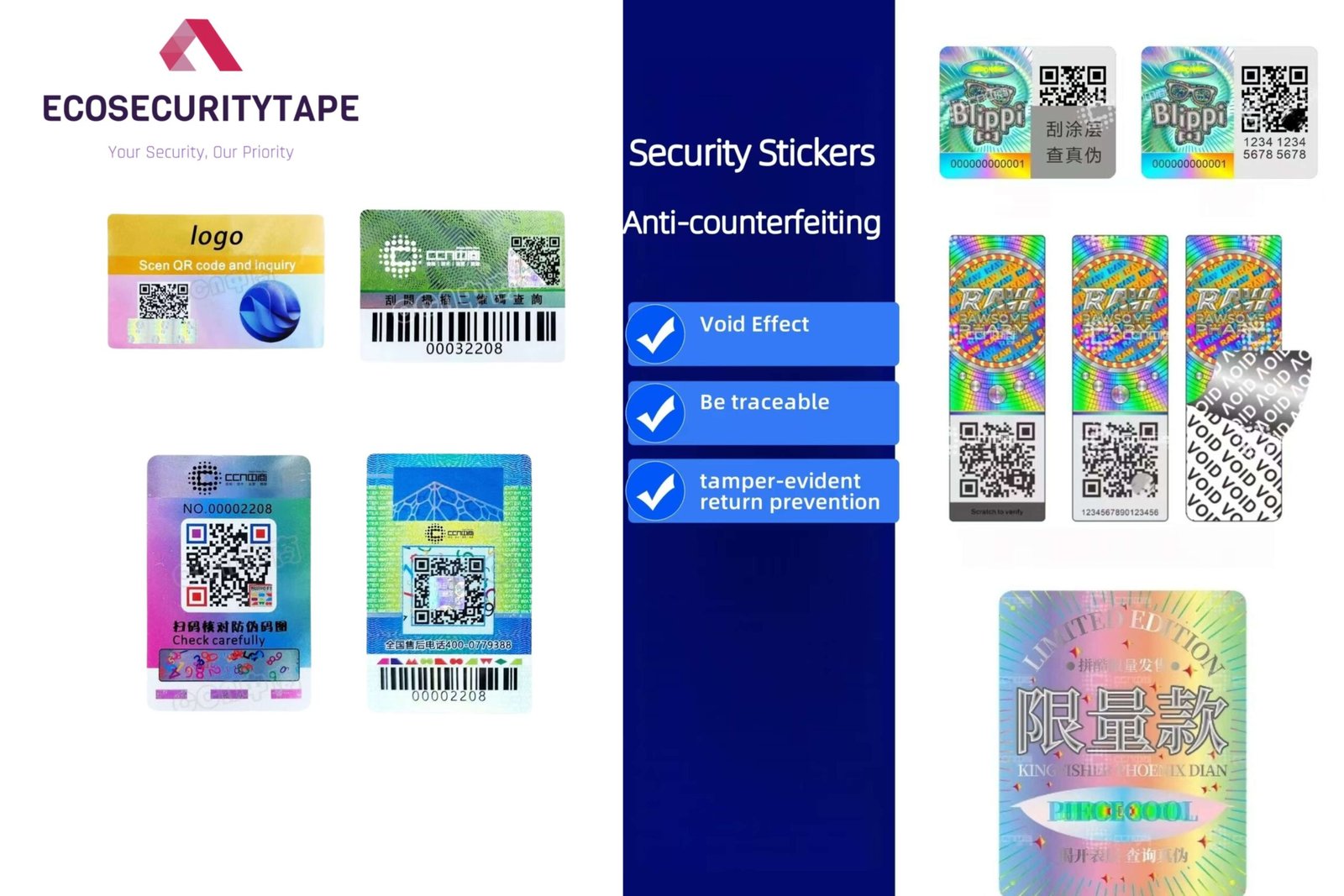
Unlike ordinary stickers, holographic security labels are difficult to visually copy, easy for users to recognize, and suitable for both brand protection and product traceability. For packaging buyers, brand owners, distributors, and manufacturers, choosing the right hologram security seal can help reduce counterfeit risk, improve customer trust, and support safer product distribution.
What Is a holographic security label?
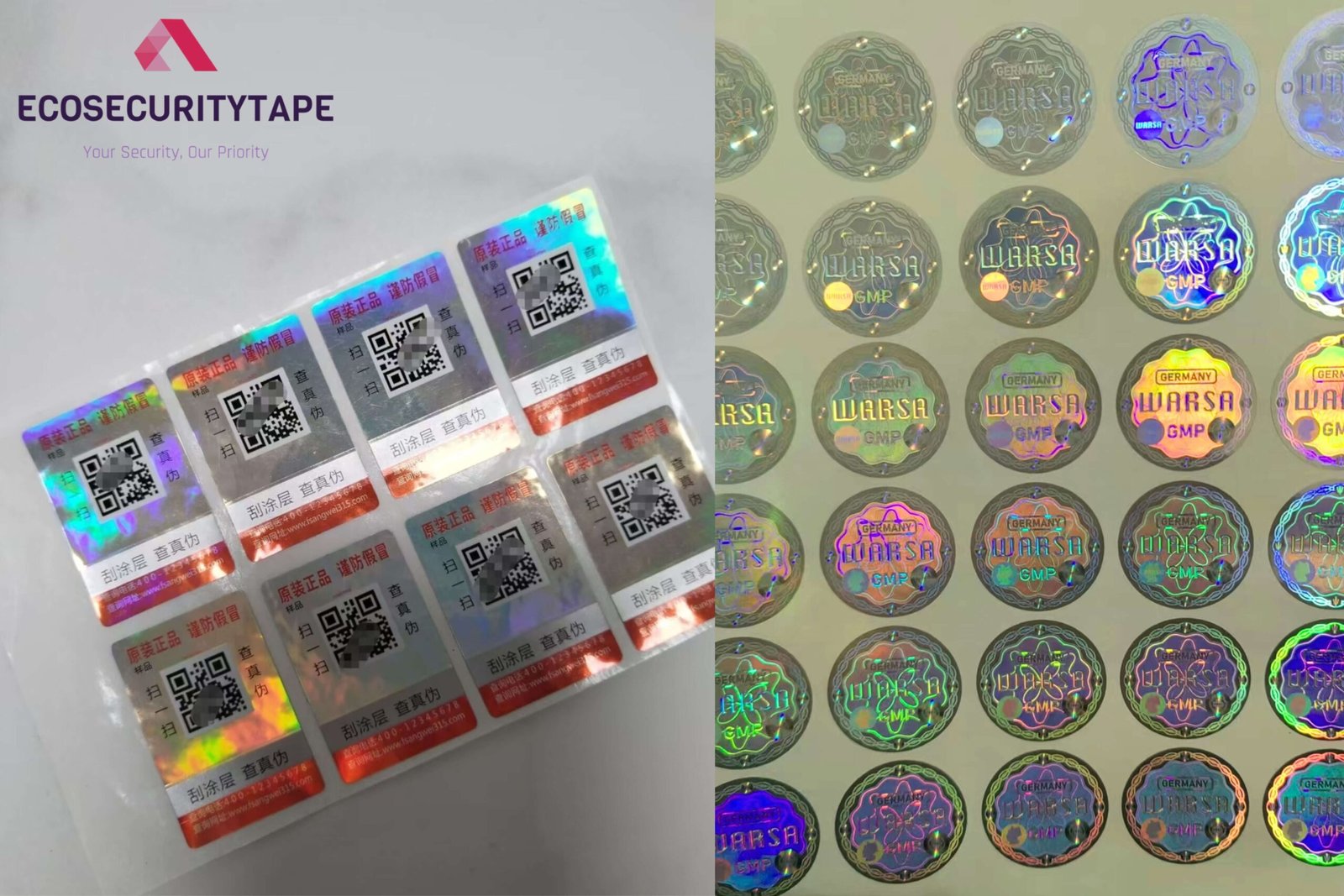
A hholographic security label is a security label that uses holographic film, printed security graphics, adhesive backing, and optional QR code or serial number to protect products and packaging from counterfeiting or tampering.
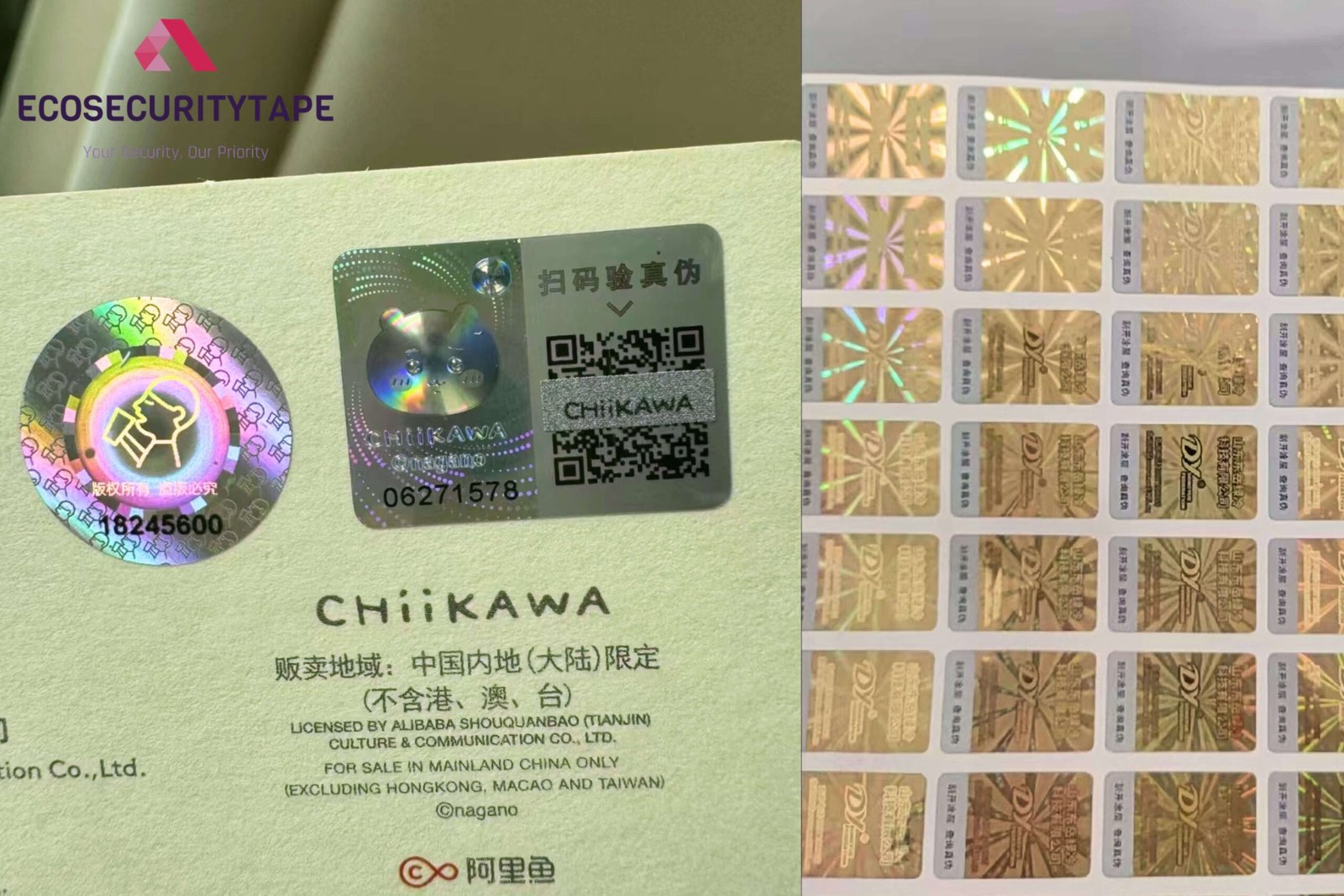
It is commonly used on product boxes, bottles, certificates, electronic devices, warranty areas, luxury packaging, pharmaceutical packaging, and industrial components. The holographic layer creates a special optical effect that is difficult to reproduce with standard printing. When customers tilt the label under light, they can see color shifts, 2D/3D patterns, logo effects, or customized security graphics.
For B2B packaging applications, a holographic security label can provide three main functions:
- Authentication: It helps users visually identify whether the product or package is genuine.
- Traceability: When combined with QR code, barcode, or serial number, it can support product tracking, verification, and batch management.
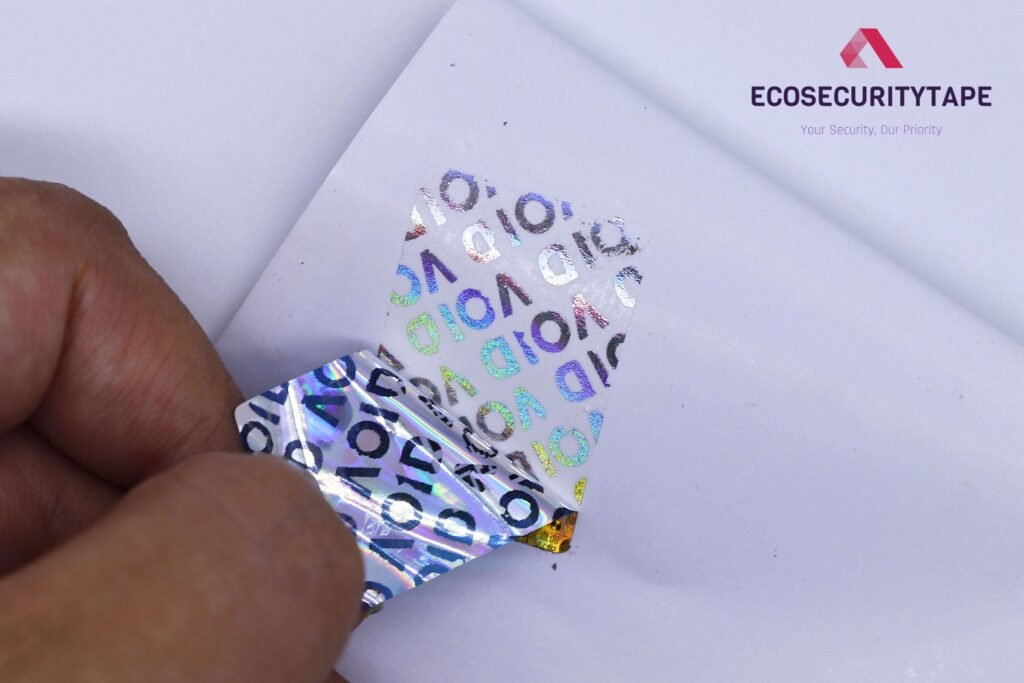
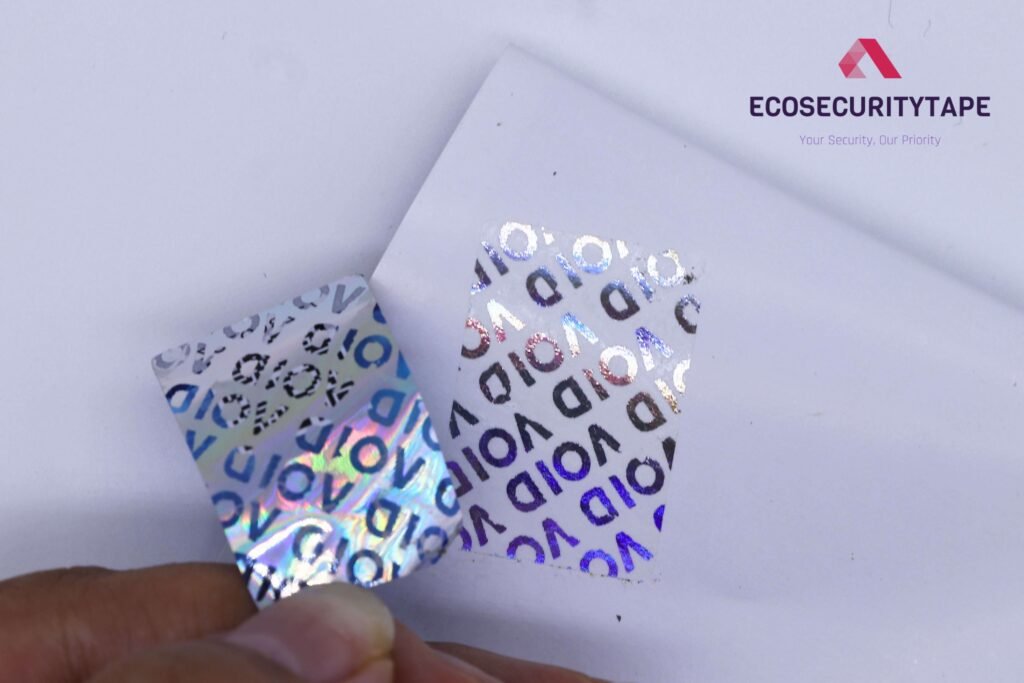
- Tamper evidence: When combined with tamper-evident material or VOID adhesive, it can show clear signs if the package has been opened or the label has been removed.
This is why many brands choose custom holographic security labels instead of ordinary paper stickers or simple printed labels.
How Does a Hologram Security Seal Work?
A hologram security seal usually works through three layers of protection: visual protection, digital protection, and physical protection.
1. Visual Holographic Authentication
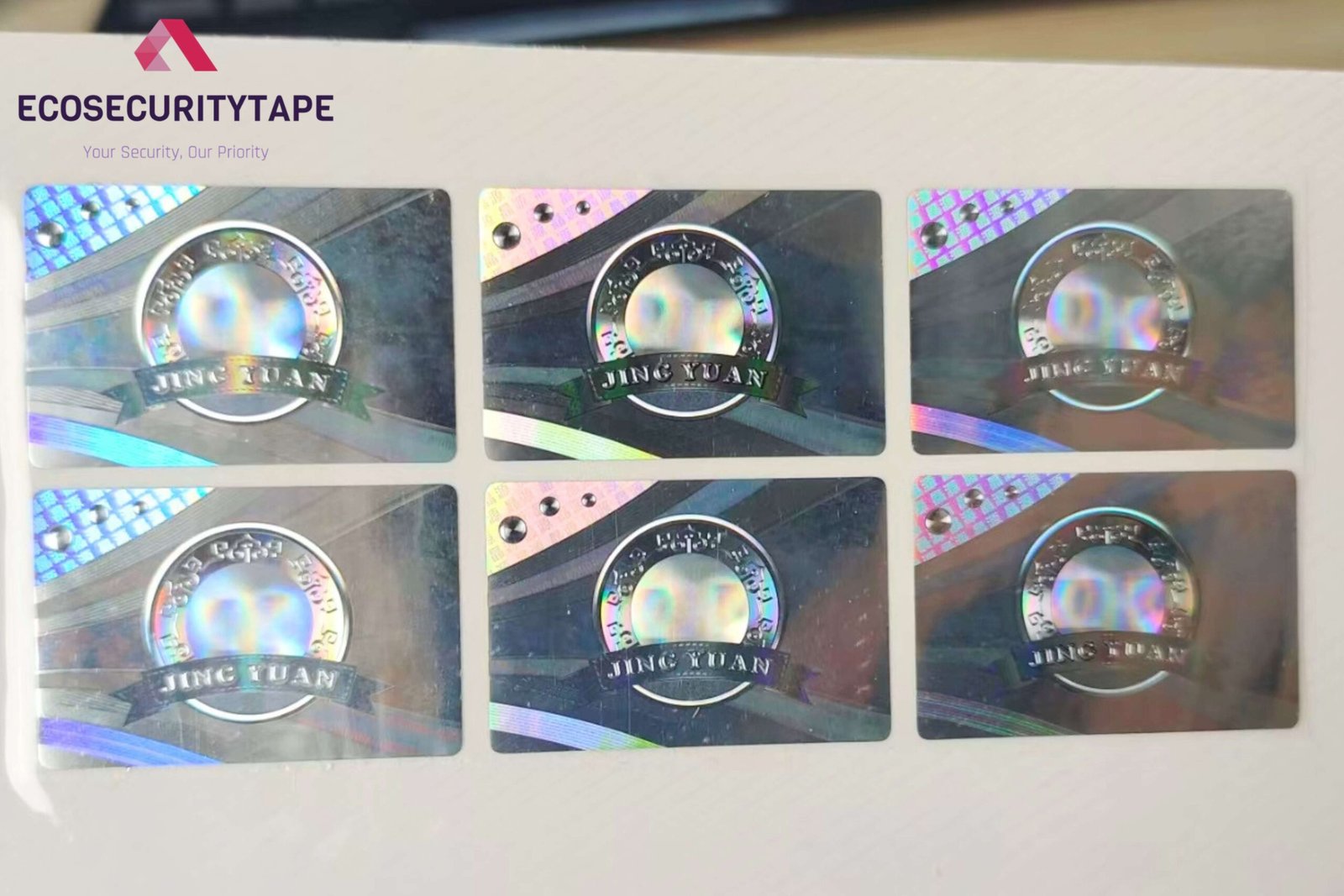
The holographic film provides optical security features such as rainbow effects, 2D/3D patterns, custom logos, micro text, or special visual graphics. These effects are difficult to duplicate with normal printing equipment.
For brand owners, this visual layer helps customers, retailers, and inspectors quickly identify the label. For example, a cosmetics brand may use a custom hologram sticker on the outer box so customers can visually check whether the package looks authentic before purchase.
2. Digital QR Code or Serial Number Verification
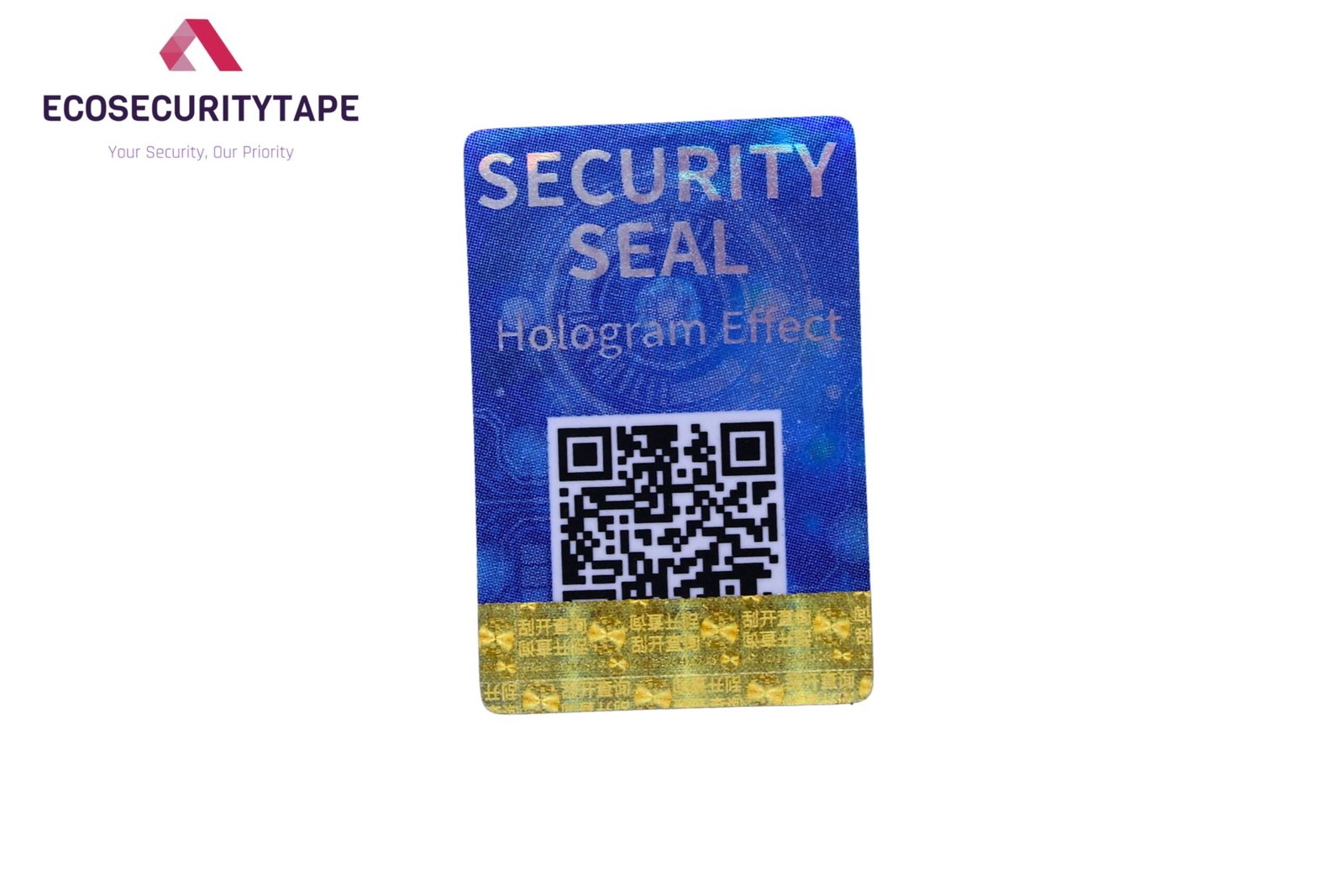
A hologram sticker with QR code can connect the physical product to a digital verification system. The QR code can be used for:
- Product authentication
- Batch tracking
- Distributor management
- Warranty registration
- Anti-counterfeit verification
- Customer engagement
A QR code alone can be copied, so it should not be the only security feature. However, when combined with a holographic security label and unique serial number, it becomes more difficult for counterfeiters to reproduce the complete security system.
3. Physical Tamper-Evident Sealing
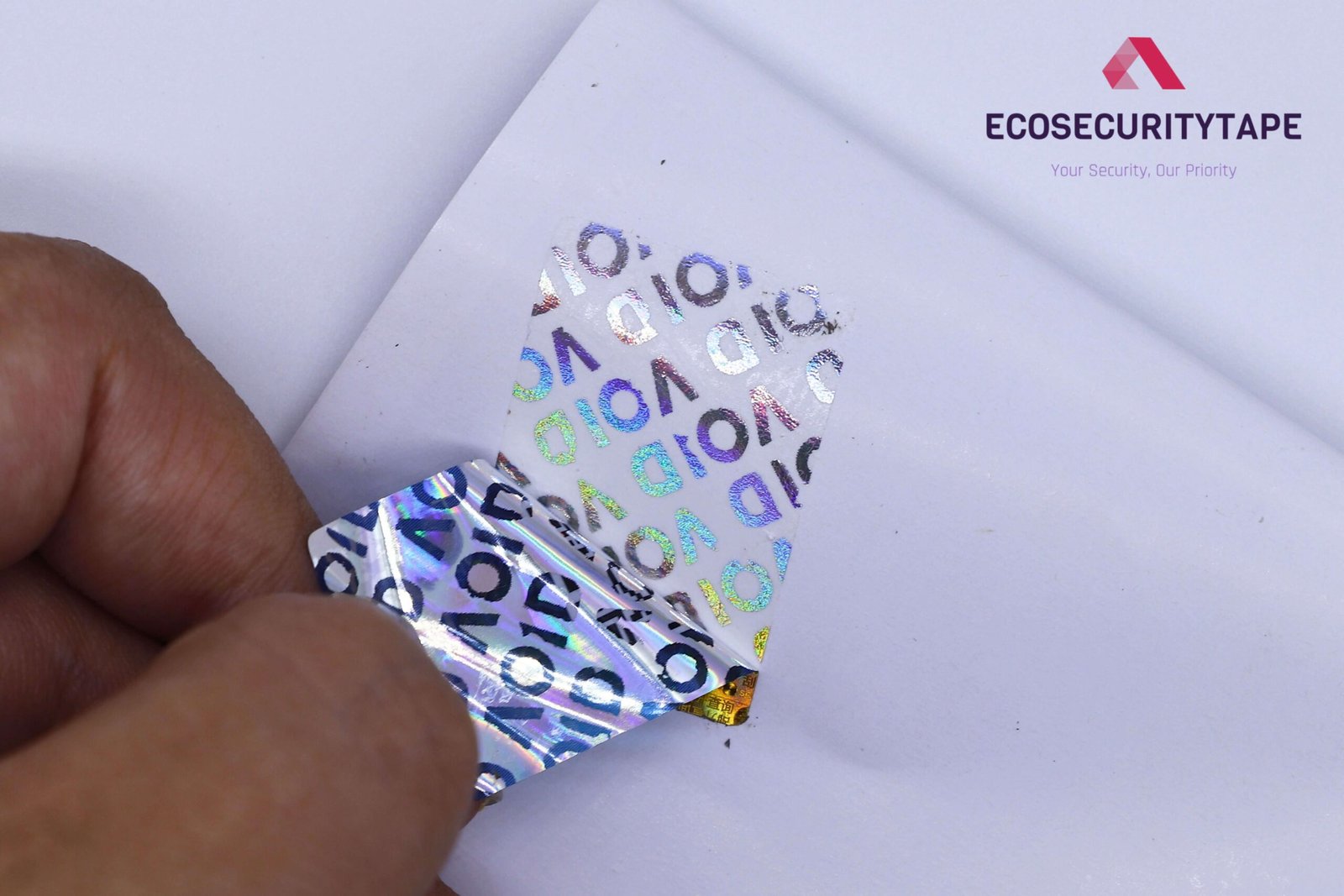
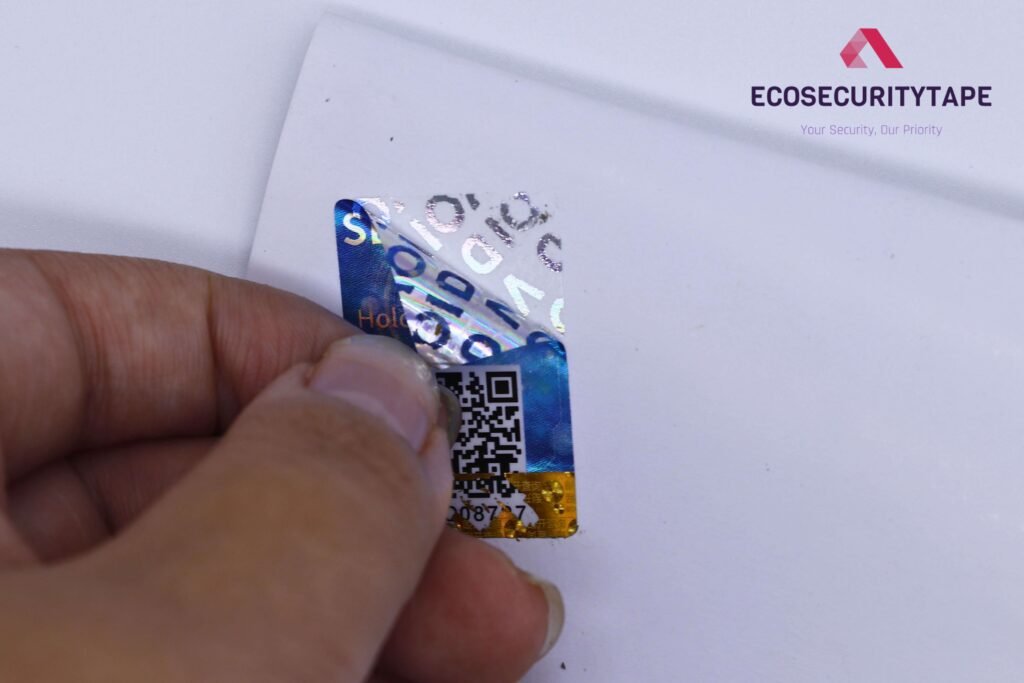
Tamper-evident adhesive or VOID material can show visible evidence if someone tries to remove or reuse the label. Depending on the material, the label may leave a VOID message, break into pieces, or show clear damage after removal.
This physical protection is important for packaging boxes, bottle caps, warranty seals, and logistics packages. It helps buyers identify whether the package has been opened, replaced, or tampered with during storage or transportation.
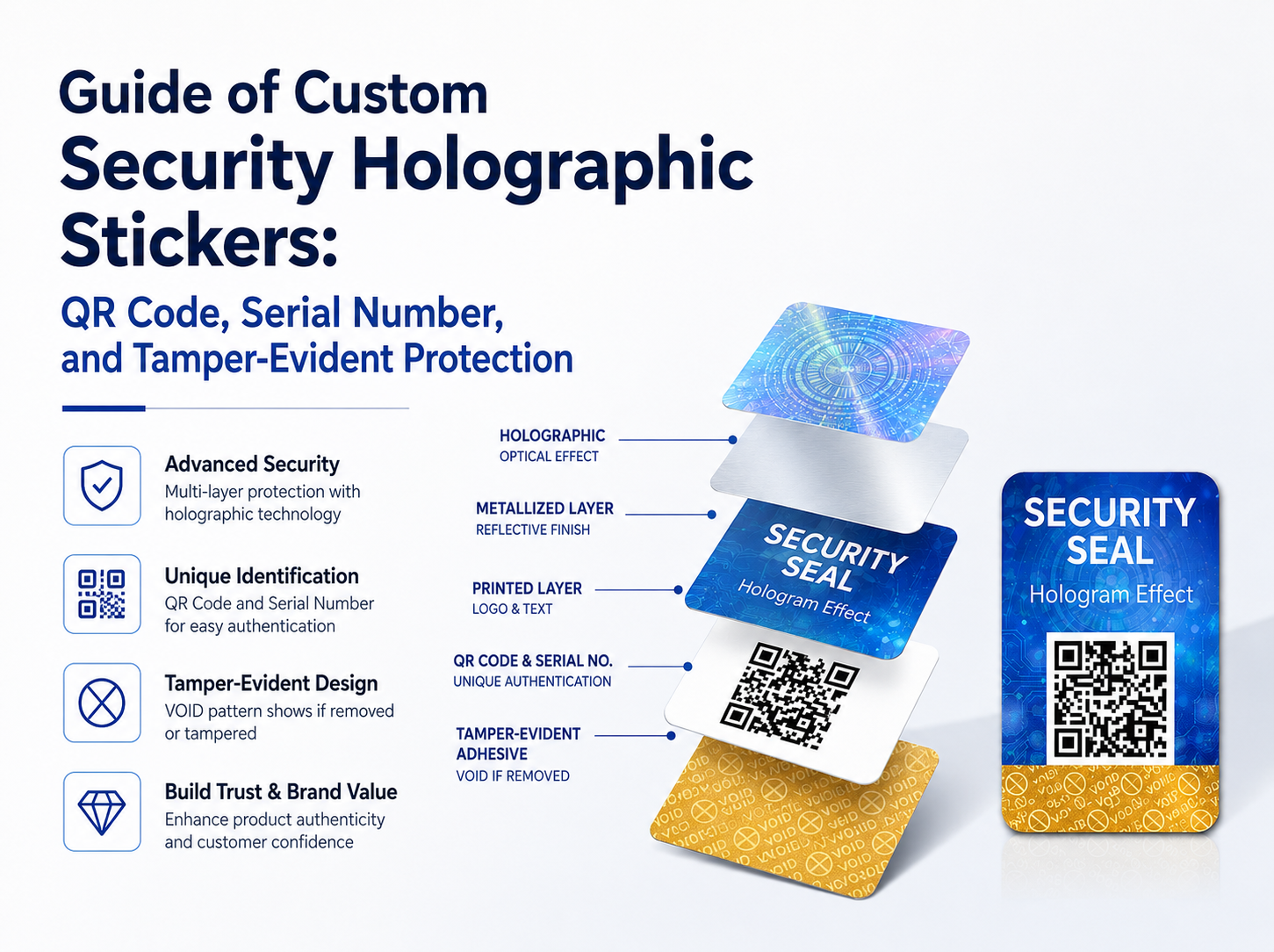
Key Components of a QR Code Hologram Label
A QR code hologram label is usually made of several functional layers. Each layer affects the security level, appearance, durability, and application performance of the final label.
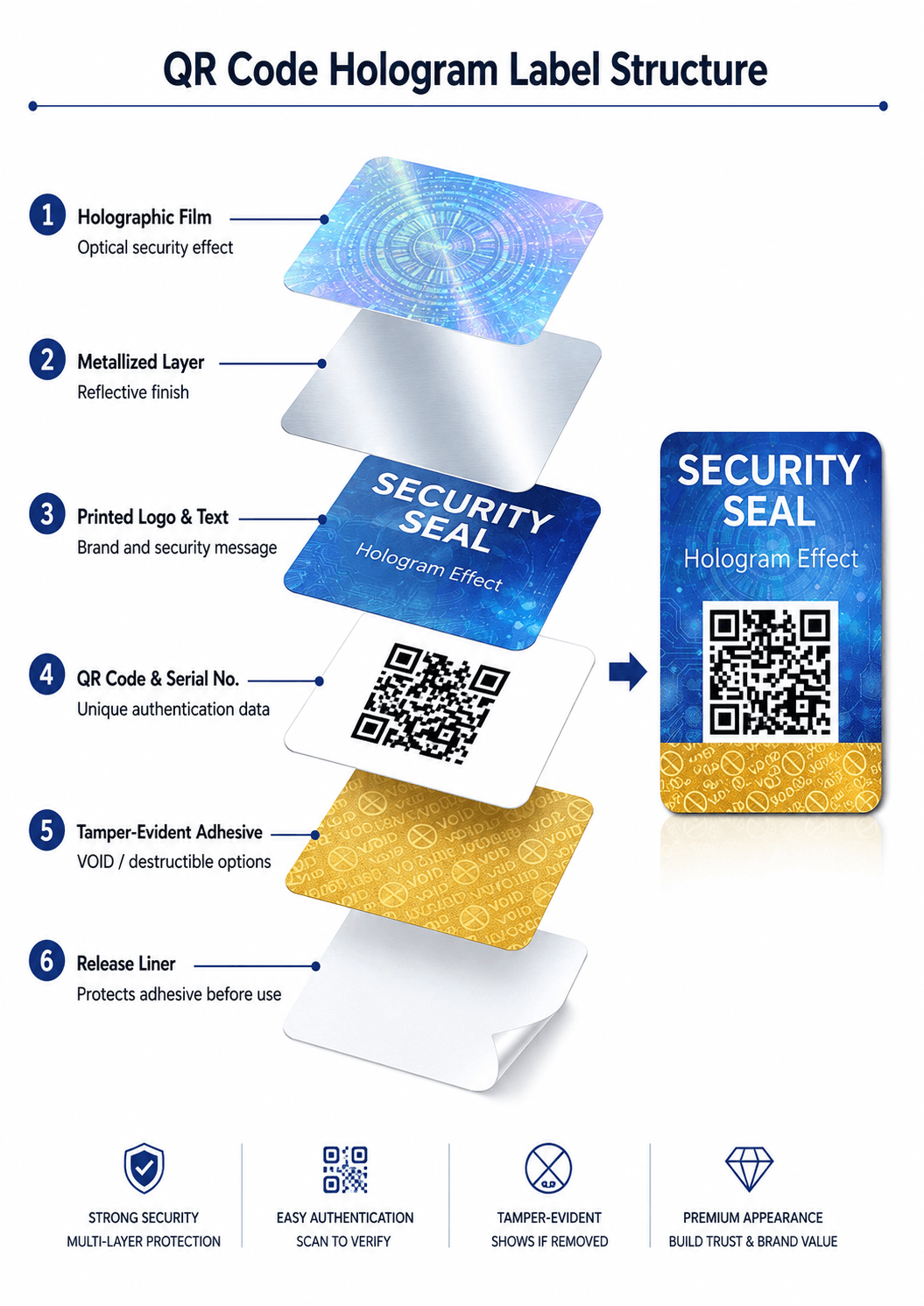
Holographic Film
The holographic film creates the optical effect. It can be standard holographic film or custom holographic film with logo, security pattern, or brand-specific design.
Metallized Layer
The metallized layer gives the label a reflective appearance. Silver, gold, transparent, or colorful holographic effects can be selected based on brand style and packaging requirements.
Printed Logo and Text
The label can include brand name, security text, warning text, batch information, product code, or custom message. Common examples include “Genuine Product,” “Original,” “Security Seal,” or brand-specific wording.
QR Code and Serial Number
Variable data printing allows each label to carry a unique QR code, barcode, serial number, or batch number. This is useful for authentication, inventory control, and product traceability.
Tamper-Evident Adhesive
The adhesive determines how the label performs after removal. Options may include full transfer VOID, partial transfer VOID, non-transfer, destructible material, or standard permanent adhesive.
Release Liner
The release liner protects the adhesive before application. Hologram security labels can be supplied in rolls or sheets depending on whether the customer applies them manually or by automatic labeling machine.
Common Security Features of Hologram Security Labels
Different buyers need different security levels. A certificate label, cosmetics seal, pharmaceutical package, and electronic warranty sticker may all require different structures.
The table below shows common security features and how they are used.
| Security Feature | Main Function | Typical Application |
|---|---|---|
| Custom holographic logo | Visual brand authentication | Luxury goods, cosmetics, certificates |
| QR code | Digital verification and traceability | Food, electronics, pharmaceuticals |
| Serial number | Unique product identification | Warranty labels, product tracking, inventory control |
| VOID effect | Shows tampering after removal | Packaging boxes, warranty seals, logistics packages |
| Destructible material | Breaks when removed | Asset labels, electronics, anti-transfer labels |
| Micro text | Adds hidden visual security | Certificates, brand protection labels |
| Barcode | Supports warehouse and logistics scanning | Industrial parts, distribution, inventory management |
| Color-shifting hologram | Improves visual recognition | Retail packaging, cosmetics, premium products |
| Tamper-evident adhesive | Prevents label reuse | Bottles, boxes, bags, electronics |
| Scratch-off area | Protects verification code | Consumer authentication, promotional verification |
For stronger protection, buyers often combine multiple features. For example, a tamper evident hologram label may include a custom holographic logo, serial number, QR code, and VOID adhesive.
Applications of Hologram Security Labels
Hologram security labels are widely used in industries where product authenticity, packaging integrity, and brand trust are important.
Cosmetics and Personal Care Products
Cosmetics brands use anti-counterfeit hologram stickers on boxes, bottles, caps, and outer packaging. The label helps protect against fake products, unauthorized refilling, and package replacement.
For premium skincare or perfume packaging, the label also adds a visual brand protection element. A hologram sticker with QR code can allow customers or distributors to verify the product before purchase.
Electronics and Accessories
Electronic products often need warranty control and anti-tampering protection. Hologram security labels can be used on:
Device shells
Battery compartments
Screw holes
Accessory packaging
Warranty areas
Power adapters
A warranty hologram label with serial number can help the service team check whether the device has been opened, repaired, or replaced without authorization.
Pharmaceuticals and Healthcare Packaging
Pharmaceutical and healthcare packaging may require authentication, batch traceability, and tamper evidence. Hologram security labels can be applied to medicine boxes, sample kits, testing kits, and healthcare product packaging.
For this industry, buyers should confirm local compliance requirements before ordering. The label should be selected based on storage conditions, packaging surface, adhesive requirements, and traceability needs.
Food and Beverage Products
Food and beverage brands may use hologram stickers to protect product authenticity, especially for premium food, imported products, health food, wine, spirits, and specialty beverages.
A QR code security label can also be used to provide batch information, origin verification, or marketing information.
Luxury Goods and Premium Retail Packaging
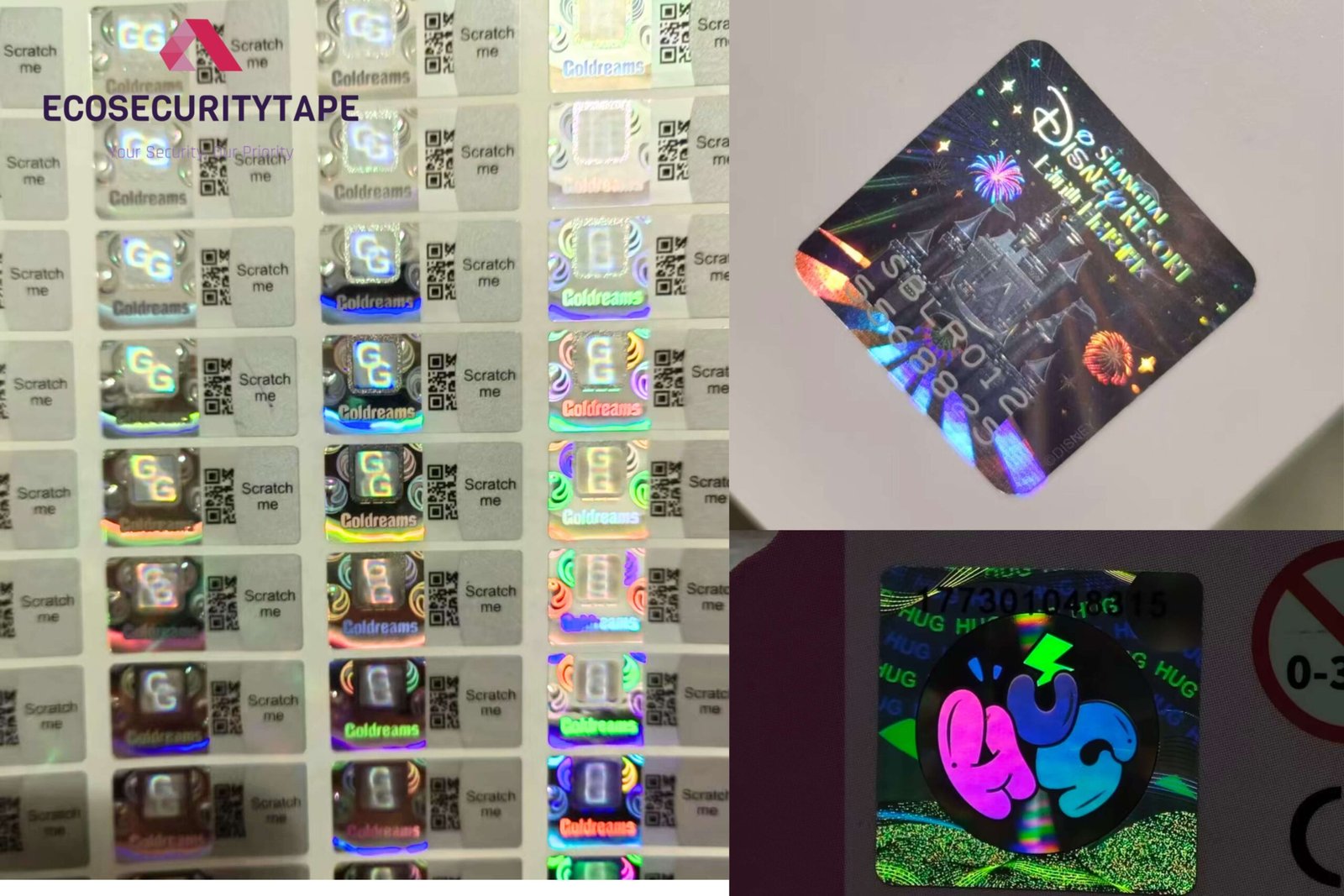
Luxury products are common targets for counterfeiters. Holographic security labels can be used for authentication seals, hang tags, outer packaging, gift boxes, and certificates.
For high-value goods, a simple hologram may not be enough. A better solution may combine custom hologram film, serial number, QR code, and tamper-evident adhesive.
Certificates and Documents
Certificates, licenses, warranty cards, membership cards, and official documents often use hologram labels to improve authenticity. The label can include a custom logo, micro text, serial number, or verification code.
Industrial Parts and Components
Industrial components, spare parts, automotive parts, electronic modules, and machinery parts can use hologram security labels for product identification and anti-counterfeit control.
For B2B buyers, the most important point is not only appearance. The label should also match the product surface, temperature environment, storage condition, and supply chain process.
How to Customize Hologram Security Seals
Custom hologram security labels can be designed based on product type, packaging surface, brand image, security level, and application method.
Size and Shape
Labels can be produced in rectangular, square, round, oval, strip, bottle seal, cap seal, or custom die-cut shapes. The size should match the packaging area and application method.
For example, a small electronics warranty seal may need a narrow strip label, while a certificate may need a larger holographic authentication label.
Color and Hologram Effect
Common options include silver hologram, gold hologram, transparent hologram, rainbow effect, custom background pattern, and brand-specific holographic design.
For luxury or cosmetics packaging, the visual appearance should match the brand style. For industrial parts, readability and durability may be more important.
Logo, Text, and Security Message
Custom logo, brand name, product code, warning text, and security message can be printed on the label. For tamper-evident applications, buyers may request custom VOID text or OPENED message.
QR Code and Serial Number
Each label can carry a unique QR code and serial number. This is useful when the buyer needs one-product-one-code verification, distributor tracking, product registration, or inventory control.
Adhesive Type
The adhesive should be selected based on the application surface. Common surfaces include coated paper boxes, plastic bottles, glass containers, metal components, painted surfaces, and electronic device shells.
If the surface is rough, curved, low-energy plastic, or exposed to cold or humid conditions, sample testing is strongly recommended before mass production.
Roll or Sheet Packaging
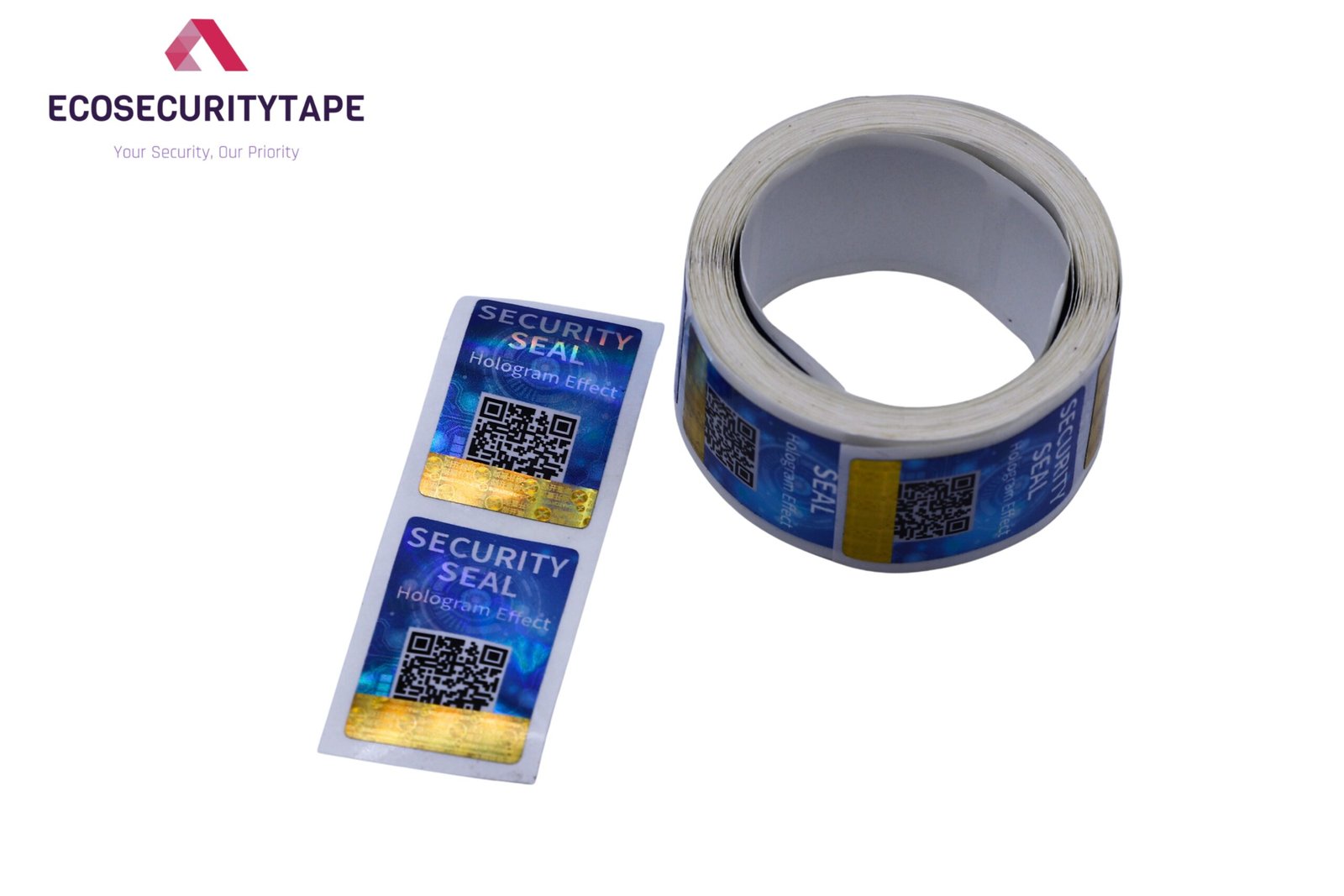
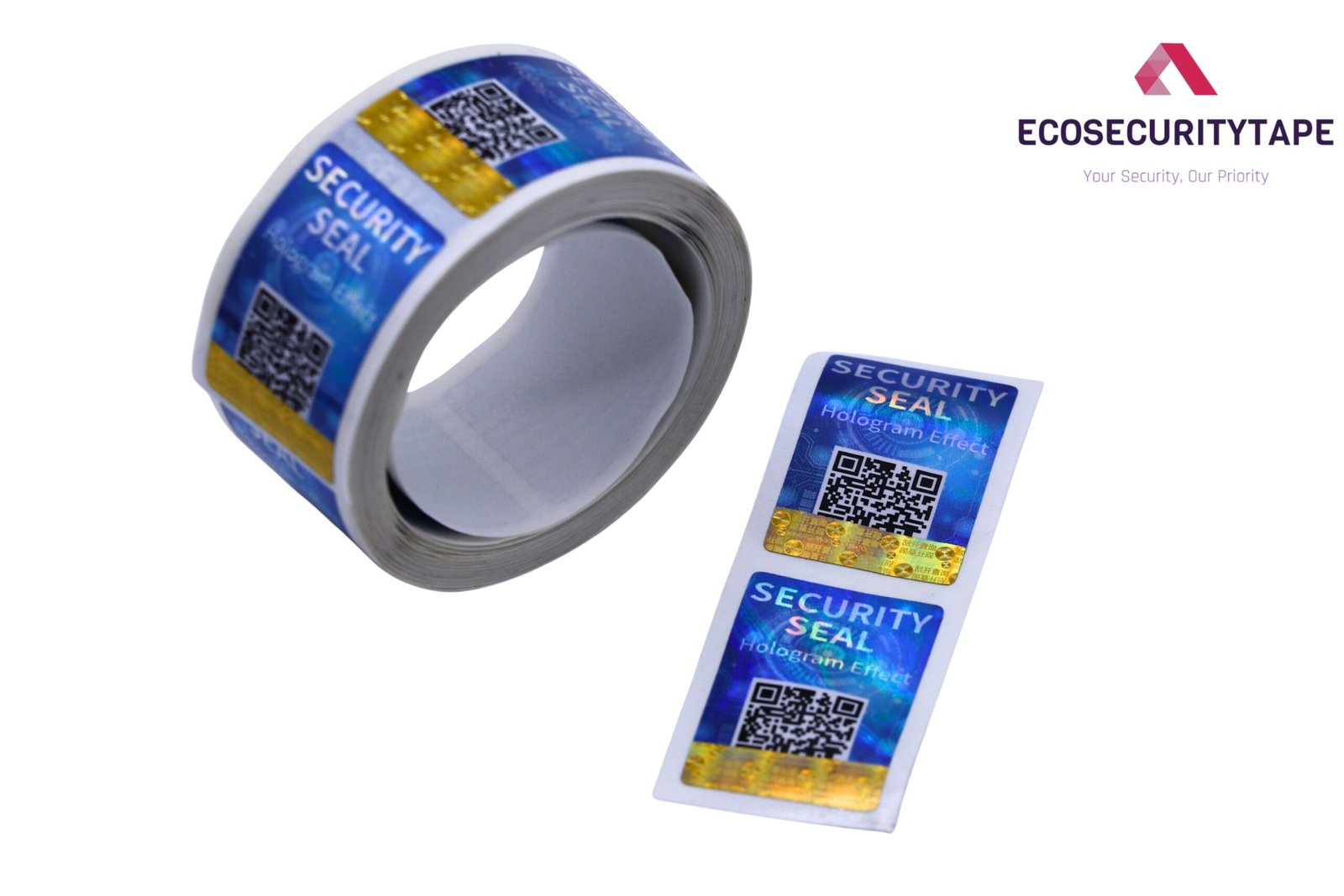
Labels can be supplied in rolls for automatic labeling machines or in sheets for manual application. Packaging format should be confirmed before production because it affects die-cutting, spacing, liner type, and application efficiency.
How to Choose the Right Hologram Security Label Supplier
Choosing the right supplier is important because hologram labels are not only printed stickers. They involve materials, adhesive performance, variable data, printing accuracy, packaging format, and application testing.
B2B buyers should evaluate suppliers based on practical production and customization capability.
| Supplier Evaluation Point | Why It Matters |
| Custom hologram pattern support | Helps prevent simple copying and improves brand-specific protection |
| Variable QR code printing | Allows each label to have a unique verification code |
| Serial number management | Supports tracking, warranty control, and batch identification |
| Tamper-evident material options | Helps match the required security level |
| Adhesive selection support | Reduces failure risk on different surfaces |
| Sample testing support | Helps confirm label performance before mass production |
| Roll and sheet packaging options | Supports both manual and automatic application |
| Export experience | Helps with international communication, packing, and delivery |
| Clear artwork requirements | Reduces design errors and production delays |
| Flexible MOQ options | Useful for new projects, market testing, and custom trials |
Before placing a bulk order, buyers should prepare the following information:
- Label size and shape
- Application surface
- Product or package material
- Indoor or outdoor use
- Required security effect
- QR code or serial number requirements
- Logo and artwork file
- Quantity
- Packaging format
- Target country or market
This information helps the supplier recommend a more suitable holographic security label instead of offering a generic sticker.
Why Choose EcoSecurityTape?
EcoSecurityTape helps global B2B buyers source and customize tamper-evident labels, hologram security seals, security tapes, security bags, and anti-counterfeit packaging solutions from China.
For hologram security labels, we can help buyers evaluate and customize options such as:
- Custom logo hologram labels
- QR code hologram stickers
- Serial number labels
- Tamper evident hologram labels
- VOID security effect
- Hologram film options
- Roll or sheet packaging
- Low MOQ options for trial orders
- Sample support before bulk production
- Supplier integration for different security packaging products
Our role is not only to provide a label. We help buyers match the label type with the application surface, packaging structure, security purpose, and purchasing requirement.
For new projects, sample testing is especially important. Buyers can request samples here:
Free Sample
To send your label size, artwork, quantity, and application details, contact us here
FAQs About Holographic Security Label
Q1: How should hologram security labels be stored?
Hologram security labels should be stored in a dry, clean, and ventilated environment. Avoid direct sunlight, rain, heavy pressure, high humidity, and chemical contamination. Unused labels should be sealed back into the plastic bag after opening.
Q2: What is the shelf life of hologram security labels?
The recommended usage period depends on the material and adhesive. For better adhesive performance, many buyers use the labels within 6 months from the production date, especially for custom tamper-evident labels.
Q3: Can every hologram label have a unique QR code?
Yes. Variable data printing allows each label to have a unique QR code, barcode, or serial number for authentication, traceability, warranty control, and inventory management.
Q4: Can hologram security labels be customized with my logo?
Yes. Custom logo, brand name, color, shape, hologram background, QR code, serial number, and security text can be customized based on your packaging and brand protection requirements.
Q5: What is the best place to apply a hologram security seal?
The best position is usually a clean, smooth, and flat surface. Common positions include box openings, bottle caps, electronics warranty areas, certificates, and outer packaging seals.
Q6: What is the MOQ for custom hologram security seals?
MOQ depends on size, material, hologram type, QR code requirements, serial number printing, adhesive type, and roll or sheet packaging. Buyers can send specifications for an accurate quotation.
Q7: Why combine QR code with hologram?
A QR code supports digital verification and traceability, while a hologram provides visual anti-counterfeit protection. Combining both creates stronger security than using either one alone
Conclusion: Build Stronger Protection with Hologram, QR Code, and Tamper Evidence
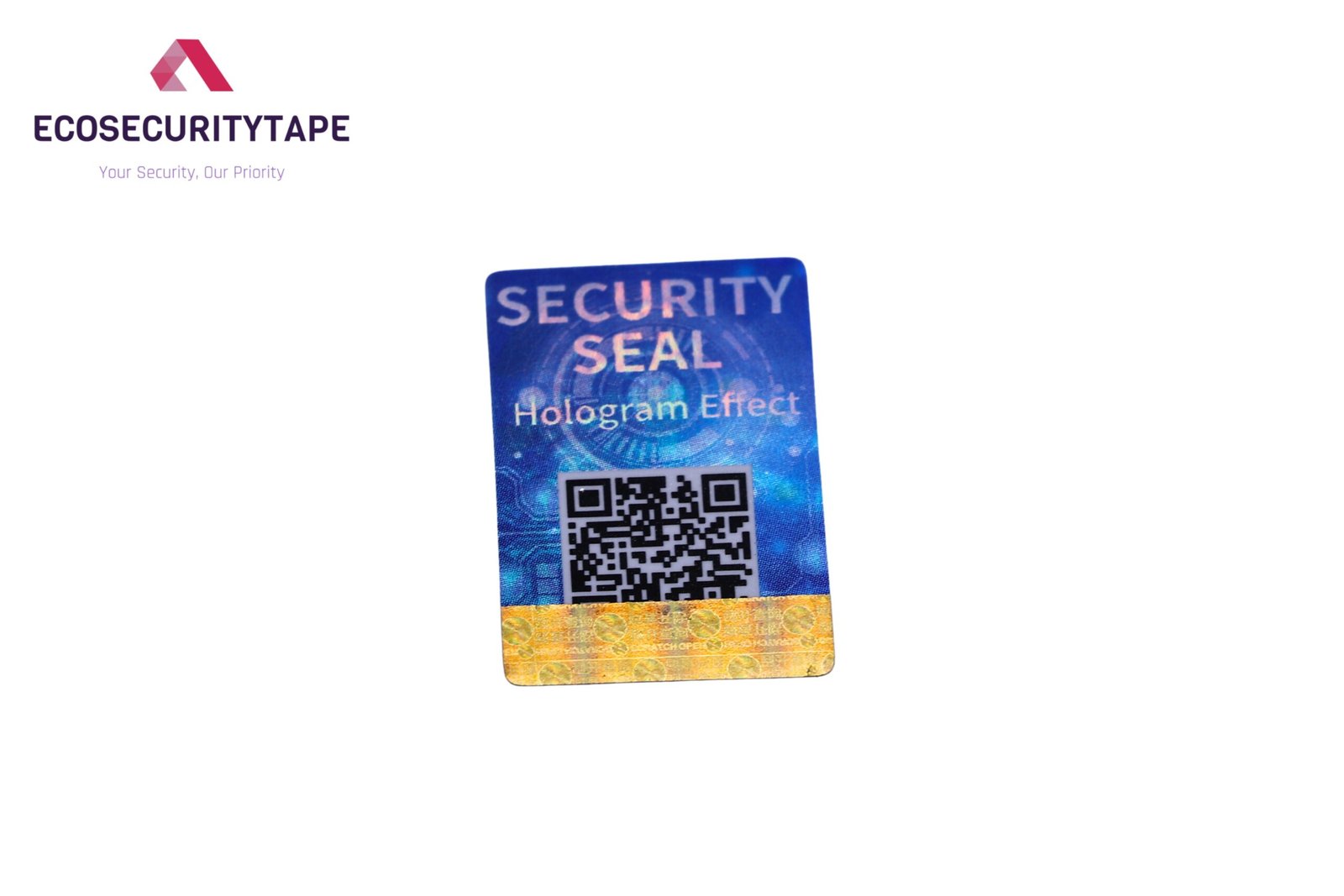
A holographic security label can help protect products from counterfeiting, unauthorized resale, package tampering, and warranty fraud. When combined with QR code, serial number, and tamper-evident protection, it becomes a practical security packaging solution for global B2B buyers.
For most brands, a single security feature is not enough. A QR code provides digital traceability. A hologram provides visual authentication. A tamper-evident structure provides physical evidence of opening or removal.
Looking for custom hologram security seals with QR code, serial number, or tamper-evident features?
EcoSecurityTape can help you customize holographic security labels for packaging boxes, bottles, electronics, cosmetics, certificates, luxury products, and industrial components.
Contact us to get free sample suggestions and a customized quotation.
- Email: info@ecosecuritytape.com
- WhatsApp: +1 615 480 2757
- Youtube:EcoSecurityTape
- Custom Cigarette Hologram Stickers: Security Features, Applications, and How to Choose a Supplier
- Cigarette Tax Stamp 2026 Compliance Guide: Functions, Design, and Use
- Security Stickers Explained: Uses, Types, and Benefits

Focus on tamper evident packaging, free sample for test, small-batch MOQ, let’s have a talk.