Article Background
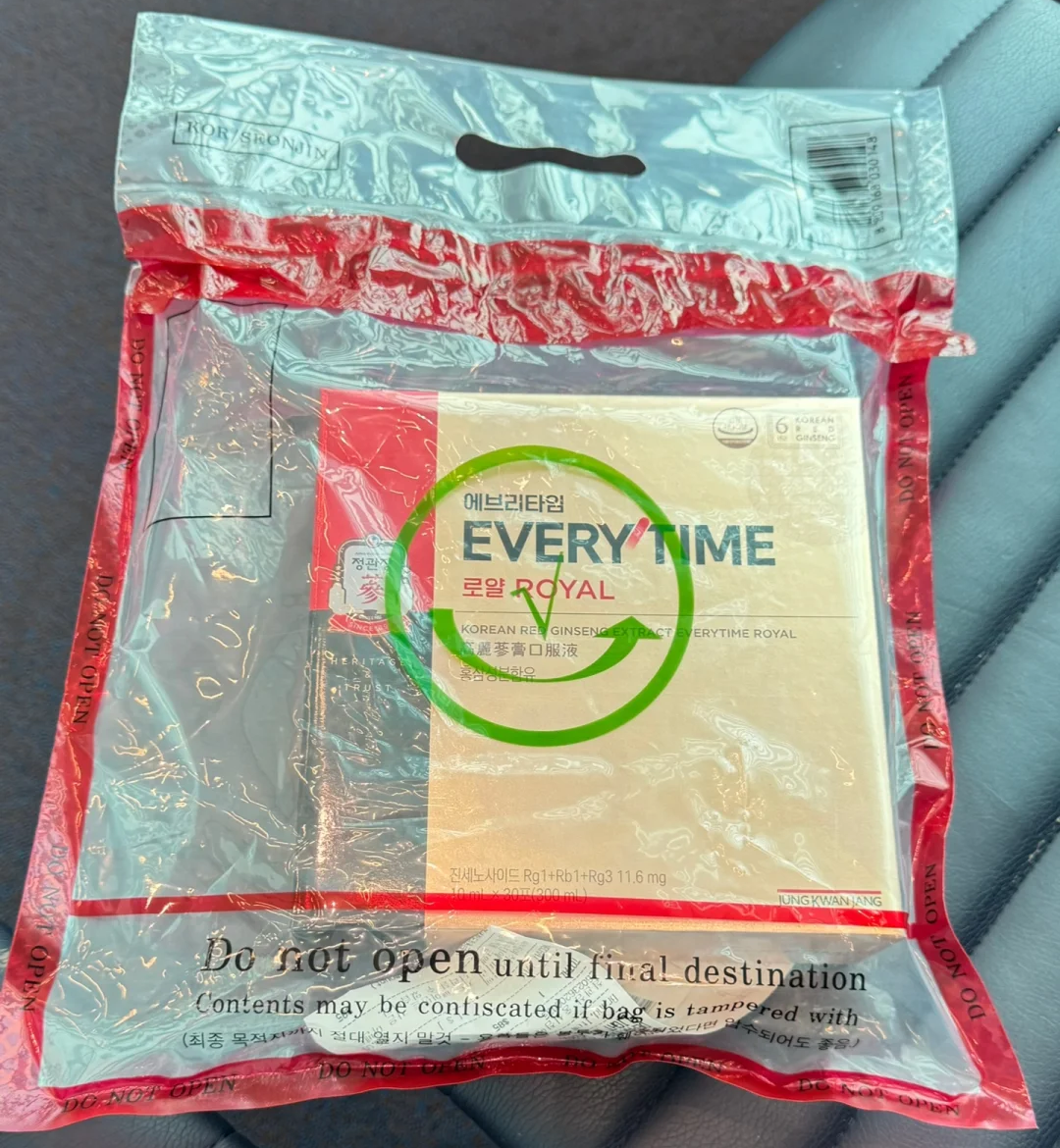
In our daily customer consultations, we’ve found that many buyers tend to confuse duty-free bags vs tamper evident bags, often assuming they are the same product. In reality, they serve different purposes despite sharing some similarities.
Both types of packaging fall under the category of tamper-evident and anti-counterfeiting solutions. They are designed to prevent unauthorized access, feature VOID or message-revealing security mechanisms upon opening, and provide one-time sealing protection. In addition, they typically offer practical packaging benefits such as water resistance, tear resistance, and light-blocking properties, making them reliable for secure transport and storage.
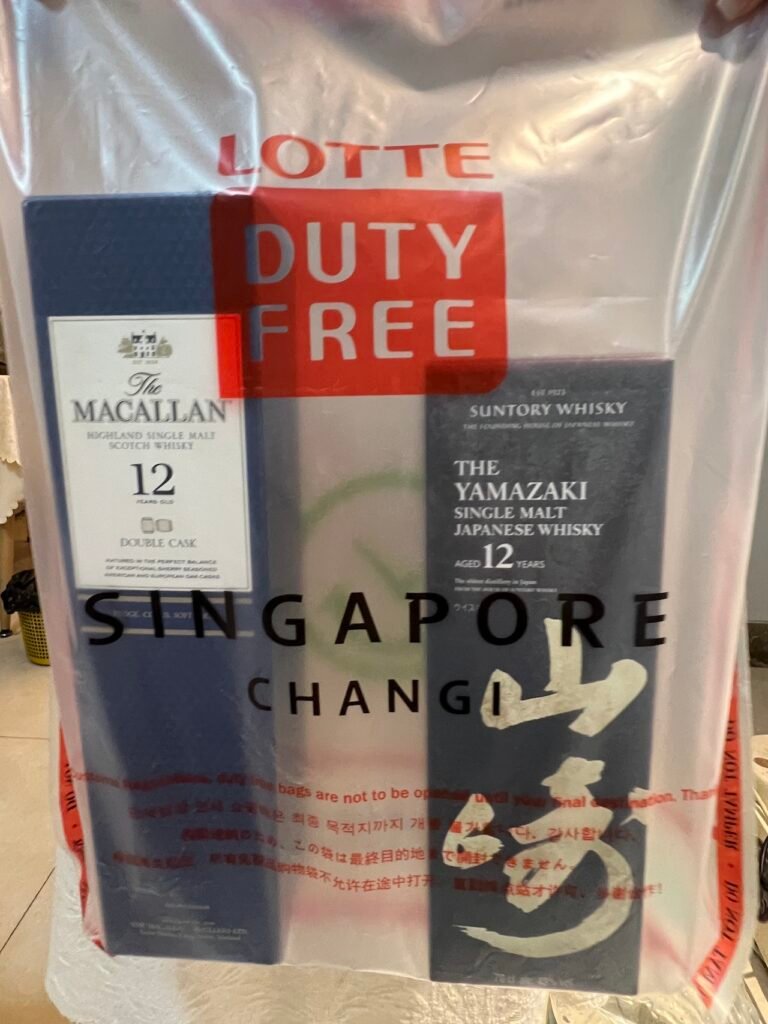
However, when comparing duty-free bags vs tamper evident bags in depth, the differences become clear. They vary significantly in terms of application scenarios, information handling requirements, target customer groups, and overall product positioning. Choosing the wrong type may not only fail to meet operational needs but also lead to unnecessary costs and inefficiencies.
Based on EcoSecurityTape’s years of experience in the anti-tamper packaging industry, along with insights from dozens of real customer inquiries in early 2026, this guide provides a clear breakdown of the similarities and differences between duty-free bags vs tamper evident bags. Our goal is to help you accurately identify the right solution and avoid costly selection mistakes.
Use Scenarios Difference
One of the most fundamental differences when comparing duty-free bags between tamper evident bags lies in their application environments. Each product is designed for a clearly defined use case, with distinct boundaries in terms of industry requirements and operational purpose.
1. Duty-Free Bags
Duty-free bags are primarily used in duty-free retail environments, where the core objective is to comply with aviation security regulations and duty-free goods control policies. Their applications are mainly concentrated in two key scenarios:
Airport Duty-Free Stores
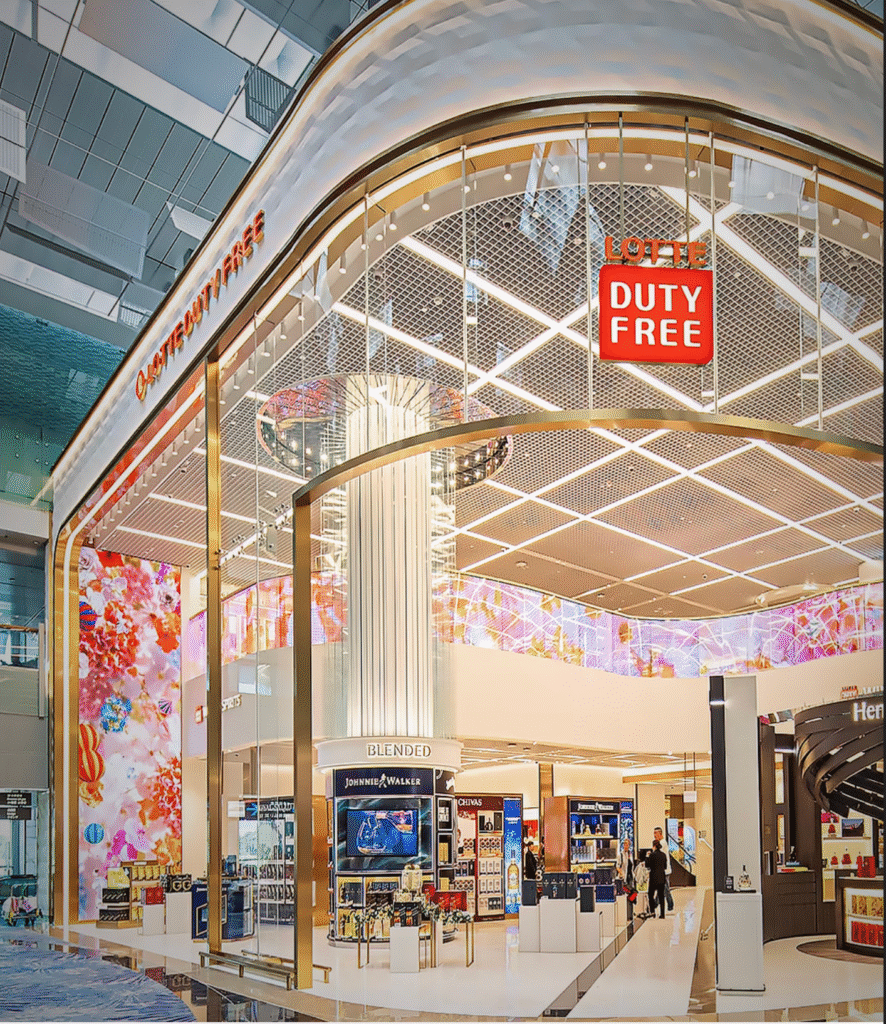
Duty-free shops at major international airports are the primary users of these bags. For example, airports such as Singapore Changi, Seoul Incheon, Tokyo Narita, and Hanoi Noi Bai all require standardized duty-free packaging. When selling items like luxury goods, perfumes, high-end watches, premium spirits, and chocolates, retailers must seal products in duty-free bags to comply with airline carry-on security regulations.
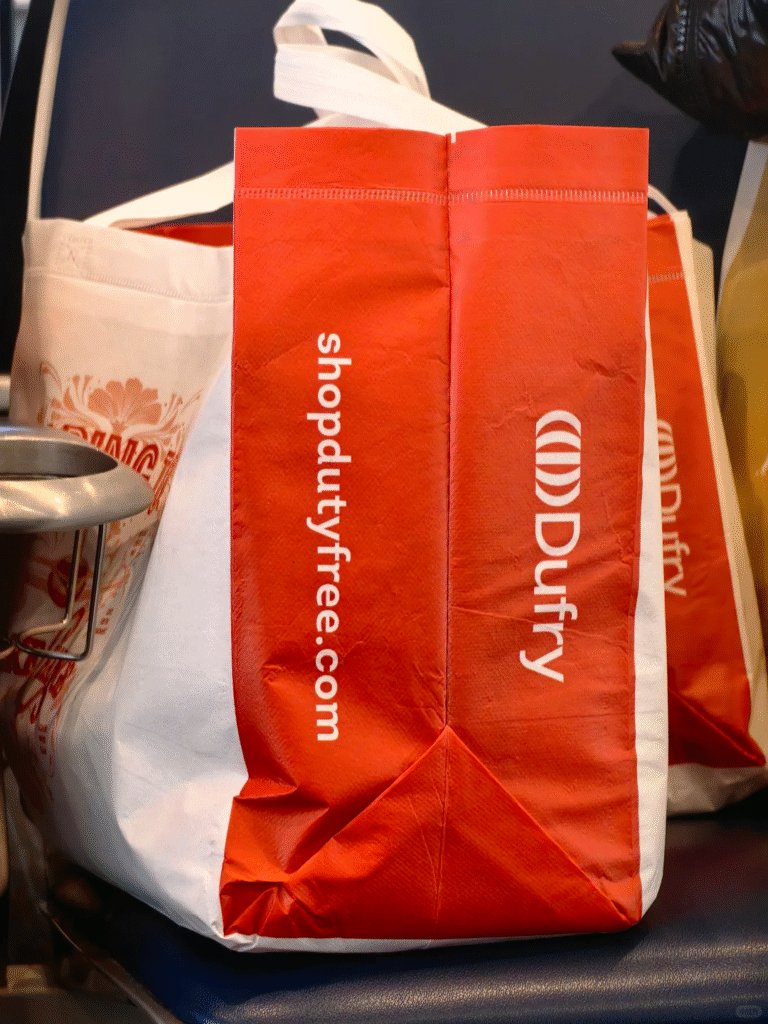
Global Duty-Free Retail Chains
Large international duty-free operators—such as Shinsegae Duty Free, Lotte Duty Free, DFS, and Heinemann—also rely on duty-free bags as a standardized packaging solution. After purchase, all duty-free items are sealed in these specialized bags to ensure compliance with global travel regulations and maintain product integrity throughout the passenger journey.
2. Tamper Evident Bags
Tamper evident bags, on the other hand, are designed for secure containment and anti-tampering control of sensitive items. They are widely used in industries where confidentiality, integrity, and security are critical, ensuring that contents cannot be opened, replaced, or altered without detection.
Financial Institutions
Banks use these bags to store and transport daily cash deposits, financial documents, and transaction records. Securities firms rely on them for handling confidential trading documents and sensitive business materials, ensuring full traceability and protection.
Postal Systems
Postal services use tamper evident bags for confidential mail, official documents, and critical items, such as license plates, university admission letters, driver’s licenses, and ID documents. For instance, Austria Post has explored such solutions to enhance secure delivery processes.
High-End Logistics and Courier Services
Premium logistics providers such as DHL, UPS, and FedEx use tamper evident bags to prevent unauthorized access or product substitution during transit. Once opened, the bag reveals irreversible tamper evidence, allowing recipients to immediately verify whether the package has been compromised.
Key Takeaway
When comparing duty-free bags between tamper evident bags, the distinction is clear:
- Duty-free bags are built for regulated retail environments, especially airports
- Tamper evident bags are designed for high-security transport and document protection
Selecting the right type ensures compliance, operational efficiency, and maximum protection for your specific application.
Bag Design and Writing Features
Beyond application scenarios, there are also clear differences between the two types of bags in terms of writing functionality, printed content, and material transparency. At the same time, both share certain similarities in traceability design. The key distinctions are outlined below:
1. Writing Functionality on the Bag Surface
Tamper Evident Bags
Tamper evident bags are typically designed with a dedicated writable area, which is a core and essential feature. In industries such as banking, securities, postal services, and logistics, users need to clearly write critical information directly on the bag, including:
- Contents description
- Amount or quantity
- Responsible personnel
- Handover date
- Department or branch
- Additional notes
This handwritten information is crucial for handover verification, tracking, and accountability throughout the process. Without a writable surface, the practical value of tamper evident bags would be significantly reduced, as they would not meet the operational requirements of these industries.
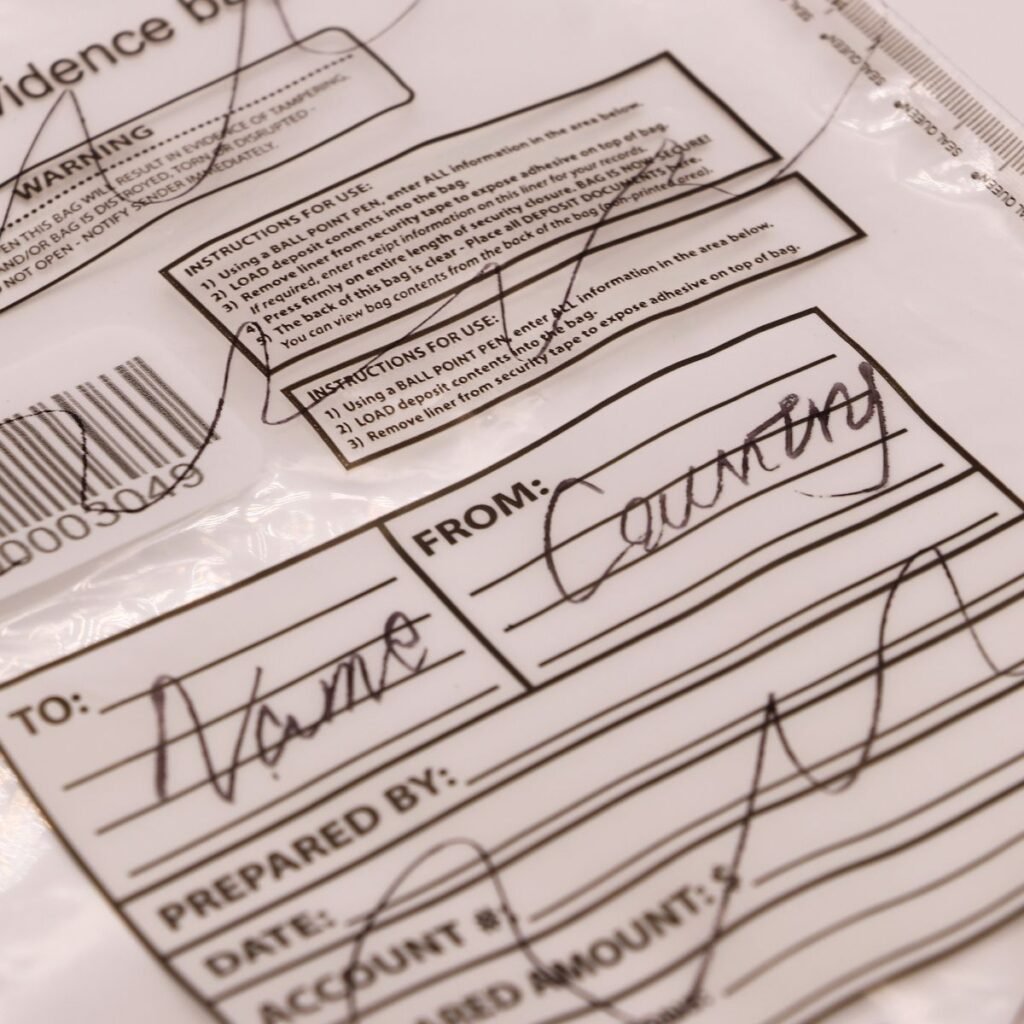
Duty-Free Bags
In contrast, duty-free bags are not designed for writing and do not include any writable area. Their primary function is to securely seal duty-free goods, prevent unauthorized opening, and display brand identity.
Since the contents inside are usually visible and standardized retail products, there is no need to manually record item details on the bag. The design focuses on meeting customs inspection requirements and aviation security regulations, rather than operational documentation.
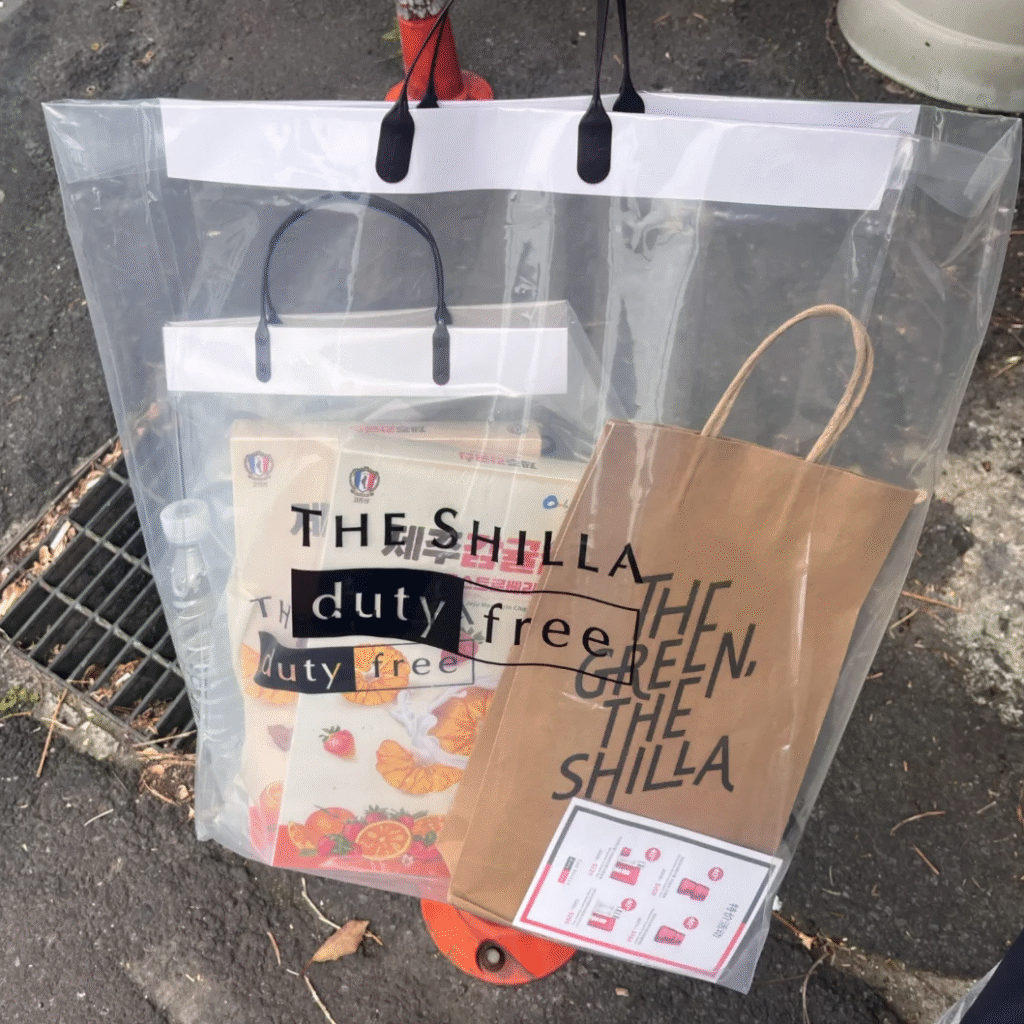
2. Printed Content on the Bag
Both types of bags typically include unique serial numbers (one bag, one code) to support traceability and prevent product substitution or diversion.
Duty-Free Bags
- Printed with store branding, logos, and visual elements
- Include warning messages such as “Do Not Open”
- Focus on brand presentation and regulatory compliance
Tamper Evident Bags
- Usually do not emphasize brand identity
- Prioritize writable areas, security warnings, and tracking information
- Designed for practical use in document and asset handling workflows
3. Material Transparency
Duty-Free Bags
Duty-free bags are generally made from transparent materials, allowing customs officers and staff to visually inspect the contents without opening the bag. This supports fast and efficient checks in airports and retail environments.

Tamper Evident Bags
Tamper evident bags are available in both transparent and opaque options, depending on the application:
- Transparent bags: Suitable for situations where visual inspection is required
- Opaque bags: Used for confidential documents, sensitive materials, or high-value items, where privacy and information protection are essential
This flexibility allows tamper evident bags to adapt to a wide range of industries with different security and confidentiality requirements.
Key Takeaway
The differences in bag design highlight two distinct priorities:
- Duty-free bags focus on compliance, visibility, and brand presentation
- Tamper evident bags focus on functionality, traceability, and secure handling
Understanding these distinctions helps businesses select the most appropriate packaging solution based on their operational workflow and security needs.
Anti-Counterfeiting Logic Differences
The core anti-counterfeiting design logic, security level, and functional requirements of the two types of packaging are fundamentally different. Each is built around the specific needs of its own application scenario, with essential distinctions in anti-counterfeiting focus, security standards, and practical implementation.
1. Airport Duty-Free Bags: Scenario-Based, Simplified Anti-Counterfeiting
Airport duty-free bags are designed with simplicity, efficiency, and regulatory compliance as the guiding principles. All anti-counterfeiting features are tailored specifically for airport duty-free shopping and airline boarding inspections. These bags do not aim for extreme high-strength security, but rather precisely meet the core demands of their scenario.
The primary goal is to prevent unauthorized opening and resale of duty-free goods, strictly following international civil aviation regulations and customs inspection requirements. Visually, these bags adopt a standardized design, incorporating elements exclusive to airports and duty-free shops. This enhances brand visibility while allowing quick recognition by customs officials.
This type of anti-counterfeiting is considered basic compliance-level security. Its structure is simple, operation is convenient, and it is fully adapted to high-frequency, fast-paced airport scenarios, enabling rapid packing by duty-free shops and smooth passenger passage through security. Complex anti-counterfeiting technologies are unnecessary to achieve regulatory compliance and basic tamper-evident protection.
2. General Anti-Counterfeiting Packaging Bags: High-Security, Financial-Grade Protection
General anti-counterfeiting packaging bags adopt financial-grade, high-security standards, offering a security level far above that of duty-free bags. They are designed for valuable items, critical documents, and sensitive materials, ensuring full-process security control for high-protection scenarios.
The core focus is comprehensive, high-strength anti-counterfeiting. In addition to basic tamper-evident features, these bags include water resistance, tear resistance, and puncture resistance, ensuring even fragile or high-value items such as premium whiskey, rum, cash, tickets, or confidential documents are fully protected during transport and handling.
These bags feature irreversible destruction designs: if torn or opened, they leave a permanent VOID mark that cannot be restored or reassembled, eliminating any chance of tampering. They are also paired with unique serialized tracking codes, enabling full traceability and binding between bag and item. This combination creates an unbreakable security barrier, fully satisfying the strict confidentiality, integrity, and safety requirements of banks, securities, postal services, and high-end logistics providers.
Printing Content and Design Differences
Airport duty-free bags and general anti-counterfeiting packaging bags also show distinct differences in printing content, material selection, size specifications, and design adaptability. Each is purposefully designed around its own usage scenario and target audience, making the distinction between them very clear.
1. Airport Duty-Free Bags: Standardized, Compliance-Focused Design Balancing Brand and Customs Needs
The printing and overall design of airport duty-free bags revolve around three core requirements: rapid customs inspection, international transit compliance, and brand presentation. Every detail is tailored to the airport scenario.
In terms of core printing content, the bags clearly display the dedicated three-letter airport code, enabling precise identification of the purchase airport for duty-free traceability. They also prominently feature the duty-free store logo and the corresponding airport logo. Some designs incorporate local national or cultural elements, creating visually appealing styles that combine brand recognition with regional identity.
Material-wise, these bags are primarily transparent or semi-transparent, allowing customs officers to verify contents without opening the bag, significantly improving passenger throughput. Size specifications follow industry standards: small sizes accommodate cosmetics and perfumes, while larger sizes are designed for whiskey, rum, and other gift items, covering all duty-free packaging needs.
Language design is internationalized, typically including English, Chinese, Korean, Japanese, Spanish, and can be customized with local languages such as Thai or French depending on the duty-free location. This ensures customs officials and travelers worldwide can clearly identify the bag contents and complete cross-border transfers smoothly.
2. Anti-Counterfeiting Packaging Bags: Custom Security-Focused Design Protecting Privacy and Safety
Anti-counterfeiting packaging bags are fully oriented toward item security, privacy protection, and custom adaptability. Their design and printing prioritize practicality and protective functionality.
Materials are thicker, reinforced, and opaque, physically shielding sensitive documents or valuable items. This design prevents theft, information leaks, or accidental exposure during transport and handling, providing full-spectrum privacy and security protection.
Size is completely flexible, with no fixed standards. Bags can be customized to any dimensions based on the client’s needs—from small 32×26 cm document security bags to large 76×38 cm anti-counterfeiting material bags—perfectly tailored to different companies and usage scenarios.
Printing focuses on unique anti-counterfeiting serial numbers, implementing one bag, one code for full traceability. There are no decorative designs or multilingual prints; all design and customization details are centered on security, anti-counterfeiting, and traceability, meeting the exclusive requirements of each client.
FAQ: Common Questions About Our Packaging Bags
1. Are the products customizable?
Yes, our products are fully customizable. Clients only need to provide their brand logo, required dimensions, and thickness specifications. The thicker the bag, the higher its load-bearing capacity, with a maximum support of up to 20 kg. Larger sizes provide more storage space—for example, if you need to pack two 1-liter bottles of Johnnie Walker Blue Label whiskey, you can choose a larger size to accommodate such bulky items.
2. What is the minimum order quantity (MOQ)?
The minimum order quantity is 10,000 units. Bulk procurement is required for printing and production, making this the industry-standard starting point, yet the actual usage is quite reasonable. For example, a duty-free store client in Florida, USA, consumes around 2,000 units per store per month. With five stores in total, the monthly usage reaches 10,000 units, totaling 120,000 units annually. Large clients, such as Lotte Duty Free, often place single orders of 500,000 to 1,000,000 units, as they operate multiple stores globally.
3. Can you provide free samples for testing?
Yes, we offer free samples. We have shipped samples to clients in Mali, USA, Japan, UK, Venezuela, Australia, and other major regions worldwide. We adhere to a long-term cooperation philosophy, ensuring that clients can personally test the samples and verify quality before committing to a long-term partnership.
4. What are the production and delivery timelines?
Production and delivery timelines vary depending on custom specifications and material selection. Larger orders naturally require longer production cycles. Standard production time is 15–20 working days.
For logistics, air shipping is prioritized for duty-free bag orders. For large orders exceeding 50,000 or 100,000 units, sea freight is also available. Air shipping delivers to over 100 countries in approximately 7 working days, while sea freight, which involves booking, port clearance, and shipping processes, usually takes around 60 days.
Contact Us
If you are looking to customize duty-free bags—for example, for an airport duty-free store selling chocolates, rum, perfumes, watches, or other products—we warmly invite you to get in touch. We can provide flexible, tailored solutions to meet your specific needs.
Our clients are primarily small-to-medium businesses and startups, and our policies are designed to be very friendly to emerging companies. While many large factories set minimum order quantities of 50,000 units, we start from just 10,000 units, making us particularly suitable for new ventures.
We also offer free sample testing. In some cases, a sample fee may be charged, but if you place a bulk order afterward, the sample cost will be fully deducted from your order—effectively making the sample free.
This sample policy was introduced because we previously provided free samples and shipping, only to encounter occasional unjustified refusals or malicious abuse, which caused significant losses. Think of it like buying a book, CD, or whiskey: opening and using the item without defects but then requesting a full refund is unfair to the seller, and we appreciate your understanding.
As a professional anti-counterfeiting packaging solutions provider, we are not a single factory. Instead, we integrate multiple domestic manufacturers of various scales. This allows us to precisely match the best solution according to your budget, order quantity, and quality requirements, delivering truly customized, cost-effective solutions.
Moreover, if you plan to visit China for exhibitions or supplier inspections, we can provide translation assistance, factory introductions, and other value-added services. For example, a Russian client plans to attend a packaging exhibition in Shanghai in June, and we will provide on-site translation support. With years of industry experience, we are committed to building long-term, mutually beneficial, and trustworthy partnerships with our clients.
Contact Information:
- Email: info@ecosecuritytape.com
- WhatsApp: +1 615 480 2757
We strongly recommend contacting us via WhatsApp for faster, more convenient communication. WhatsApp allows real-time notifications, easy sharing of images and videos, and quicker responses. Emails may occasionally experience delays or oversight, so for rapid coordination, feel free to reach out directly via WhatsApp.

Focus on tamper evident packaging, free sample for test, small-batch MOQ, let’s have a talk.