Article Background
In anti-counterfeiting, warranty protection, and anti-diversion systems, destructible labels vs security labels are two of the most commonly used solutions. However, many buyers struggle to distinguish between them during the selection process.
Without a clear understanding of their tamper-evident mechanisms and application differences, businesses often make the wrong choice—either failing to achieve the required level of protection or negatively impacting product appearance and after-sales performance. This can ultimately affect brand reputation and even revenue.
Although both options in the destructible labels between security labels category provide tamper evidence and traceability, they differ fundamentally in material properties, tamper mechanisms, application scenarios, and warranty logic.
In this guide, we break down the key differences between destructible labels vs security labels, drawing on real customer cases from EcoSecurityTape. You’ll gain clear, practical insights and selection guidance to help you choose the most suitable anti-tamper solution for your products.
Material Differences
When comparing destructible labels bewteen security labels, the material composition is one of the most critical factors that determines performance, durability, and application suitability.
Standard Security Labels
Standard security labels are made from durable, flexible materials such as PET or other film-based substrates. These materials offer strength, elasticity, and resistance to tearing, making them suitable for long-term use. Common types include VOID full-transfer or non-transfer labels, UID security labels, and holographic security labels.
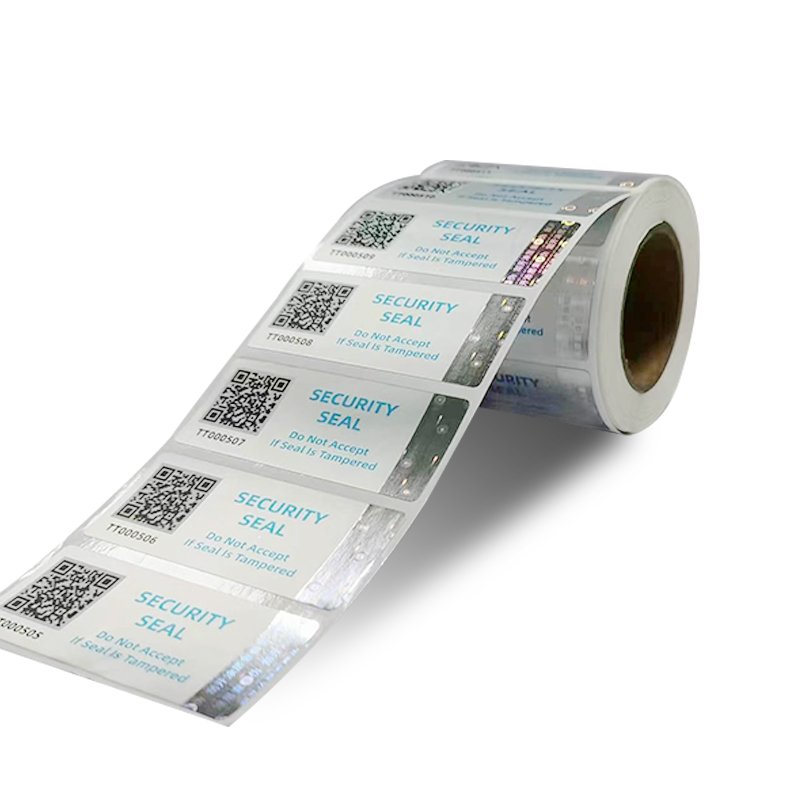
Because of their robust structure, security labels can withstand handling, transportation, and environmental stress without easily breaking. They are widely used in scenarios where both tamper evidence and product appearance are important—such as electronics packaging, logistics sealing, and branded product authentication. In real-world applications, businesses often choose security labels when they need a balance between durability and visible anti-tamper features.
Destructible Labels
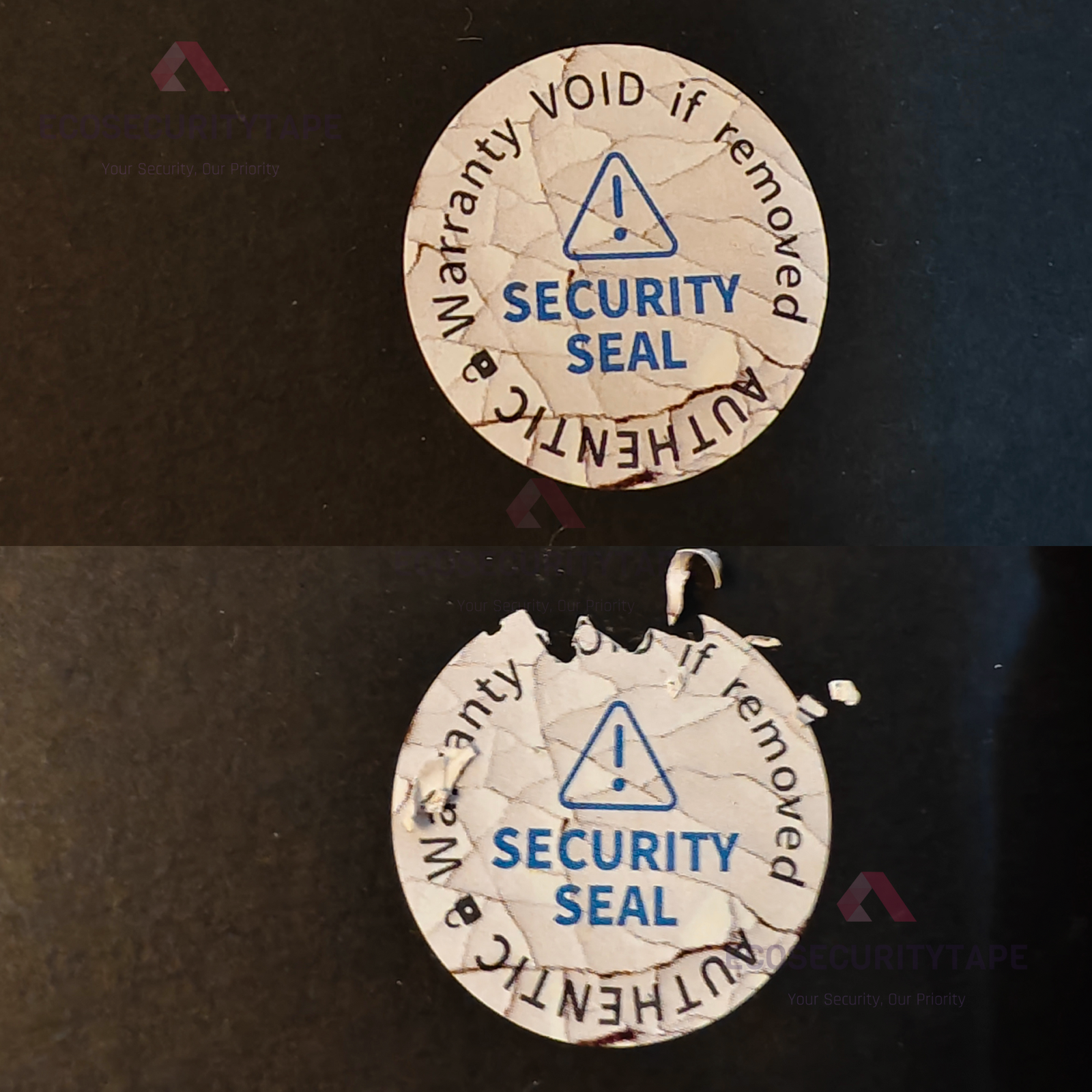
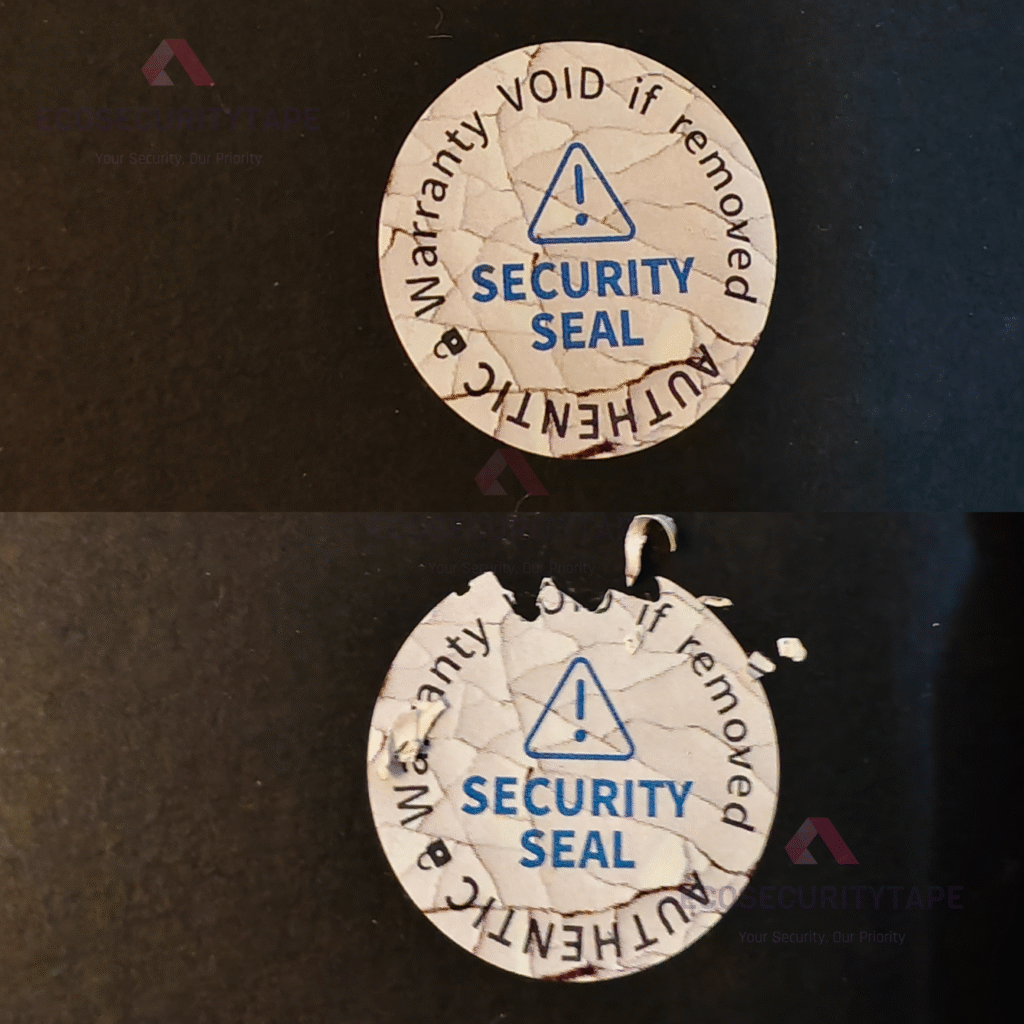
In contrast, destructible labels are made from specially engineered fragile paper materials. This substrate is thin, brittle, and has no tensile strength, meaning it will break apart into small pieces if removal is attempted.
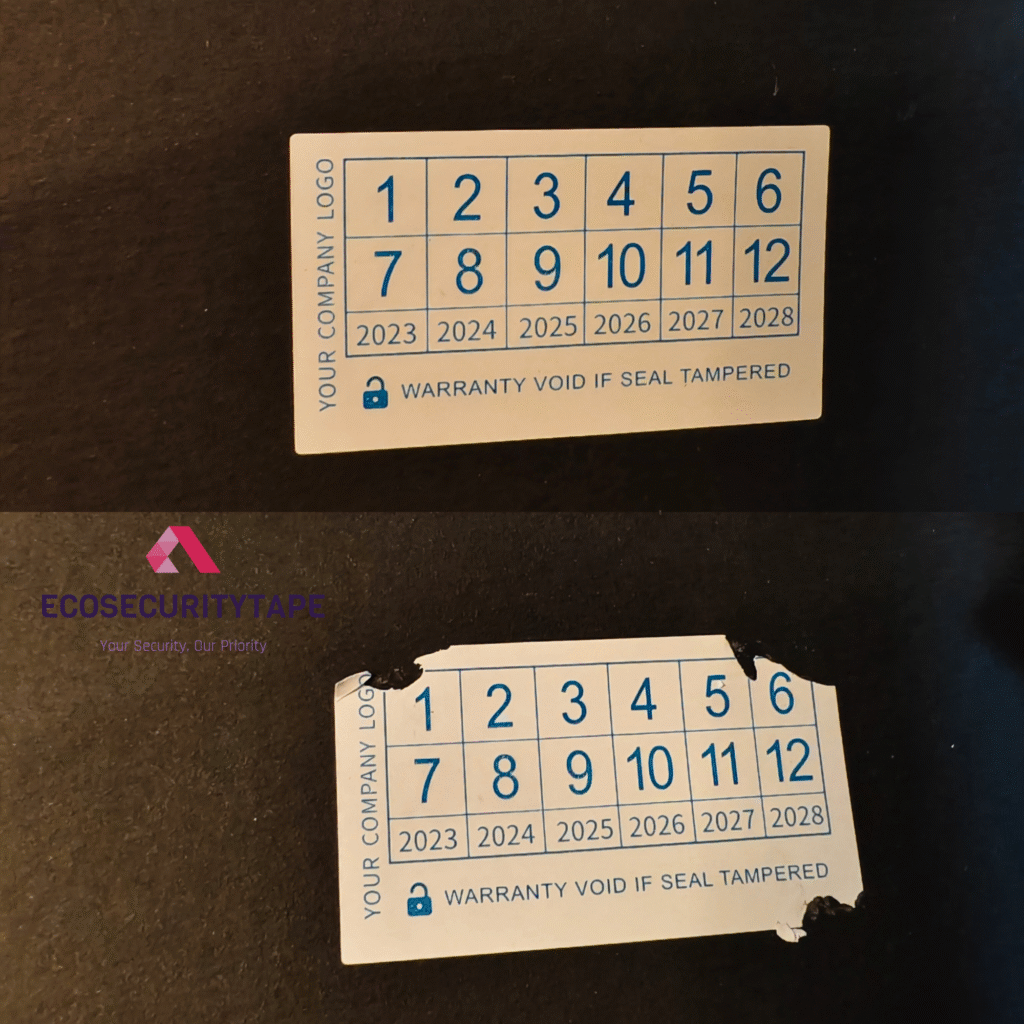
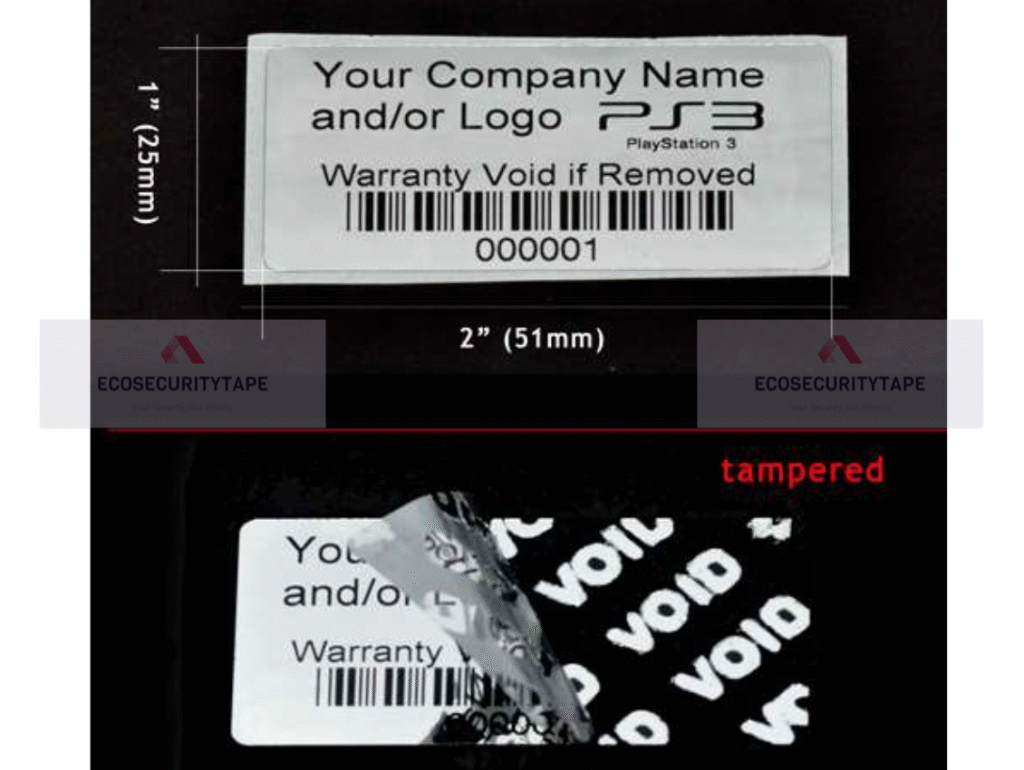
Once applied, destructible labels cannot be peeled off intact, making them a self-destructive anti-tamper solution. This characteristic makes them ideal for warranty seals, asset protection labels, and anti-refurbishment applications, where preventing removal or reuse is critical. For example, electronics manufacturers often use destructible labels on screws or device openings to ensure that any unauthorized access is immediately visible and irreversible.
Key Takeaway
The core difference in destructible labels vs security labels lies in their material behavior:
- Security labels prioritize durability and controlled tamper indication
- Destructible labels prioritize irreversible damage and non-removability
Choosing the right material depends on whether your priority is long-term usability or one-time, high-security tamper prevention.
Tamper-Evident Mechanisms
When evaluating destructible labels vs security labels, the tamper-evident mechanism is the most critical factor. It directly determines the level of protection, how tampering is detected, and whether the product can be reused or visually restored after opening.
Visible Evidence Without Full Destruction
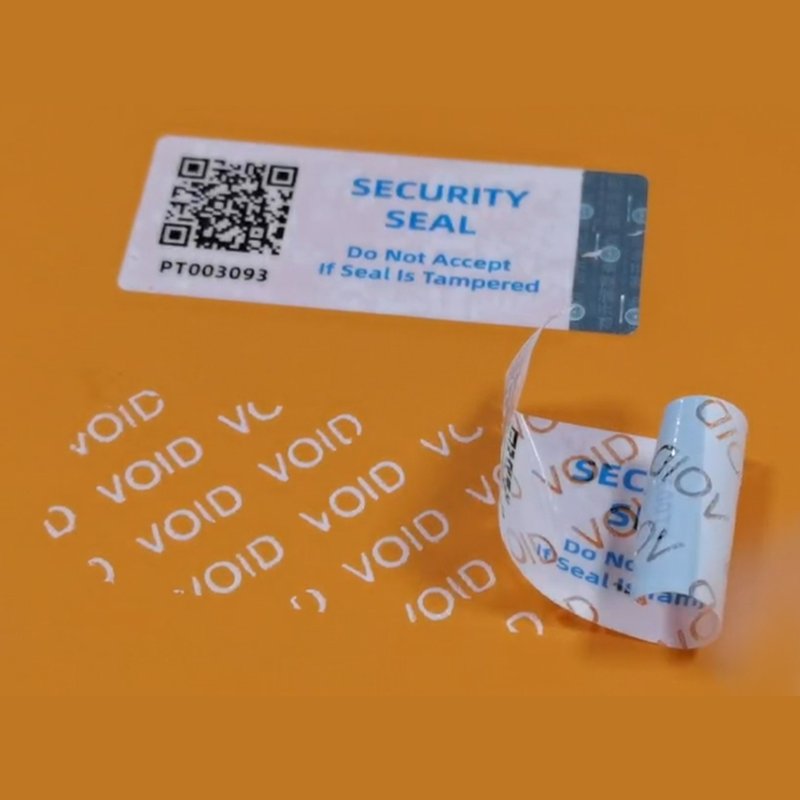
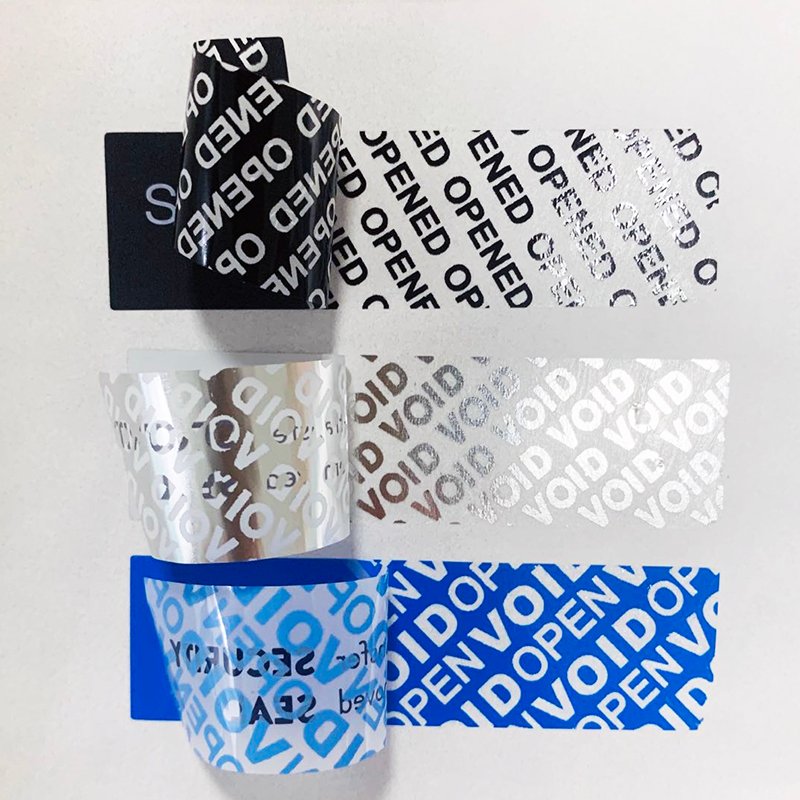
The core anti-tamper logic of security labels is based on revealing a hidden message, such as VOID, OPEN, or a custom security pattern, once the label is removed.
When someone attempts to peel off the label, a permanent mark is left either on the label surface or on the applied substrate, clearly indicating that tampering has occurred. However, the label itself typically remains structurally intact, even after removal. In some cases, it can be partially peeled or repositioned, depending on the material and adhesive type.
This makes security labels ideal for applications where:
- Tamper evidence is required, but full destruction is not necessary
- The product packaging still needs to maintain a clean and professional appearance
- Businesses want to retain the label for inspection, tracking, or branding purposes
For example, in logistics packaging or retail product boxes, companies often prefer security labels because they provide a clear visual warning without completely damaging the packaging or label.
Irreversible, Self-Destructive Protection
In contrast, the anti-tamper logic of destructible labels is based on immediate and irreversible destruction.
Once applied, any attempt to remove, lift, or tamper with the label will cause the material to break into small fragments instantly. The label cannot be removed in one piece, cannot be restored, and cannot be reapplied.
This “self-destruct” mechanism makes destructible labels highly effective for:
- Warranty seals on electronics or machinery
- Asset tracking labels on high-value equipment
- Anti-refurbishment and anti-counterfeiting applications
In real-world scenarios, destructible labels are often placed over device screws, access points, or critical components. If the label is broken, it provides undeniable proof that the product has been opened or tampered with—eliminating disputes in after-sales service or warranty claims.
Key Performance Comparison
When comparing destructible labels vs security labels, understanding their key performance parameters helps businesses choose the right solution based on real-world application needs—whether it’s logistics packaging, warranty protection, or high-security asset control.
| Comparison Criteria | Standard Security Labels | Destructible Labels |
|---|---|---|
| Material Strength | Flexible, durable, and resistant to tearing or stretching | No flexibility, highly brittle, breaks upon contact |
| Removal Behavior | Can be partially peeled; leaves tamper evidence without destroying the label | Completely breaks into fragments; cannot be removed intact |
| Reusability | Cannot be reapplied, but the label remains largely intact | Fully destroyed after removal; no possibility of reuse |
| Adhesive Residue | Full-transfer types leave residue; non-transfer types leave little to none | Minimal residue; may leave small fragmented adhesive traces |
| Protection Level | Suitable for standard anti-counterfeiting, anti-diversion, and branding | Designed for high-security tamper prevention, anti-refurbishment, and warranty sealing |
The comparison of destructible labels vs security labels ultimately comes down to security level and application purpose.
- Security labels are ideal for businesses that need visible tamper evidence while maintaining label integrity and brand appearance, such as retail packaging, logistics, and product identification.
- Destructible labels are best suited for high-security scenarios where any attempt at removal must result in irreversible damage, such as warranty seals, electronics protection, and anti-refurbishment control.
For most companies, selecting between destructible labels vs security labels depends on whether the priority is controlled tamper indication or absolute, non-recoverable tamper prevention.
Applications and Industries
1. Destructible Labels (Tamper-Evident, Non-Reusable)
Key Features: Instantly destroys upon removal, cannot be reapplied, specifically designed for strict tamper prevention, anti-refurbishment, and ensuring genuine, original products.
High-End Electronics:
- Battery and screw seals for smartphones like iPhone and Samsung, tamper-proof labels on Sony PlayStation and Microsoft Xbox consoles.
- Seals for precision electronics such as Dell, HP, MacBook laptops, and Canon, Nikon cameras, preventing unauthorized disassembly or refurbishment while maintaining warranty validity.
International Brand Appliances:
- Factory warranty seals for Siemens, Bosch, LG, Samsung refrigerators, washing machines, and air conditioners. These labels act as official proof of warranty and prevent unauthorized servicing.
Luxury Cigars, Spirits, and Gift Boxes:
- High-end products such as Cohiba cigars, premium whiskies, brandy, and wine gift boxes. Once opened, the labels are destroyed, ensuring products remain untampered and unopened.
Other International Applications:
- Import precision instruments, medical consumables, luxury watches, and jewelry also use one-time destructible labels to guarantee product authenticity and security.
2. Standard Security Labels (Verifiable, Non-Destructive)
Key Features: Designed for authenticity verification and tamper evidence without affecting product use or official after-sales service.
International Beauty and Fragrance:
- Brands like LV, Dior, Chanel, Hermès use these labels on perfume and skincare boxes to show whether the product has been opened. The label provides visual verification while preserving product integrity and warranty.
Imported Food, Supplements, and Gift Boxes:
- High-end chocolates, health supplements, baby products, and snack gift boxes use security labels for brand traceability and consumer convenience, allowing verification without disrupting product use.
International Fashion, Bags, and Everyday Goods:
- Packaging and tags for brands like Coach, Michael Kors, Nike, and Adidas. Consumers can authenticate items while maintaining eligibility for returns or warranty services.
This differentiation highlights the practical selection criteria for destructible versus standard security labels, ensuring that businesses choose the right label based on protection level, product type, and consumer experience.
FAQ
1. Can destructible labels be reused?
No. Once a destructible label is applied, any attempt to remove it will cause it to break into pieces. It cannot be reapplied or reused, making it a one-time, high-security solution.
2. Can both security labels and destructible labels be customized with logos or QR codes?
Yes. Both types support full customization, including logos, barcodes, QR codes, UID serial numbers, and custom anti-tamper messages, allowing brands to meet their specific identification and security requirements.
3. Are destructible labels likely to be damaged during shipping or storage?
No. Destructible labels are designed to break only when someone attempts to remove or tamper with them. Under normal conditions—such as application, transportation, and storage—they remain stable and reliable.
4. Which type of label is more cost-effective?
Standard security labels are made from more common materials, so they are generally more cost-effective. Destructible labels use specialized fragile materials, which makes them slightly more expensive, but they provide a higher level of tamper protection. The right choice depends on your budget and required level of security.
Contact Us
If you’re looking to customize security labels or destructible labels, feel free to reach out to us via WhatsApp at +1 615 480 2757. We support full customization, including size, logo, serial numbers, and tamper-evident features, and can recommend the most suitable solution based on your specific product and application scenario.
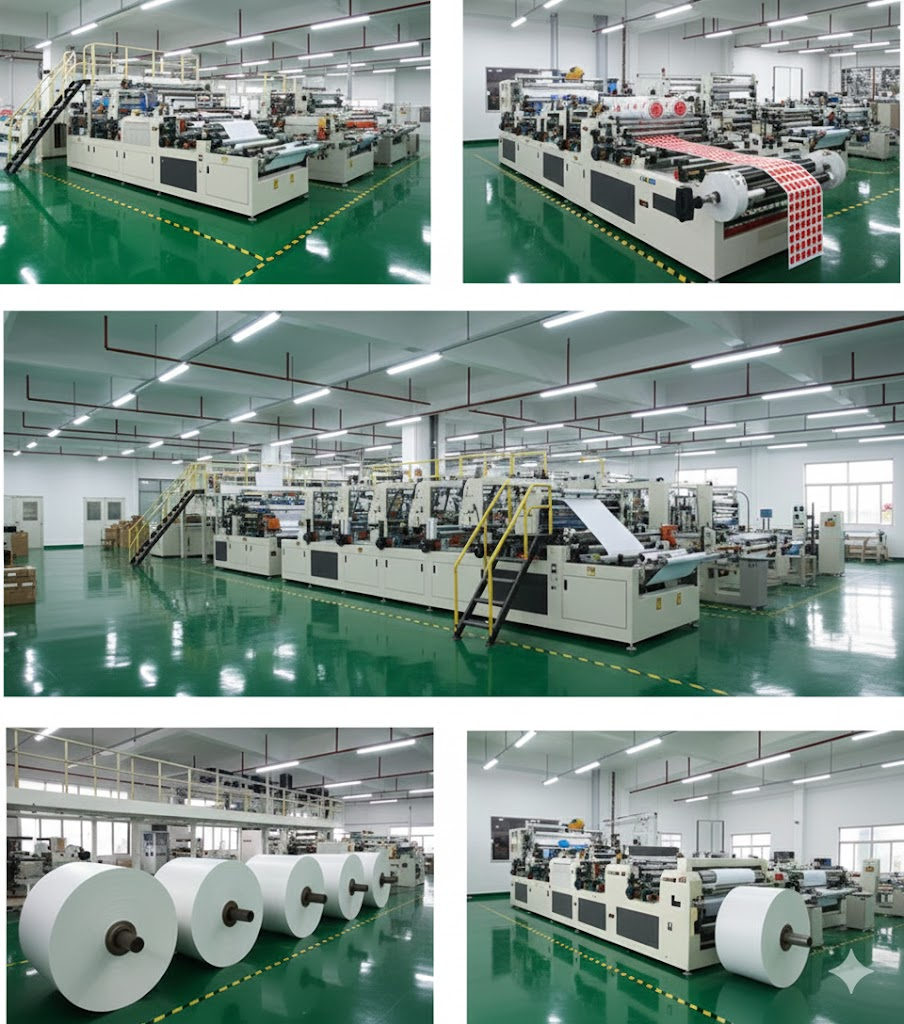
Whether you are sealing electronics for warranty protection, packaging cosmetics and food products, managing e-commerce returns, or preventing product diversion in distribution channels, we provide tailored recommendations and pricing to help you solve real-world anti-counterfeiting challenges efficiently.
With extensive experience serving global clients, we understand the practical issues businesses face—such as labels failing during transport, insufficient tamper evidence, or mismatched materials for different surfaces. Our team works closely with you to ensure the selected label performs reliably in your actual usage environment.
- Email: info@ecosecuritytape.com
- WhatsApp: +1 615 480 2757
Contact us to request free samples and test the labels on your own products. You can also download our product catalog online to explore our full range of anti-tamper packaging solutions and find the best fit for your business.

Focus on tamper evident packaging, free sample for test, small-batch MOQ, let’s have a talk.