Article Background
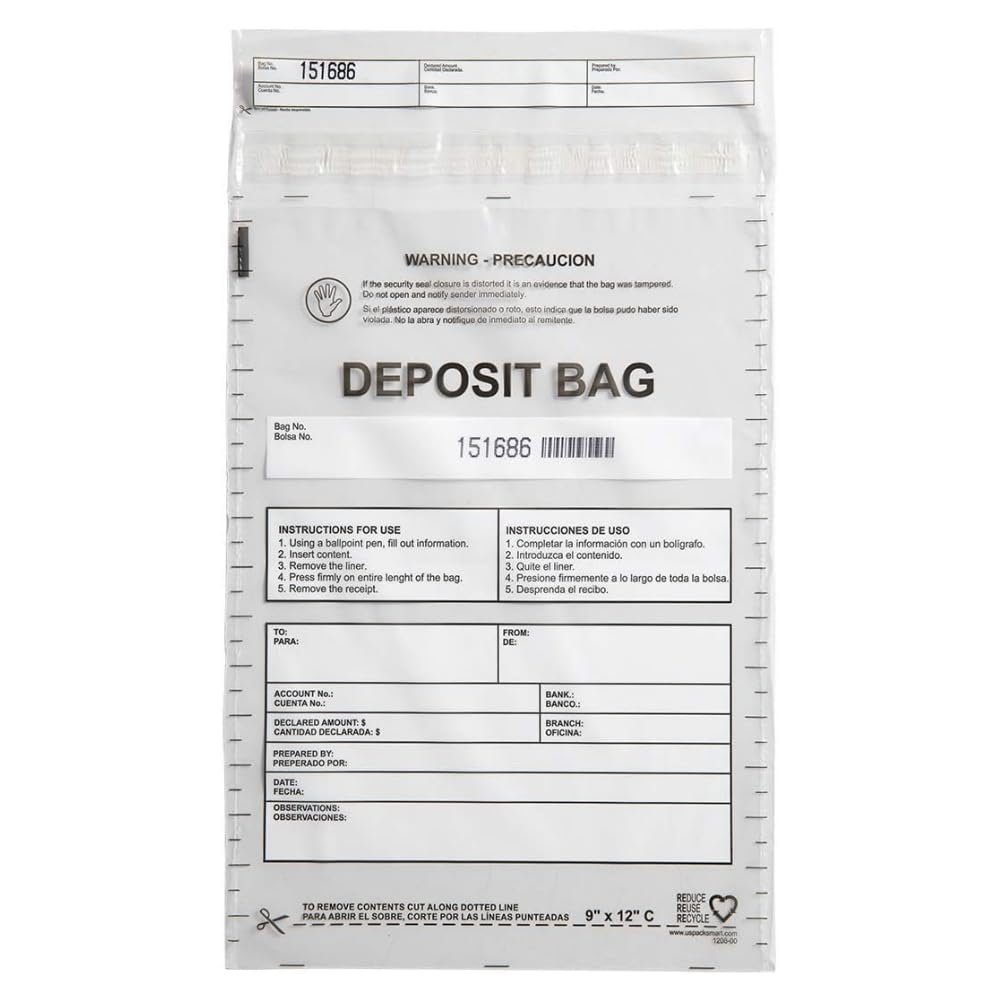
Since April 2026, we have received a growing number of inquiries for custom tamper evident bags from customers across multiple countries, including Colombia, South Korea, Spain, and South Africa.
These clients operate in a wide range of industries and application scenarios, such as banking security, airport duty-free retail, and government document protection. Although their use cases differ, they share a clear and consistent requirement: the need for highly customized packaging solutions.
Most customers typically provide reference images of the required bags, along with specific dimensions, thickness requirements, and order quantities. Based on this information, EcoSecurityTape develops accurate quotations for custom tamper evident bags, ensuring that each solution is tailored to the client’s operational and security needs.
Once pricing and specifications are confirmed, payment is completed and production is immediately initiated, enabling a streamlined and efficient workflow for global buyers seeking reliable custom tamper evident bags solutions.
Tamper Evident Bags Materials and Structue
Material Selection and Functional Design
The performance and quality of custom tamper evident bags are fundamentally determined by the selection of raw materials and the structural design. Different application scenarios—such as alcoholic beverages, duty-free products, financial documents, and forensic evidence—require significantly different material configurations and performance standards.
In general, the material system of tamper evident packaging bags can be divided into three core categories: base film materials, security adhesive layers, and functional auxiliary materials. Each layer plays a specific role in ensuring durability, tamper resistance, and application adaptability.
1. Base Film Materials
The base layer is typically made from high-strength composite films, with common material options including PE (Polyethylene), PET (Polyethylene Terephthalate), BOPP (Biaxially Oriented Polypropylene), and aluminum-plastic composite films.
PE material offers excellent flexibility and cost efficiency, making it suitable for general applications such as alcoholic beverages and cosmetic packaging. PET material provides higher rigidity and superior puncture resistance, making it ideal for electronics packaging and evidence bags where protection against sharp objects is required. Aluminum-plastic composite films offer excellent light-blocking, moisture resistance, and oxidation protection, and are commonly used for sensitive products such as pharmaceuticals and premium tea packaging.
2. Security Adhesive Layer
The security adhesive layer is the core functional component of tamper evident packaging bags and is responsible for tamper detection and irreversible evidence marking. It mainly includes three types: OpenVoid security adhesive, hot-melt adhesive, and acrylic adhesive.
OpenVoid adhesive is the standard configuration. Once the bag is peeled, scratched, or exposed to solvents, permanent “VOID” or “OPENED” messages appear and cannot be removed or restored.
Hot-melt adhesive provides strong bonding strength and fast curing performance, making it suitable for high-speed automated packaging lines, particularly in alcoholic beverage and heavy-duty packaging applications.
Acrylic adhesive offers excellent resistance to high and low temperatures and long-lasting adhesion, making it suitable for cross-border logistics, sea freight, and extreme environmental conditions.
3. Functional Auxiliary Materials
Depending on customization requirements, additional functional materials may be incorporated to enhance performance and branding capability. These include security printing inks for serialization codes, logos, and custom patterns; reinforced fibers for improved tensile strength and load-bearing capacity; anti-adhesion coatings to prevent bag sticking during production and handling; and privacy blackout layers for confidential documents and financial packaging applications.
Structural Composition
A standard tamper evident bag typically consists of a three-layer structure, designed to balance protection performance and tamper-proof functionality.
1. Outer Layer
The outer layer is made of high-strength base film materials and is responsible for surface printing, branding, and resistance against friction and abrasion during transportation. It protects both the product and internal security structures from external physical damage.
2. Middle Layer
The middle layer is the core security layer, consisting of the tamper-evident adhesive system and anti-tampering structural design. It integrates OpenVoid technology, which activates irreversible evidence marking upon unauthorized opening, ensuring tamper detection and security integrity.
3. Inner Layer
The inner layer is made of soft, product-compatible materials designed to ensure close contact with packaged items such as glass bottles or cosmetic containers. It prevents surface abrasion and damage while maintaining stability and protective performance during transportation and handling.
Manufacturing Process of Custom Tamper Evident Bags
Overview of the Production Workflow
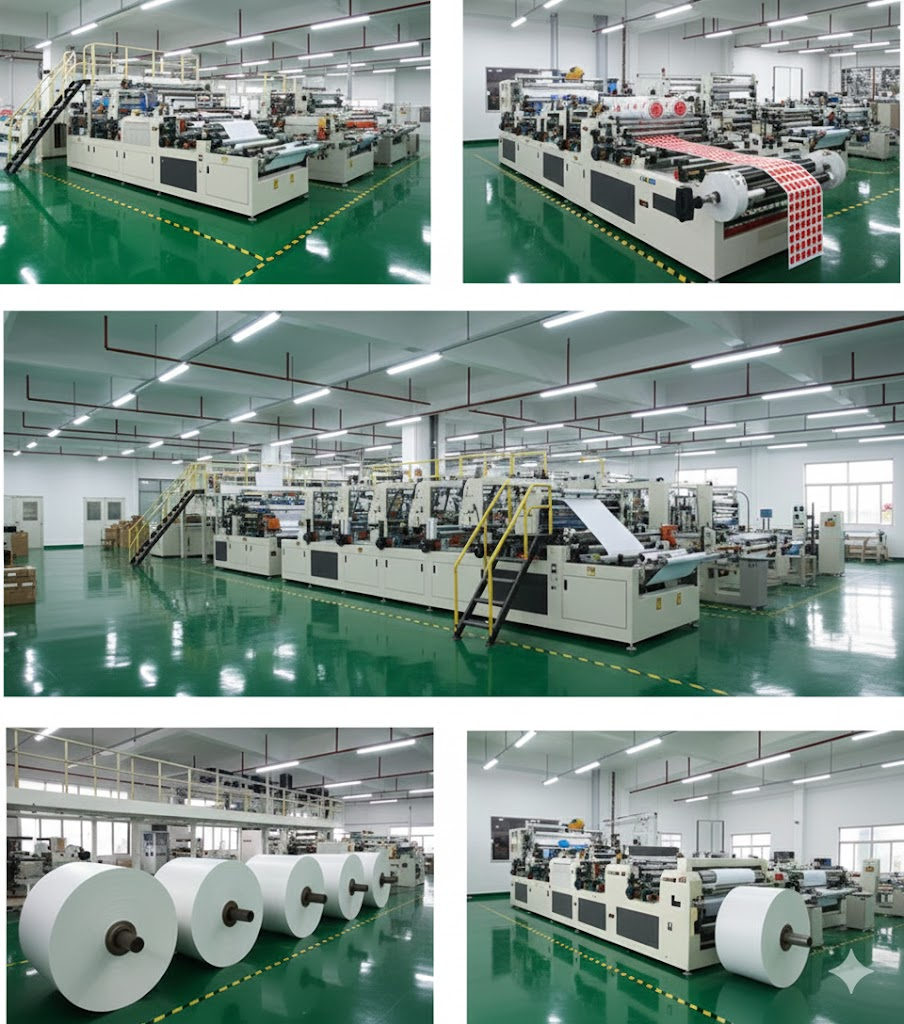
The production of STEB tamper evident packaging bags by a professional tamper evident bags manufacturer follows a strictly controlled four-stage process: material pre-treatment, structural lamination and processing, security function integration, and final quality inspection.
Each stage is executed with high precision to ensure that both the tamper-evident functionality and physical performance of the final product meet international standards required for high-value and security-sensitive applications.
1. Raw Material Pre-Treatment
The process begins with incoming inspection of all raw materials, including base films, security adhesives, and security printing inks. A professional tamper evident bags manufacturer carefully verifies material specifications, adhesive performance, temperature resistance range, and printing compatibility to ensure compliance with industry and customized requirements.
After inspection, the base film undergoes surface treatment, such as corona treatment, to improve surface energy and adhesion performance. This step ensures strong bonding between layers and stable ink adhesion, preventing issues such as delamination, weak adhesion, or blurred printing during later production stages.
2. Lamination and Structural Processing
Once pre-treatment is completed, the base materials are laminated with security adhesive layers and functional auxiliary materials using high-precision lamination equipment. A professional tamper evident bags manufacturer strictly controls temperature, pressure, and speed during this process to ensure uniform bonding without bubbles, separation, or defects.
After lamination, the material is slit and converted into bag formats according to customized specifications (e.g., 15×40 mm, 85×25 mm, etc.). The film is then processed through bag-making machines for heat sealing, folding, and forming. At this stage, the basic bag structure is completed, while reserved areas for security coding and tamper-evident sealing are maintained.
3. Security Function Integration and Customization
This is the core stage in the production process for a tamper evident bags manufacturer. It consists of two key operations:
First, installation of the tamper-evident adhesive strip. The OpenVoid security adhesive is precisely applied to the sealing area of the bag using specialized equipment, ensuring accurate positioning, uniform pressure, and zero misalignment. This guarantees irreversible tamper evidence once the bag is opened.
Second, printing and serialization. High-speed printing equipment is used to apply brand logos, airport codes, and customized graphics. Each bag is then assigned a unique traceability code using laser marking or inkjet printing technology, enabling a “one bag, one code” digital tracking system that supports full supply chain traceability.
4. Finished Product Inspection and Packaging
After production, each batch undergoes comprehensive quality control. A professional tamper evident bags manufacturer conducts multiple inspection procedures, including:
- Visual inspection: checking print clarity, adhesive alignment, and surface integrity
- Performance testing: evaluating adhesive strength, load-bearing capacity, temperature resistance, and tamper-evident activation performance
- Code verification: ensuring all serialized codes are unique and fully scannable
Only products that pass all inspection standards are approved for packaging. Qualified products are then sorted, packed in moisture-proof and compression-resistant cartons, and clearly labeled with product model, specifications, quantity, and production date to ensure efficient storage, logistics handling, and customer delivery.
Custom Tamper Evident Bags Customization Processes
Overview of Customization Strategy
The customization of tamper evident packaging bags focuses on three core directions: application scenario adaptation, functional enhancement, and brand differentiation. A professional custom security bags supplier can flexibly adjust specifications and production processes based on different industry needs, including spirits packaging, duty-free retail, financial documents, and forensic evidence handling.
Customization is typically divided into three main categories: basic specifications, functional upgrades, and optional processing techniques.
1. Basic Customization Options
Size and Specification Customization
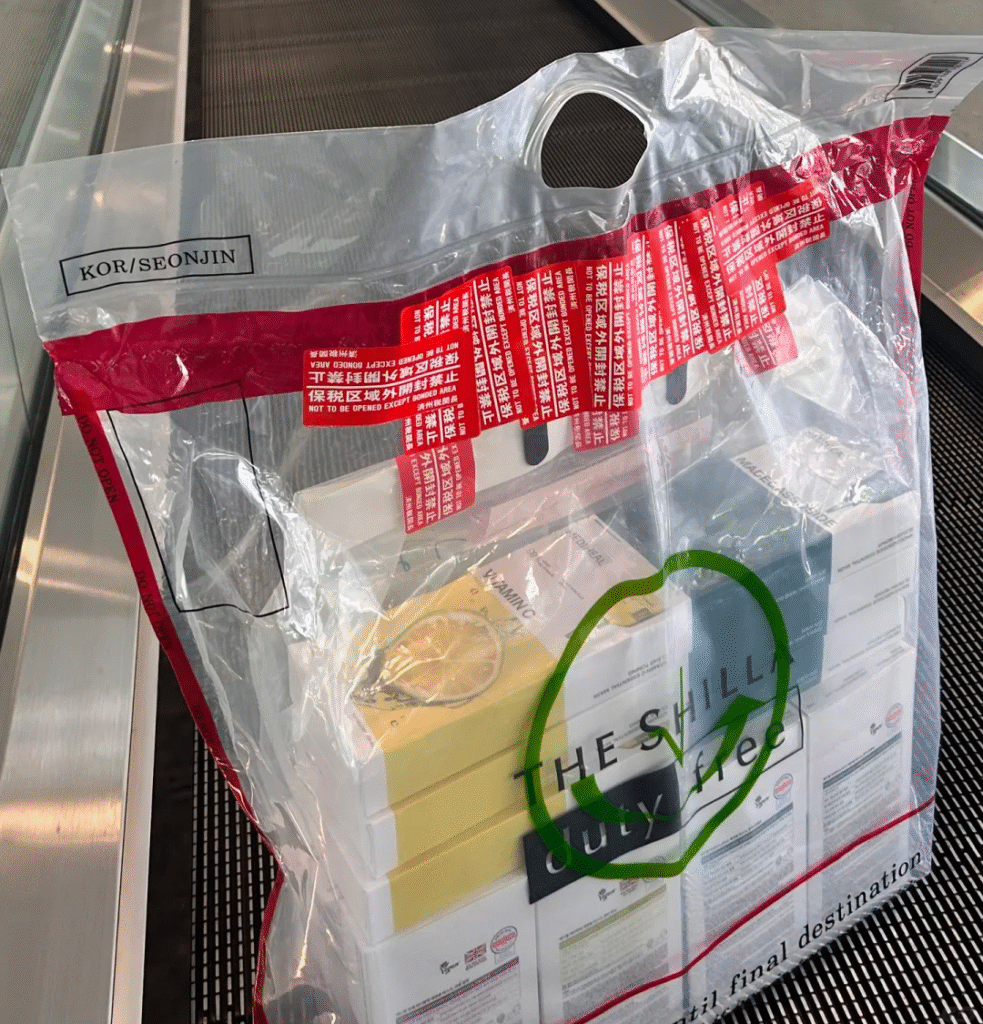
Bag dimensions can be tailored according to product size and weight requirements. For example, alcohol packaging commonly uses sizes such as 15×40 mm or 20×50 mm, suitable for single or double bottles of whisky and brandy. Duty-free cosmetic packaging often uses smaller formats such as 85×25 mm, while financial document bags require fully customized non-standard dimensions depending on document size and handling requirements.
Material and Color Customization
Base materials can be selected from PE, PET, or aluminum-plastic composite films. Color options are fully customizable based on branding needs. Transparent or semi-transparent designs are commonly used in duty-free applications to facilitate customs inspection, while opaque black or grey materials are preferred for financial documents to ensure confidentiality. For alcohol packaging, custom color schemes are often used to enhance brand recognition.
A professional custom security bags supplier typically provides flexible material matching solutions to ensure both functionality and visual consistency with brand identity.
Basic Information Printing
Custom printing services include brand logos, company names, airport codes (such as ICN for Incheon Airport or SIN for Singapore Changi Airport), production dates, and usage instructions. Printing methods such as offset printing and screen printing are used to ensure high clarity, durability, and long-lasting visual performance.
2. Functional Customization Options
Security Feature Customization
Tamper-evident effects can be customized based on different security requirements, including “VOID” messages, brand-specific hidden patterns, or thermochromic and photochromic effects. Advanced traceability systems can also be integrated, allowing users to scan unique codes to track logistics routes, production batches, and distribution channels. This is a key capability offered by a high-end custom security bags supplier for global supply chain security.
Load-Bearing and Protection Enhancement
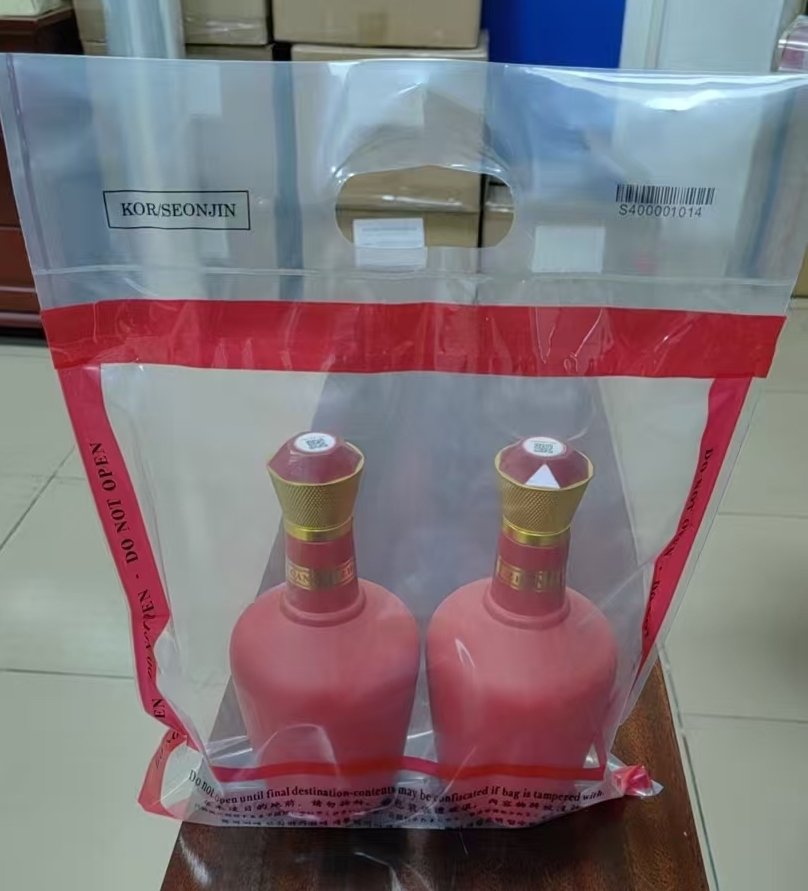
Material thickness and structural strength can be customized according to load requirements. For example, alcohol packaging bags may need to support over 10 kg, requiring reinforced composite films and tensile-strength fibers to securely hold premium spirits such as Johnnie Walker Blue Label (1L × 2 bottles). Evidence and financial bags can be upgraded with puncture-resistant and tear-resistant properties to enhance security performance.
Special Functional Design
For duty-free applications, transparent structures are designed for easy customs inspection. For confidential logistics, full blackout privacy layers are available. For temperature-sensitive transport, high and low temperature-resistant adhesive systems can be integrated to ensure stable performance under different environmental conditions. A reliable custom security bags supplier will match these features precisely to application requirements.
3. Optional Processing Techniques
Laser Coding Technology
Laser marking is used to generate unique traceability codes with high precision and tamper resistance. Compared to traditional printing, laser coding offers stronger anti-counterfeiting performance and is suitable for full supply chain traceability systems provided by a professional custom security bags supplier.
Hot Stamping (Gold/Silver Foil) Process
Hot stamping is used for premium branding elements such as logos and identity marks. This enhances visual appeal and is widely used in luxury goods, high-end spirits, and duty-free packaging applications.
Die-Cutting and Irregular Shape Design
Custom bag shapes can be produced to match product contours, such as curved designs for wine bottles or fitted shapes for watches and small luxury items. This improves both aesthetic presentation and packaging precision.
Anti-Stick Coating Technology
An anti-adhesion coating can be applied to inner or outer surfaces to prevent sticking during storage and handling. This is especially useful for automated packaging lines, improving operational efficiency and usability, which is often recommended by an experienced custom security bags supplier.
MOQ, Lead Time and Cost
Pricing and Production Factors
The minimum order quantity (MOQ), production lead time, and overall cost of custom tamper evident bags are directly influenced by four key factors: customization complexity, material selection, production process difficulty, and manufacturing scale. A professional STEB bag factory evaluates these factors to provide accurate quotations and realistic production schedules for global buyers.
Understanding these parameters helps customers quickly assess feasibility, budget requirements, and delivery expectations before placing an order.
1. MOQ Standards
Standard Products (Low MOQ 300–500 pcs)
For non-customized tamper evident bags with no logo printing, no special color requirements, and no structural modifications, the MOQ can be as low as 300–500 pieces. These standard products are ideal for small duty-free shops, startups, and individual buyers, significantly reducing initial procurement costs and inventory risks.
Basic Customized Products (MOQ 1,000–3,000 pcs)
For bags with basic logo printing, standard color customization, and conventional sizing, the MOQ ranges from 1,000 to 3,000 pieces. This level is suitable for small to medium brands and regional duty-free retailers with moderate volume requirements.
Advanced Customized Products (MOQ 10,000+ pcs)
For high-end customization—including exclusive airport logos, brand-specific color schemes, die-cut shapes, hot stamping (gold/silver), and advanced traceability systems—the MOQ starts from 10,000 pieces. These solutions are typically required by international liquor brands, global duty-free chains such as Lotte or DFS, and large financial institutions. At this level, a STEB bag factory often needs dedicated tooling and customized production setups, which increases the minimum order requirement.

2. Lead Time Influencing Factors
Standard Production Lead Time
For standard or basic customized orders with sufficient raw material availability and stable production scheduling, the lead time is typically 7–15 working days. Small urgent orders can be accelerated and delivered in as fast as 5 working days.
High-End Customized Lead Time
For complex orders involving mold development, exclusive process design, or customized traceability systems, the lead time is generally 20–30 working days. Mold production alone may require 5–10 days, followed by 15–20 days for mass production and quality inspection. A professional STEB bag factory always separates tooling and production phases to ensure precision and consistency.
Special Cases
Delays may occur due to raw material shortages, repeated design revisions, or international shipping constraints for export orders. In such cases, timelines are adjusted and confirmed with customers in advance to ensure transparency.
3. Key Cost Factors
Material Cost
Base material type and thickness significantly affect pricing. For example, reinforced PET composite films are 20%–30% more expensive than standard PE films. Imported security adhesives (such as temperature-resistant or high-performance bonding adhesives) can increase costs by 15%–25% compared to standard domestic adhesives, especially for high-end spirits and cross-border logistics applications.
Process Cost
Special finishing processes such as hot stamping (gold/silver foil), die-cut shaping, and laser coding typically increase production costs by 5%–15%. In addition, customized traceability systems with dedicated backend platforms may incur additional development fees charged annually or per usage, depending on system requirements.
Customization Complexity Cost
Design complexity also affects pricing. Multi-color printing, airport-specific codes, and intricate graphic designs increase costs by 10%–20% compared to standard single-color printing. However, a key principle from any STEB bag factory is that higher order volumes reduce per-unit cost significantly—larger batches always result in better unit pricing.
Logistics Cost
Domestic orders are usually charged based on weight, while international shipments require additional costs for sea freight, air freight, customs clearance, and insurance. Final logistics pricing depends on destination countries such as the United States, Russia, Vietnam, and other global markets, as well as selected shipping methods.
Quality Control in Custom Tamper Evident Bags Production
Quality Management in Manufacturing
The quality of custom tamper evident bags directly determines their security performance, protective capability, and brand credibility. In a professional production system, quality control must be strictly implemented across three core stages: raw materials, processing, and finished products. Each stage requires precise monitoring to ensure consistent product reliability and eliminate potential quality risks.
Raw Material Control
A strict supplier qualification system is established, where only certified and compliant raw material suppliers are selected. A professional production system reviews supplier qualifications, production certifications, and material testing reports on a regular basis to ensure all materials meet national GB/T standards as well as industry-specific requirements.
Upon arrival of each material batch, sampling inspections are conducted. Key parameters include film thickness, tensile strength, and temperature resistance for base materials; adhesive strength, tamper-evident activation performance, and solvent resistance for security adhesives; and print clarity and abrasion resistance for security inks. Any non-compliant materials are strictly rejected and not allowed into production.
Processing Control
Lamination Process Control
Strict control is applied to lamination temperature, pressure, and speed. Each batch undergoes sampling tests to verify interlayer adhesion strength, ensuring no delamination, bubbling, or structural instability occurs in the final product.
Printing Process Control
High-precision printing equipment is used, with regular calibration to maintain accuracy. Printed content such as logos, serialized codes, and airport identifiers is inspected for clarity, color consistency, and abrasion resistance, ensuring all information is accurate and durable.
Security Adhesive Application Control
The placement and pressure of tamper-evident adhesive strips are strictly controlled to ensure perfect alignment without deviation, leakage, or wrinkling. Sampling tests are conducted to verify tamper-evident performance, ensuring that unauthorized opening clearly triggers irreversible “VOID” indicators.
Serialization and Traceability Control
Each bag is assigned a unique, scannable traceability code. A centralized database system is established to ensure a one-to-one mapping between code, product, and customer, enabling full lifecycle traceability and efficient post-production management.
Typical Custom Cases and Real-World Implementation
Industry Applications and Delivery Process
Tamper evident packaging bags are widely used across key industries such as alcoholic beverages, duty-free retail, financial services, forensic evidence handling, and logistics security. Below are three representative customization cases, along with key implementation considerations to help global clients efficiently complete their customization projects.
Airport Duty-Free Alcohol Packaging
Customization Requirements
Designed for premium spirits such as whisky, brandy, and vodka, this solution must support the transport of two 1-liter bottles with a load-bearing capacity of at least 10 kg. The bag must feature anti-tamper, waterproof, and tamper-evident functions, while also supporting airport logo and code printing for customs clearance and transit efficiency.
Customization Solution
The structure uses reinforced PET composite film to enhance load resistance and puncture protection. It is paired with OpenVoid tamper-evident adhesive strips to ensure irreversible opening evidence. The outer layer is customized with airport logos (such as ICN for Incheon Airport or NRT for Narita Airport) and brand-specific color schemes. An anti-adhesion inner coating is added for usability, while each bag is assigned a unique serialized traceability code.
Implementation Case
This solution supports both low-MOQ standard versions (300–500 pcs) and exclusive airport-customized versions (MOQ 10,000 pcs). Typical lead time ranges from 7 to 20 working days. It is widely used by clients such as Lotte Duty Free at Singapore Changi Airport and Yamazaki whisky counters at Tokyo Narita Airport.
Financial Documents and Cash Security Packaging
Customization Requirements
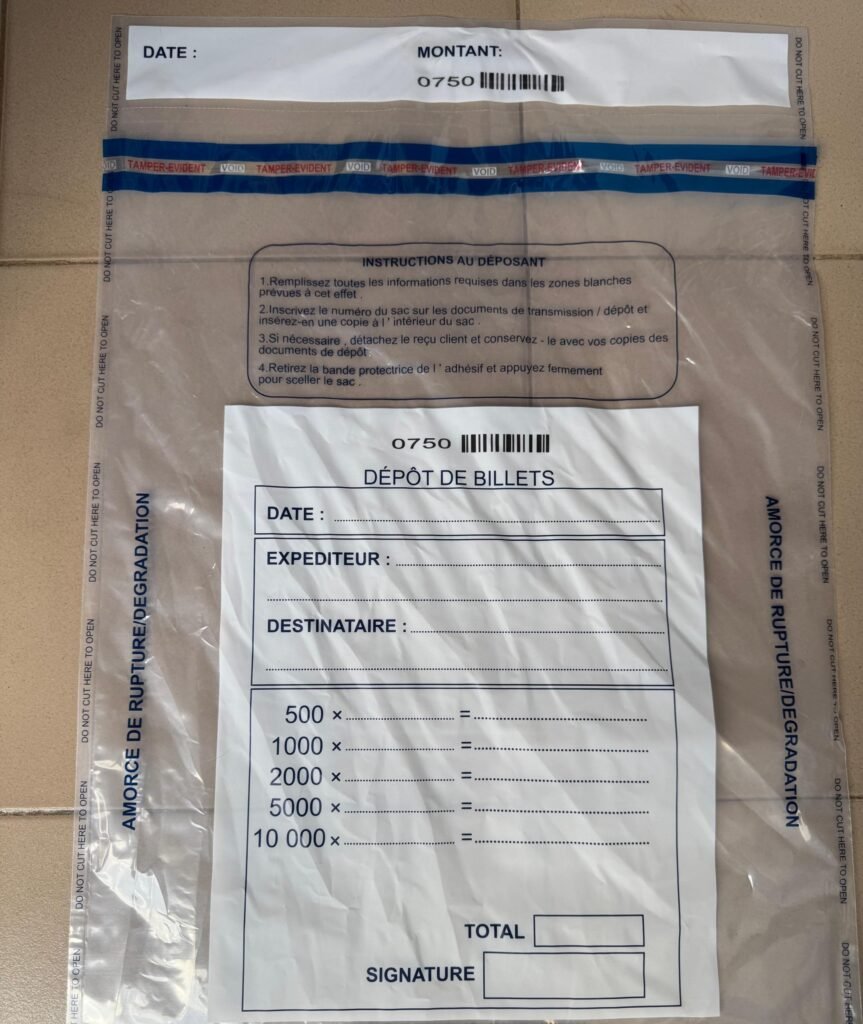
Used for secure sealing of banknotes, checks, contracts, and coins. The packaging must ensure high confidentiality, anti-tampering protection, waterproof performance, and full opacity with complete traceability.
Customization Solution
The bag uses fully opaque aluminum-plastic composite film for maximum privacy protection. High-strength hot-melt adhesive is applied to enhance sealing strength and anti-opening performance. The outer surface includes minimal printing such as “Confidential” or “Security Seal” along with a unique serialized code to ensure traceability without compromising privacy.
Implementation Case
Standard MOQ is 10,000 pieces, with a production lead time of 10–15 working days. This solution is commonly used by bank branches, financial institutions, and cash-in-transit service providers to ensure secure handling, storage, and transfer of sensitive financial assets.
Evidence and Privacy Courier Packaging
Customization Requirements
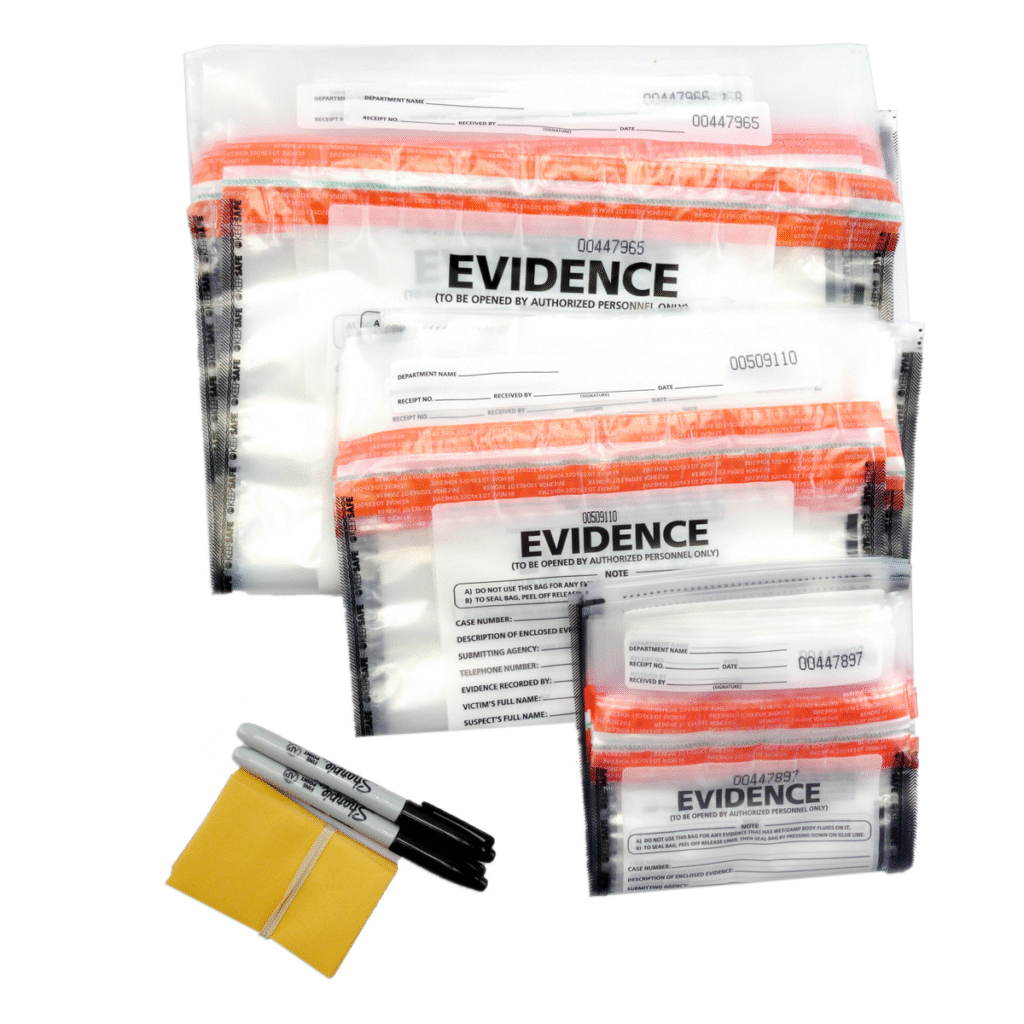
For forensic applications such as crime scene evidence sealing and law enforcement investigations, the packaging must provide anti-tamper protection, contamination resistance, and full traceability. For courier services, the solution must ensure privacy protection and security for high-value parcels.
Customization Solution
Evidence bags use puncture-resistant PET composite film combined with tamper-evident adhesive strips and unique traceability codes. The outer layer is printed with “Evidence Seal” markings for legal identification. Privacy courier bags use full blackout composite film with anti-tamper sealing technology, suitable for high-value electronics such as smartphones and gaming consoles.
Implementation Case
Evidence bags typically require a MOQ of 500–2,000 pieces, while standard privacy courier bags start from 500 pieces. The production lead time ranges from 7 to 15 working days. These solutions are widely adopted by law enforcement agencies, forensic departments, and logistics companies.
Key Considerations for Customization Implementation
Requirement Definition in Advance
Clearly define application scenario (alcohol, duty-free, finance, etc.), load requirements, dimensions, customization elements (logo, serialization, color), MOQ, and delivery timeline to avoid repeated design revisions and additional costs.
2. Design Confirmation Process
Provide design files in AI or PDF format and confirm logo positioning, sizing, color schemes, and serialization rules to ensure alignment with brand identity and avoid printing errors.
3. Sampling Before Mass Production
For high-end customization projects (such as airport-specific logos or special structures), pre-production samples are strongly recommended. Sample lead time is typically 3–5 working days to confirm appearance, performance, and tamper-evident functionality before bulk production.
4. After-Sales and Traceability Support
Clarify traceability system usage and after-sales support services. For cross-border orders, logistics and customs documentation should be confirmed in advance to ensure smooth international delivery.
5. Compliance Verification
Ensure material compliance and labeling requirements according to destination market regulations (EU, US, Southeast Asia, etc.) to avoid regulatory issues during import or distribution.
Contact Us
Whether you are looking for ready-to-ship products or fully custom tamper evident bags, we provide complete end-to-end solutions tailored to your needs. From standard STEB security bags to highly customized packaging for premium alcohol, airport duty-free retail, financial institutions, and forensic applications, our team supports every stage of your project.
We offer flexible ordering options for custom tamper evident bags, including low-MOQ standard products suitable for small and medium-sized duty-free shops and distributors. For advanced requirements, we support full customization such as branded logos, airport codes, custom color schemes, and serialized “one bag, one code” traceability systems. Based on your budget and order volume, we help optimize production plans to control procurement costs and reduce inventory pressure.
Our service covers the entire process of custom tamper evident bags, including sample confirmation, structural design, material selection, process engineering, mass production, and global delivery. Each project is managed through one-on-one communication to ensure strict control over tamper-evident performance, load-bearing strength, waterproof and tear-resistant properties, and irreversible security functionality.
With deep experience in the premium spirits industry, we provide long-term, standardized packaging solutions for whisky, brandy, vodka, and other high-end liquor products using custom tamper evident bags that meet international duty-free and logistics standards.
If you would like to request free samples, view real product images, or receive detailed quotations and customization guidance for custom tamper evident bags, please feel free to contact us at any time.
WhatsApp: +1 615 480 2757
Email: info@ecosecuritytape.com

Focus on tamper evident packaging, free sample for test, small-batch MOQ, let’s have a talk.