Introduction
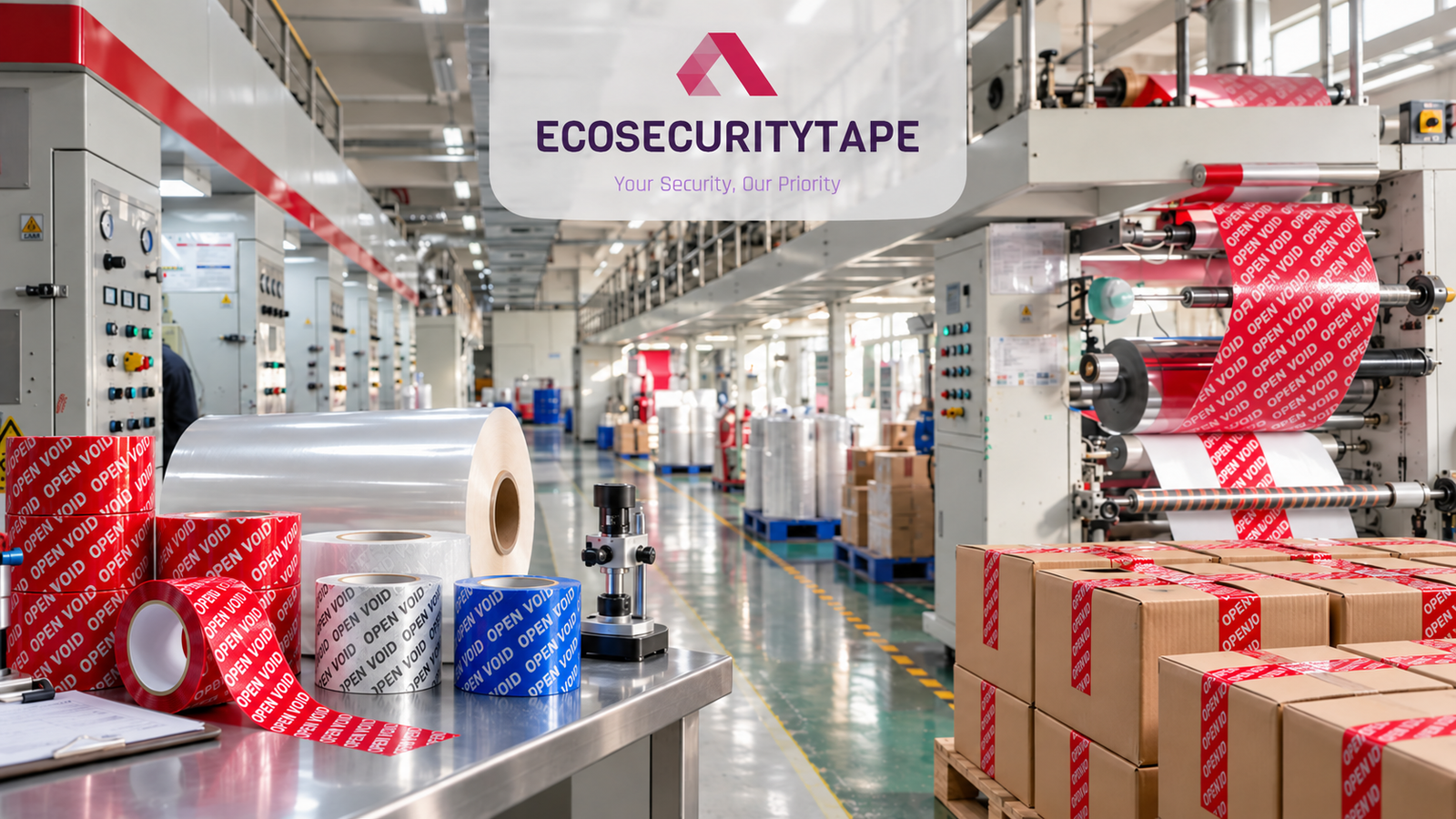
Adhesive tape manufacturing plays a critical role across industries such as packaging, electronics, automotive, and healthcare.
Whether you’re producing pressure-sensitive security tape or customizing tamper-evident rolls, mastering the tape production process is essential for ensuring quality, efficiency, and product integrity.
In modern adhesive tape production, manufacturers focus not only on material performance but also on environmental responsibility. The selection of eco-friendly substrates, solvent-free adhesives, and energy-efficient processes helps companies meet sustainability goals while reducing operational costs.
Automation is another key driver in today’s adhesive tape manufacturing environment. From automated film blowing lines to precision slitting machines, investing in advanced technology ensures consistent thickness, strong adhesion, and reduced defect rates—critical factors for industries where performance and safety cannot be compromised.
Furthermore, integrating ISO-certified quality management systems strengthens customer confidence and compliance with international standards. Periodic batch testing for tensile strength, peel adhesion, and temperature resistance ensures every roll meets or exceeds specifications.
Global competition also means that manufacturers must adapt quickly to changing market needs. This includes offering small-batch customization, rapid prototyping, and just-in-time delivery to support B2B clients in sectors like logistics, pharmaceuticals, and high-tech manufacturing.
By combining cutting-edge technology, skilled workforce training, and rigorous quality control, companies can position themselves as trusted leaders in the adhesive tape production industry.
Types of Adhesive Tapes
Understanding the available tape types is an important part of the adhesive tape manufacturing process. The correct choice depends on the application surface, sealing method, operating environment and required evidence after removal.
Water-Activated Tape: This tape requires water to activate its adhesive and bonds well to corrugated cartons. It is commonly used for e-commerce and export packaging. However, it requires dispensing equipment and may not be suitable for plastic, metal or coated surfaces.
Heat-Activated Tape: Heat activates the adhesive and creates a durable bond. This type is used in industrial assembly, insulation and applications requiring controlled bonding. Its use requires suitable heating equipment and a longer application process.
Pressure-Sensitive Adhesive Tape: PSA tape bonds when pressure is applied, without water or heat. It is widely used for cartons, electronics, logistics and security packaging. Most EST tamper-evident and custom adhesive tape products use pressure-sensitive constructions because they are easy to apply manually or with dispensing equipment.
Tamper-evident PSA tapes can be further classified by their removal result:
- Full-transfer tape leaves the security message or adhesive layer on the application surface.
- Partial-transfer tape transfers part of the security layer and displays visible tamper evidence.
- Non-transfer tape reveals a VOID message in the film while leaving little or no security residue on the surface.
For example, an Iraqi packaging customer received ten VOID tape rolls to test on cartons. A Swiss industrial-equipment customer first tested VOID security tape and later ordered non-transfer VOID labels for equipment inventory management. A Brazilian department-store industrial adhesive tape project is also being evaluated for a 400-roll custom order.
Effective adhesive tape quality control begins with choosing the correct structure. Buyers should test the tape on the actual surface and confirm adhesion, residue limits, temperature, storage conditions and the required VOID result before regular adhesive tape production.
Key Components in Adhesive Tape Production
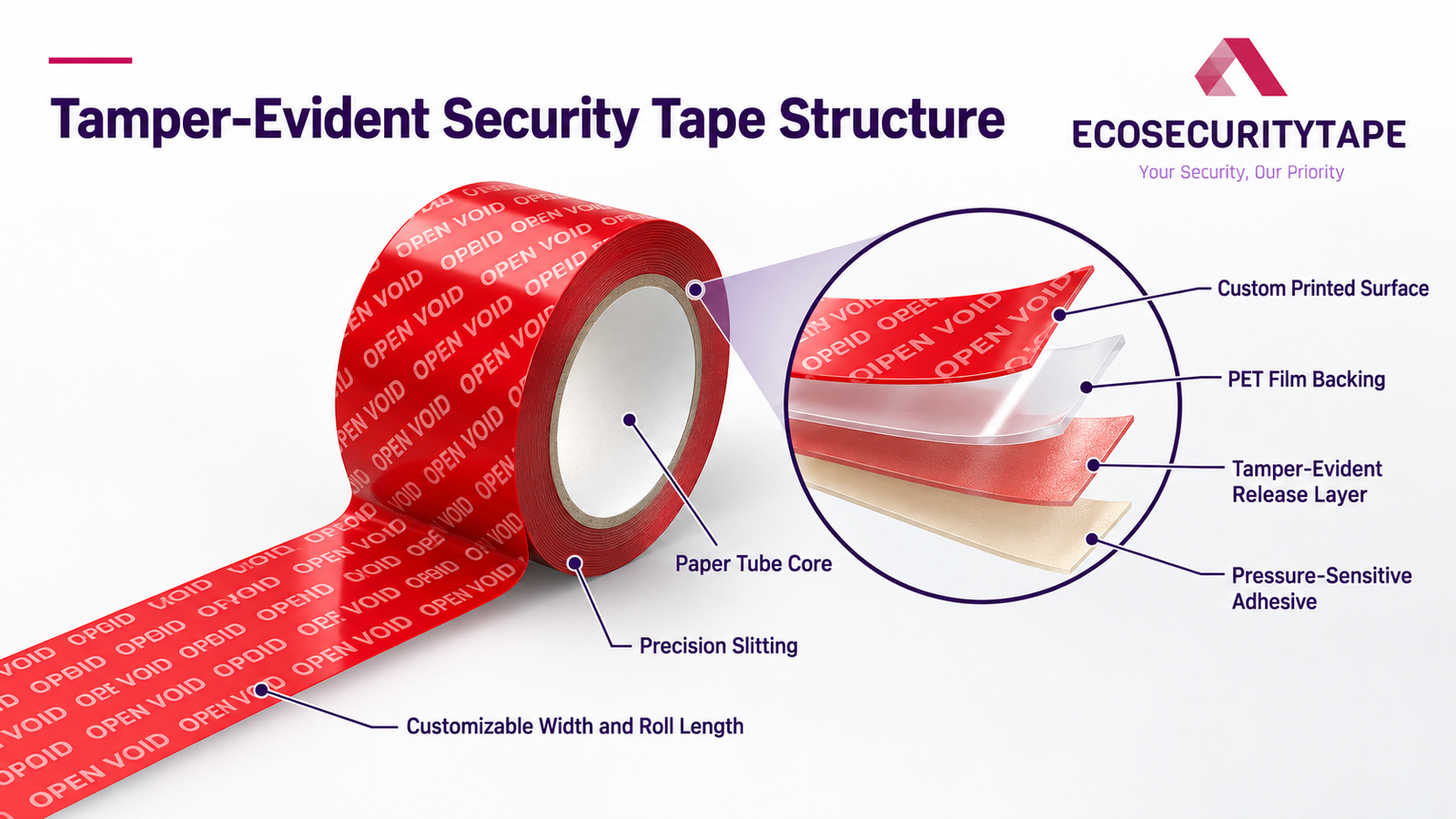
The performance of an adhesive tape depends on the combination of its backing material, adhesive and, for tamper-evident products, security-release structure. Understanding these components is essential to the adhesive tape manufacturing process because no single material is suitable for every surface or environment.
Backing Materials
The backing determines tensile strength, flexibility, moisture resistance, printability and tearing behavior. PET and BOPP films are commonly considered for packaging and security tapes, while paper, cloth, foam and foil serve different industrial purposes.
Adhesive Systems
The adhesive controls initial tack, long-term bonding, residue and resistance to temperature or moisture. Rubber-based adhesives generally provide strong initial tack, while acrylic adhesives are often selected for aging stability and longer-term applications. Silicone adhesives are used only for specific high-temperature or difficult-surface requirements.
| Component | Main Characteristics | Typical Application |
|---|---|---|
| PET film | Strong, dimensionally stable and printable | VOID and custom adhesive tape |
| BOPP film | Flexible, moisture-resistant and economical | Carton and packaging tape |
| Paper backing | Tearable and easy to print | Masking and paper-based sealing tape |
| Cloth or foam | Strong, flexible or cushioning | Repair, mounting and industrial adhesive tape |
| Rubber-based adhesive | High initial tack; suitable for many cartons | Packaging and short-term sealing |
| Acrylic adhesive | Stable aging and environmental performance | Long-term and outdoor applications |
| Security-release layer | Displays VOID text or a pattern after removal | Full-, partial- and non-transfer security tape |
EcoSecurityTape reviews the application surface, temperature, storage period, residue limits and required tamper result before recommending a structure. A carton, painted metal surface and plastic container may require different film and adhesive combinations.
Effective adhesive tape quality control therefore begins before adhesive tape production. Buyers should provide accurate specifications and test available samples on the actual surface. This helps confirm bonding strength, printing clarity and VOID performance before proceeding with regular production.
The Adhesive Tape Manufacturing Process
The adhesive tape manufacturing process for tamper-evident tape begins with the buyer’s application requirements. EcoSecurityTape coordinates each custom project from specification review and artwork approval to production, inspection and international delivery.
1. Confirm the Tape Specifications
The buyer provides the quantity, tape width, roll length, application surface, color, logo, warning text and required tamper result. Full-transfer, partial-transfer and non-transfer tapes create different effects after removal. EcoSecurityTape can prepare preliminary artwork free of charge. Adhesive tape production begins after payment and written artwork approval.
2. Select the Film and Security Structure
Suitable PET, BOPP or another film is selected according to the required strength, flexibility and printing result. For VOID security tape, the release layer and security pattern are prepared so the agreed message becomes visible after removal. The construction should match the intended carton, plastic, metal or coated surface.
3. Printing and Adhesive Coating
The approved logo, warning text or security pattern is printed before a suitable pressure-sensitive adhesive is applied evenly. The adhesive type and coating weight influence initial tack, bonding strength, residue and removal performance. These requirements should be confirmed before producing the custom adhesive tape.
4. Drying and Rewinding
The coated material passes through a controlled drying or curing process and is then rewound into master rolls. During this stage, the production team monitors coating consistency, alignment, wrinkles, bubbles and winding tension.
5. Slitting, Inspection and Packing
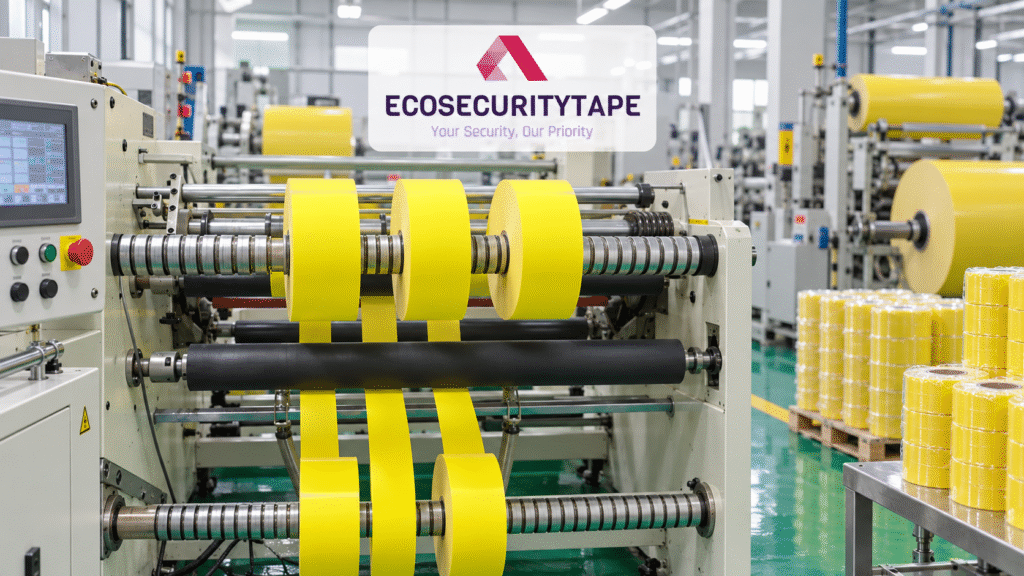
The master rolls are slit to the required width, length and core size. Finished industrial adhesive tape is checked for dimensions, printing clarity, winding quality, adhesion and VOID performance. The rolls are then counted, wrapped and packed in labeled export cartons.
Most regular EST custom tape orders below 1,000 rolls can be completed within approximately 7–10 working days after payment and artwork confirmation. Larger quantities, special materials and complex printing require a project-specific schedule. This coordinated workflow provides practical adhesive tape quality control from design to delivery.
Quality Control in Adhesive Tape Manufacturing
Effective adhesive tape quality control begins before production and continues through coating, printing, slitting, packing and delivery. EcoSecurityTape coordinates each stage according to the approved specifications rather than applying one standard configuration to every project.
Artwork and Specification Approval
Before adhesive tape production begins, the buyer confirms the tape width, roll length, color, logo, VOID message, quantity, adhesive requirements and packaging method. EST provides a preliminary layout free of charge, and production starts only after payment and written artwork approval.
Material, Coating and Printing Checks
During the adhesive tape manufacturing process, the production team checks the film, release layer, adhesive coating and printed design against the confirmed requirements. Printing position, color, logo and tamper-reveal message are monitored to reduce differences between the approved artwork and finished tape.
Rewinding and Slitting
The printed material is rewound and divided into the required widths and roll lengths. The team checks roll alignment, edges, winding condition and core size so the custom adhesive tape is suitable for manual application or the customer’s dispensing process.
Final Inspection and Packing
Finished rolls are sampled to check dimensions, printing clarity, adhesion and the visible VOID effect. The quantity, individual wrapping, carton arrangement, shipping marks and outer-carton condition are also checked before dispatch.
Shipping and Follow-Up
After the industrial adhesive tape passes inspection, EST arranges international delivery and provides the tracking number. We also follow up on receipt, application testing and repeat-order requirements, using feedback from previous projects to improve future specifications.
Applications of Industrial Adhesive Tape Across Industries
Different industries require different tape structures, adhesives and tamper-evident results. The adhesive tape manufacturing process should therefore begin with the buyer’s carton material, application surface, temperature, order quantity and inspection procedure rather than one standard specification.
Packaging and Carton Manufacturing
An Iraqi packaging company purchased 10 rolls of VOID tape for testing on its cartons. The trial allowed the buyer to evaluate adhesion, sealing performance and the visible VOID result before considering a larger custom adhesive tape order.
Hospitals and Healthcare Facilities
EcoSecurityTape is discussing a 200-roll security tape project with a hospital buyer in Zambia. The customer needs an industrial adhesive tape solution for controlled hospital handling. The tape structure, printing and intended surface still need to be confirmed before production.
Retail and Department Stores
A Brazilian department-store buyer is evaluating approximately 400 customized VOID tape rolls. The project focuses on carton sealing, visible tamper evidence and custom printing for retail distribution. The final adhesive tape production specifications will depend on carton surfaces, tape dimensions and artwork.
Industrial Equipment
A Swiss boiler-equipment customer previously ordered VOID security tape and confirmed that the tamper-evident effect performed well. When the customer later required inventory identification for large equipment, they selected non-transfer VOID labels as a complementary solution.
These cases show why adhesive tape quality control must include testing on the actual application surface. EcoSecurityTape can provide suitable stock samples free of charge, with the buyer covering courier costs, and prepare preliminary artwork before customized production.
Key Trends in Modern Adhesive Tape Manufacturing
Modern adhesive tape production is increasingly focused on consistent performance, flexible customization and responsible material use. For EcoSecurityTape, sustainability means reducing unnecessary samples, excess inventory, production waste and oversized shipping packages while still meeting each buyer’s application requirements.
Material Selection: The adhesive tape manufacturing process begins by matching the film, adhesive and security structure to the intended surface. PET, BOPP and other backing materials are selected according to strength, flexibility and printing requirements. Where technically suitable, lower-impact materials and adhesive systems can also be evaluated.
Precision Production: Controlled printing, coating, drying, rewinding and slitting help maintain consistent dimensions, adhesive distribution and roll quality. For custom adhesive tape, buyers should confirm the width, roll length, color, logo, VOID message, transfer type and application surface before production.
Practical Quality Control: Adhesive tape quality control should cover the stages that affect actual use. EST coordinates checks of the approved artwork, print clarity, coating condition, roll dimensions, winding quality, adhesive performance and tamper-reveal result before shipment.
Flexible Customization: Not every buyer needs thousands of rolls. Suitable EST security-tape projects can start from approximately 100 custom rolls, while available stock samples may be supplied free of charge for testing, with the buyer covering courier costs. This helps customers verify performance before regular procurement.
More Efficient Resource Use: Accurate specifications, preliminary artwork and sample testing can prevent incorrect production. Appropriate roll dimensions and export-carton planning also help reduce unused material, excessive packaging and avoidable transportation volume.
These practices allow EST to deliver industrial adhesive tape solutions that balance security performance, customization, purchasing flexibility and more sustainable project execution.
FAQs About Adhesive Tape Manufacturing
1. What does the adhesive tape manufacturing process include?
The adhesive tape manufacturing process normally includes selecting the film and adhesive, coating, drying, printing, rewinding, slitting and inspection. The structure depends on the application surface, temperature, tape dimensions and required tamper-evident effect.
2. Can custom adhesive tape include our logo and VOID message?
Yes. EcoSecurityTape can customize the tape width, length, color, logo, warning text and VOID pattern. Buyers should provide the required quantity, dimensions, application surface and artwork. We can prepare a preliminary design layout free of charge before production.
3. Can I test samples before ordering?
Yes. When suitable stock samples are available, they can be supplied free of charge; the buyer only covers the courier cost. Testing the industrial adhesive tape on the actual carton, plastic, metal or painted surface helps confirm adhesion and tamper evidence.
4. What is the MOQ for customized security tape?
The MOQ for suitable custom adhesive tape projects can start from 100 rolls. The final minimum quantity depends on the tape dimensions, material, printing colors, adhesive and customization requirements.
5. How long do production and delivery take?
Most custom tape orders below 1,000 rolls can be completed within approximately 7–10 working days after payment and artwork approval. International courier delivery normally takes another 7–10 working days to many major destinations. During adhesive tape production, EST provides production updates, adhesive tape quality control, shipping information and follow-up support for repeat orders.
Why Choose EcoSecurityTape for Custom Adhesive Tape?
Choosing a tape supplier based only on the lowest unit price may result in unsuitable adhesive, unclear printing, inconsistent VOID effects or excessive inventory. B2B buyers should consider whether the supplier can coordinate specifications, artwork, samples, production, inspection and international delivery as one project.
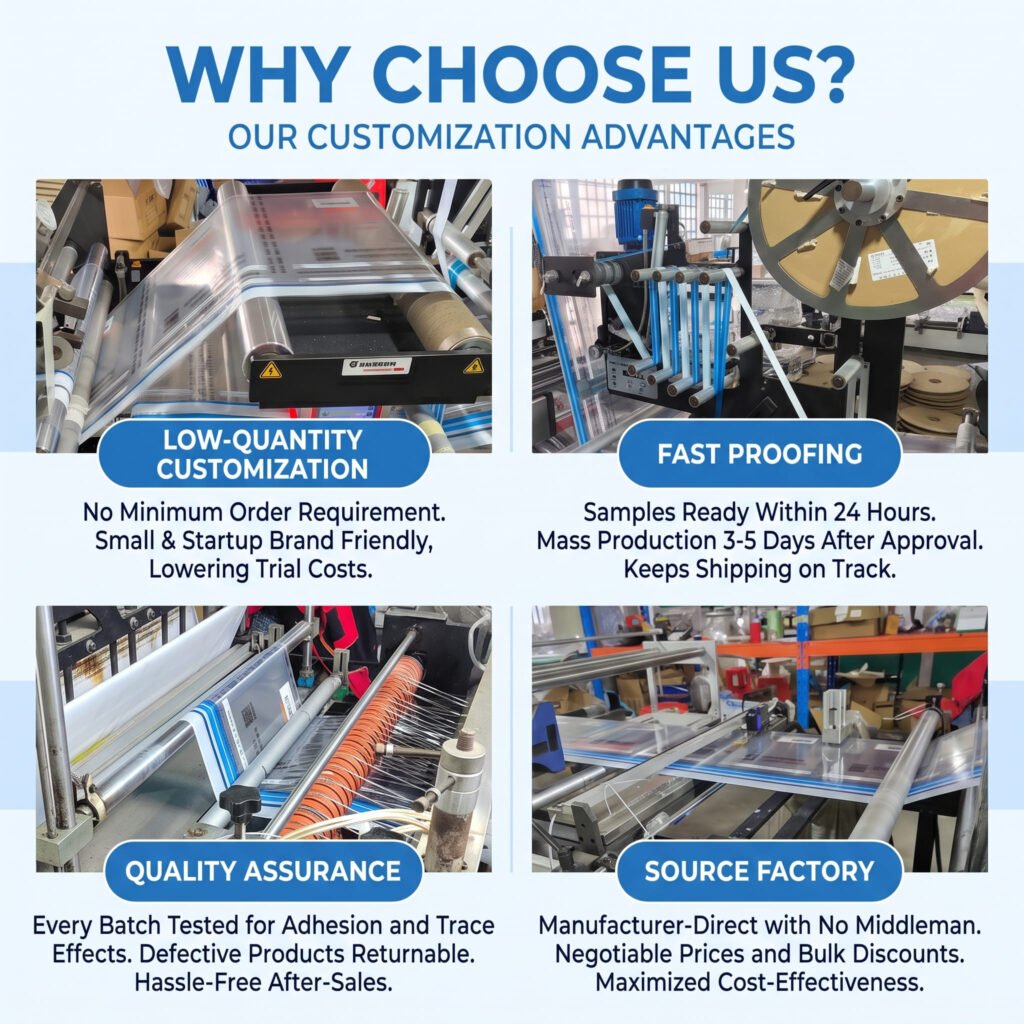
EcoSecurityTape develops custom adhesive tape according to the buyer’s application surface, width, roll length, quantity, color, logo, printed message and required transfer effect. Our main advantages include:
Low MOQ from 100 rolls: Suitable custom security-tape projects can start from approximately 100 rolls. This allows startups, distributors and packaging companies to test demand without purchasing thousands of rolls.
Free preliminary artwork: Buyers provide their logo, dimensions and printed text, and EST can prepare an initial layout free of charge. Clear artwork confirmation reduces errors and speeds up the adhesive tape manufacturing process.
Free stock-sample testing: Where suitable tape samples are available, they can be supplied free of charge; the buyer only covers courier costs. Testing on the actual carton, plastic, metal or coated surface helps verify adhesion and the VOID result.
Efficient production: Most regular orders below 1,000 rolls can complete adhesive tape production within approximately 7–10 working days after payment and artwork approval. Special materials, complex printing and larger quantities require a confirmed schedule.
Relevant project experience: EST has supported security-tape projects for packaging, hospital, retail and industrial-equipment buyers in Iraq, Zambia, Brazil and Switzerland. Suitable non-confidential photos and videos can be shared privately to help buyers compare previous solutions.
Responsive communication: EST provides prompt email and WhatsApp replies, specification review, production updates, international tracking and repeat-order follow-up. This coordinated service strengthens adhesive tape quality control and helps buyers source suitable industrial adhesive tape more efficiently.
Planning a custom tape project? Contact EcoSecurityTape for samples, artwork and a project-specific quotation.
Email: info@ecosecuritytape.com
WhatsApp: +1 615 480 2757
Conclusion
A reliable adhesive tape manufacturing process begins with understanding the application rather than selecting a tape based only on price. Buyers should confirm the surface, dimensions, adhesive performance, operating environment and required tamper result before production.
This guide has explained the main tape types, backing materials, adhesives, production stages, quality-control measures and applications across packaging, logistics, healthcare and industrial equipment. For tamper-evident projects, full-transfer, partial-transfer and non-transfer structures should always be tested on the actual surface.
EcoSecurityTape supports custom security-tape projects from approximately 100 rolls. We can provide free preliminary artwork, suitable stock samples for testing, specification review, production updates and international delivery tracking. Most regular orders below 1,000 rolls can be produced within approximately 7–10 working days after payment and artwork approval.
Planning a custom adhesive tape project? Send us your quantity, tape size, application surface, logo and required VOID effect for a project-specific recommendation and quotation.
Email: info@ecosecuritytape.com
WhatsApp: +1 615 480 2757

Focus on tamper evident packaging, free sample for test, small-batch MOQ, let’s have a talk.