What Are Forensic Evidence Bags?
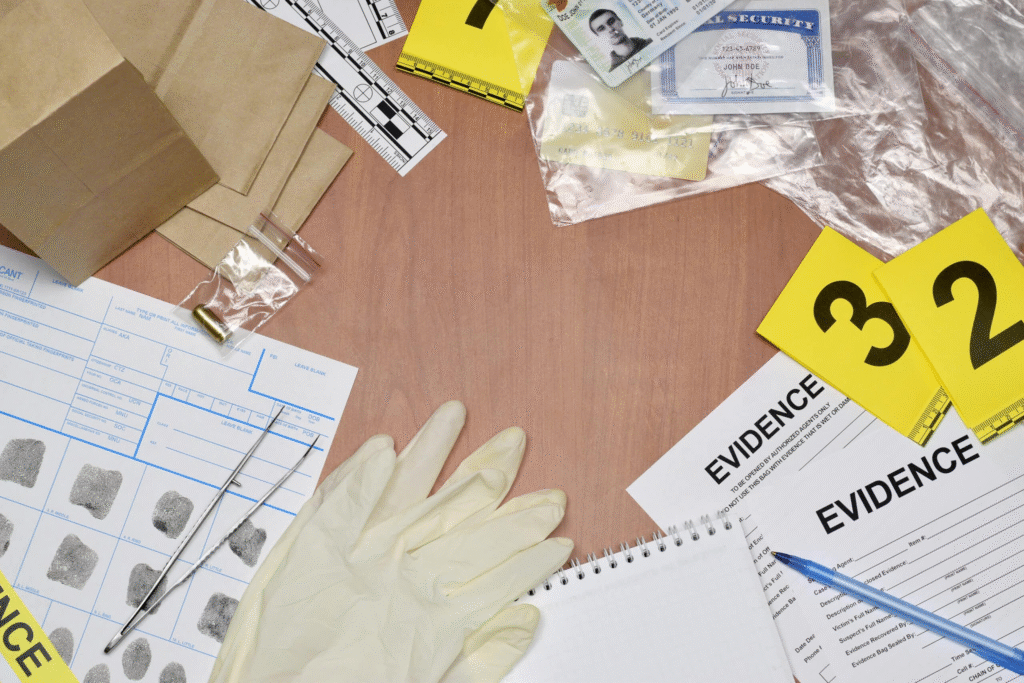
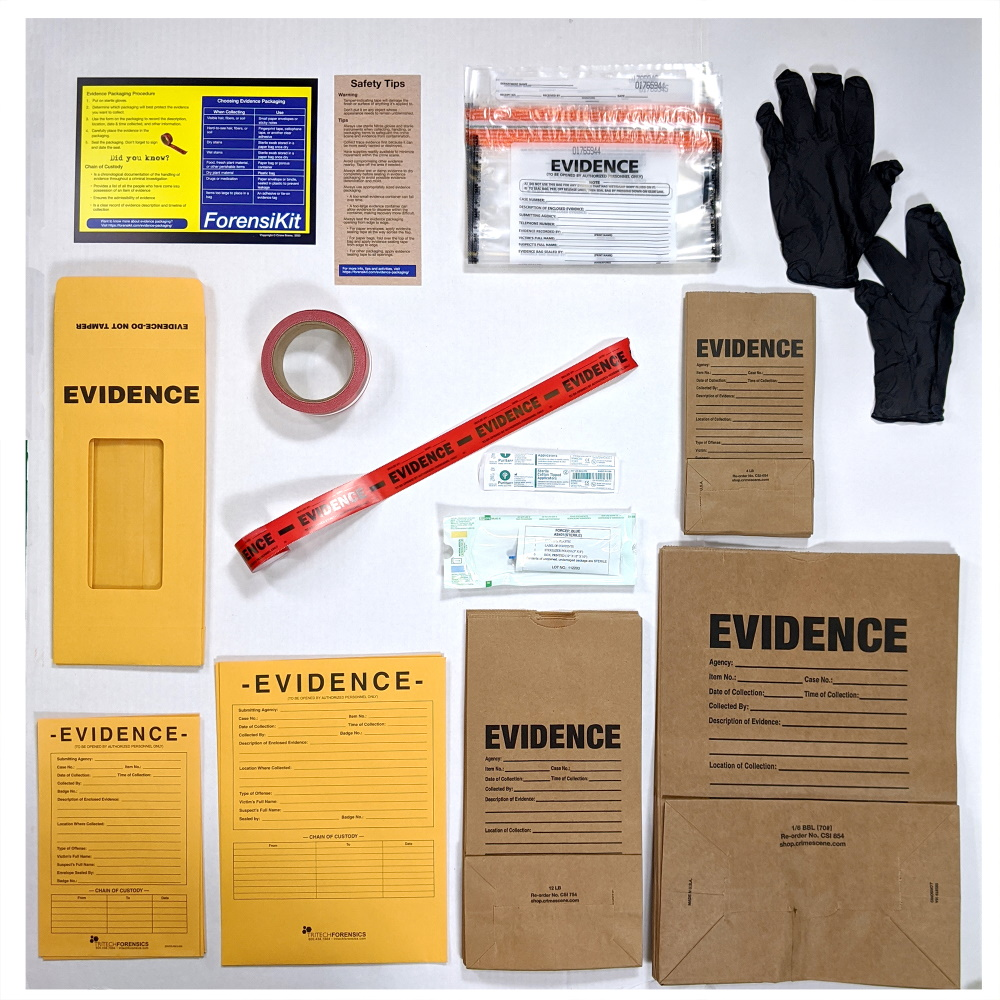
Forensic evidence bags are tamper-evident security bags used to collect, seal, store, and transport physical evidence while preserving chain of custody. They help law enforcement agencies, forensic laboratories, customs departments, and legal evidence storage teams protect evidence from tampering, contamination, loss, and mislabeling.
Unlike standard plastic bags, forensic evidence bags usually include tamper-evident seals, writable information panels, sequential numbers, barcodes, QR codes, and puncture-resistant materials. These features make evidence easier to identify, trace, verify, and present during laboratory examination or legal proceedings.
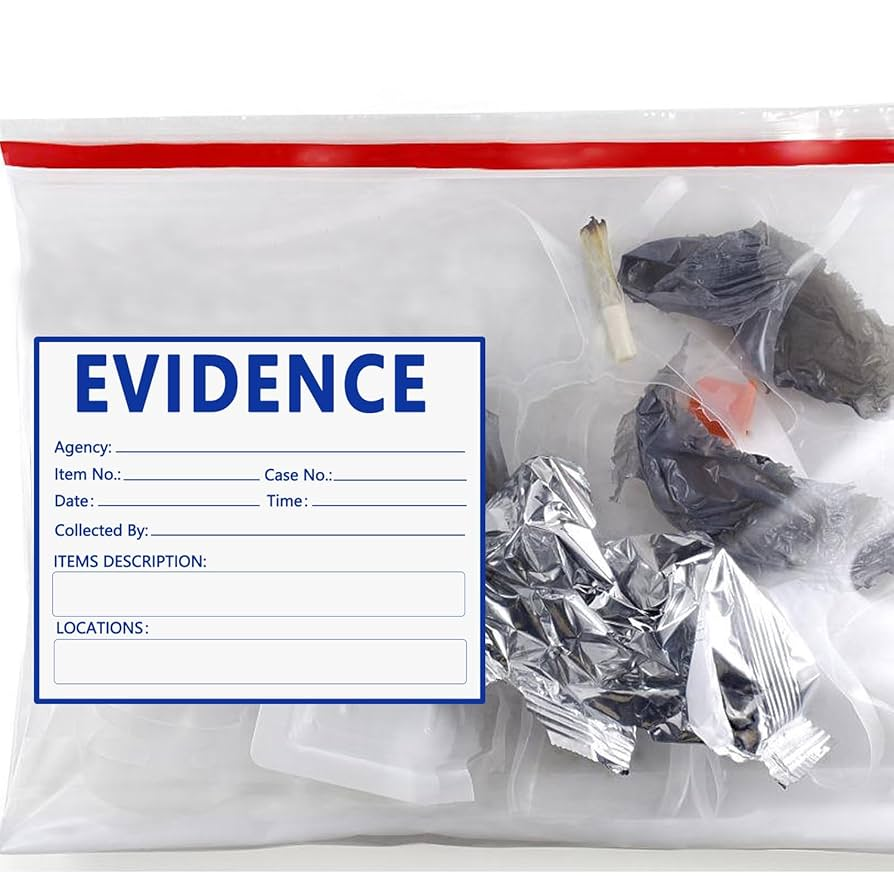
For B2B buyers, the right forensic evidence bag should keep evidence sealed, identifiable, traceable, and protected, while matching the required bag size, seal type, material strength, writable panel, barcode or QR code, and compliance markings.
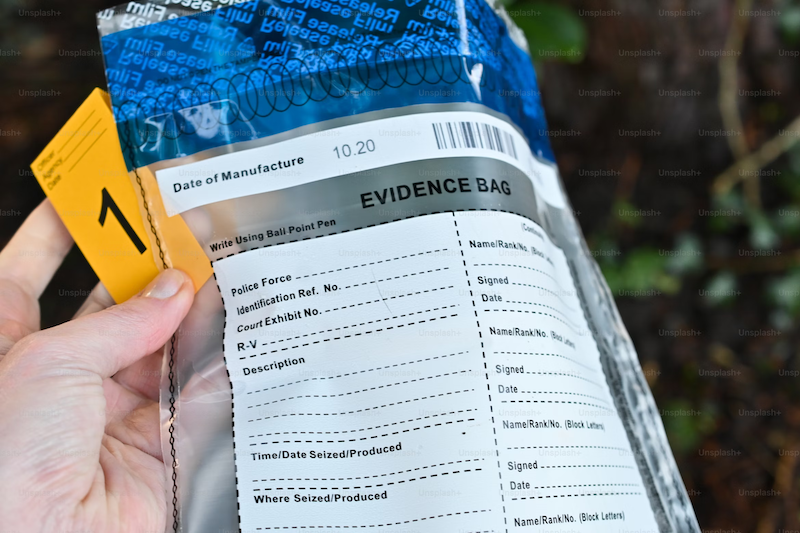
Why Forensic Evidence Bags Matter for Chain of Custody
In forensic investigations, evidence integrity directly affects whether collected materials can be trusted, examined, and used in legal proceedings. Any contamination, tampering, mislabeling, or unauthorized access may weaken the value of evidence during laboratory analysis or courtroom review.
Forensic evidence bags help preserve chain of custody by keeping each item sealed, identified, recorded, transported, and stored in a controlled way.
They support evidence handling by:
- Preventing contamination through secure material separation
- Showing visible signs of tampering if unauthorized opening occurs
- Supporting traceability with written fields, serial numbers, barcodes, or QR codes
- Protecting evidence during transport and storage
- Helping officers, labs, and legal teams maintain consistent documentation
Typical Chain of Custody Flow:
Crime Scene Collection → Evidence Identification → Bag Sealing → Transport → Laboratory Examination → Court Submission → Long-Term Storage
At each step, the evidence bag should keep the item sealed, identifiable, traceable, and protected from unauthorized access.
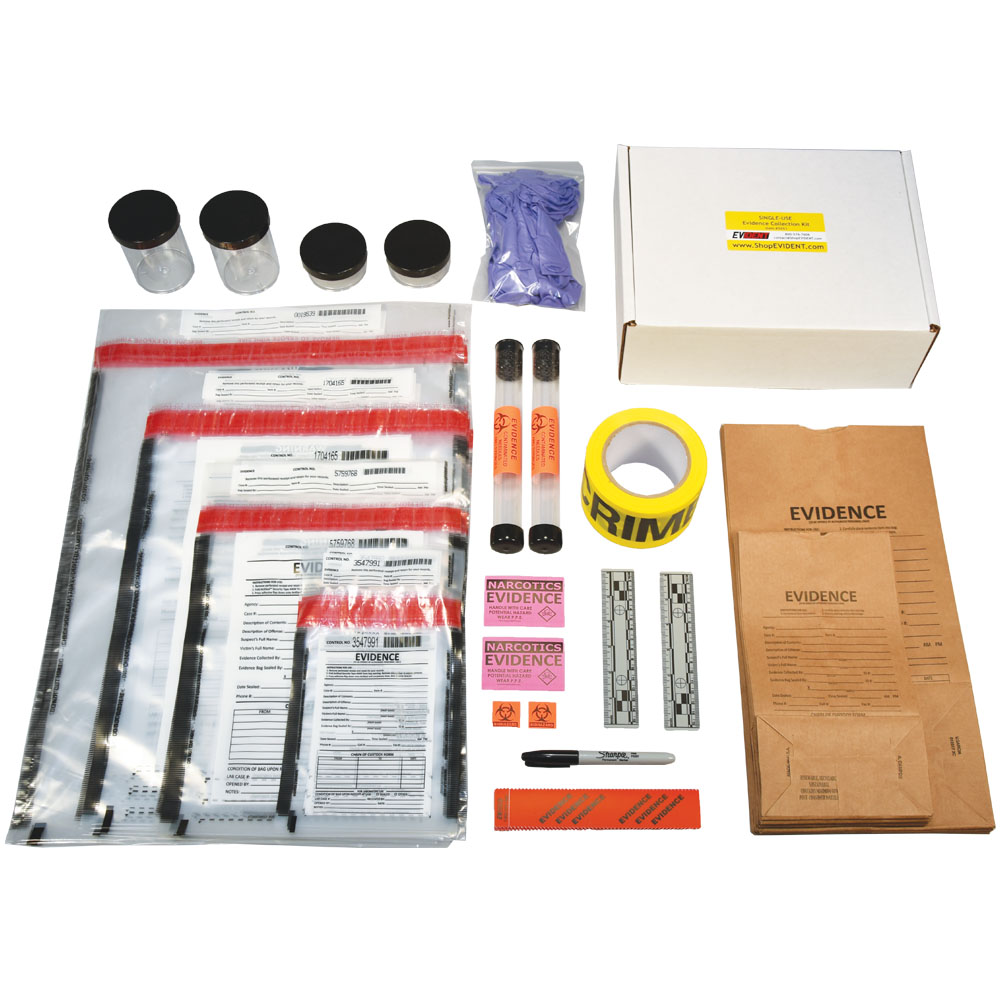
The video below shows how tamper-evident security bags work in practical packaging and sealing scenarios.
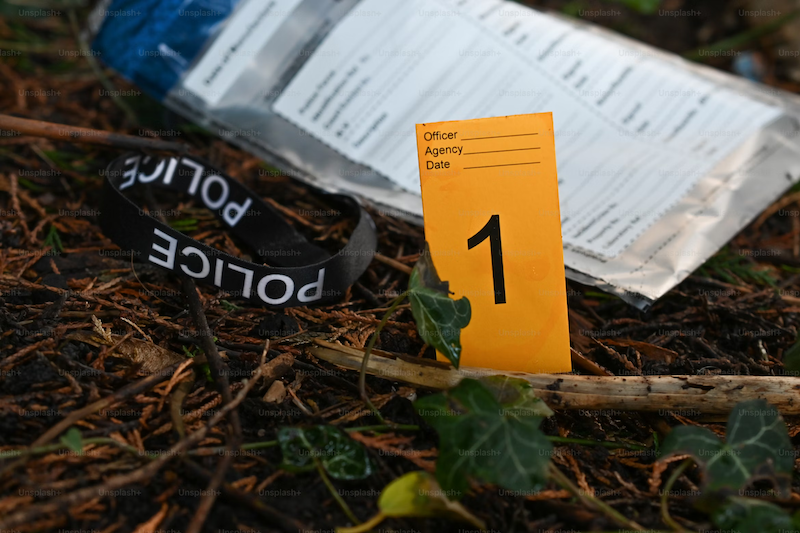
Types of Forensic Evidence Bags
Forensic evidence bags are essential tools for maintaining chain of custody integrity and ensuring judicial fairness. Different types vary in material properties, sealing mechanisms, and protective functions — precisely designed to meet the full process requirements from crime scene collection to laboratory storage and court submission.
The following sections, supported by real-world case studies across multiple countries, detail the key characteristics, applications, and judicial value of each type — providing accurate selection guidance for law enforcement agencies and forensic laboratories.
| Bag Type | Best For | Main Protection | Typical Users |
|---|---|---|---|
| Transparent Evidence Bags | Visual inspection and basic evidence collection | Visibility, labeling, tamper-evident sealing | Police departments, customs officers, field investigators |
| Opaque Security Bags | Sensitive or private evidence | Confidentiality, light blocking, tamper evidence | Police, courts, legal evidence storage teams |
| Biohazard Evidence Bags | Blood, fluids, swabs, and biological samples | Leak resistance, contamination control, warning labels | Forensic labs, pathology departments, hospitals |
| Tamper-Evident Security Bags | High-value or critical evidence | VOID seal, serial number, irreversible tamper proofing | Law enforcement, financial crime units, forensic labs |
| Heat-Sealed Evidence Bags | Long-term archival evidence storage | Permanent sealing, moisture resistance, long-term protection | DNA banks, cold case units, evidence archives |
Transparent Evidence Bags
Best for: Visual inspection, small evidence items, drugs, documents, and field collection.
Key features: Transparent PE or PP material allows officers to check contents without opening the bag. Writable panels, serial numbers, barcodes, and tamper-evident seals help maintain identification and chain of custody.
Procurement note: Choose transparent evidence bags when visibility and quick verification are more important than privacy protection.
Opaque Security Bags
Best for: Sensitive personal items, confidential documents, firearms, mobile phones, and evidence that should not be visually exposed.
Key features: Opaque or light-blocking material protects privacy and prevents contents from being seen during transport or storage. Optional serial numbers, writable panels, and tamper-evident seals improve traceability.
Procurement note: Choose opaque security bags when confidentiality, privacy, or restricted evidence visibility is required.
Biohazard Evidence Bags
Best for: Blood, body fluids, swabs, tissue samples, syringes, and other biological or potentially infectious evidence.
Key features: Leak-resistant materials, biohazard warning symbols, secure closures, and writable labeling areas help reduce contamination risk and support safer sample handling.
Procurement note: For biological evidence, confirm leak resistance, puncture resistance, warning label design, and whether the bag needs to support UN3373-related transport requirements.preventing contamination and ensuring sample viability. Essential for forensic pathology and toxicology laboratories.
Tamper-Evident Security Bags
Best for: High-value, critical, or sensitive evidence that must show clear signs of unauthorized opening.
Key features: VOID seals, tamper-evident adhesive, serial numbers, barcodes, and QR codes help make opening attempts visible and support evidence traceability.
Procurement note: Choose this type when irreversible tamper evidence and chain-of-custody protection are the main requirements.
Heat-Sealed Evidence Bags
Best for: Long-term storage, archival evidence, cold cases, DNA samples, and evidence that requires permanent closure.
Key features: Heat-sealed closure provides stronger long-term protection than standard adhesive seals. High-barrier film options can improve moisture resistance and storage stability.
Procurement note: Choose heat-sealed evidence bags when permanent sealing, long-term storage, or archival protection is more important than easy field opening.
Selection Rationale
| Forensic Scenario | Core Requirement | Recommended Bag Type | Selection Rationale |
|---|---|---|---|
| Crime Scene Collection | Visibility, quick verification, cost efficiency | Transparent Bag | Allows officers to identify contents quickly without opening the bag. |
| Sensitive Evidence Transport | Privacy, confidentiality | Opaque Security Bag | Keeps sensitive items hidden during transport and storage. |
| Biological Evidence | Leak resistance, contamination control | Biohazard Bag | Helps contain fluids, swabs, biological samples, and sharp items safely. |
| Major Case Evidence | Tamper evidence, traceability, legal handling | Tamper-Evident Bag | Shows visible signs of unauthorized opening and supports chain-of-custody records. |
| Long-Term Archival Storage | Permanent sealing, moisture protection | Heat-Sealed Bag | Provides stronger closure and storage protection for long-term evidence retention. |
If you need custom forensic evidence bags for specific evidence types, storage conditions, or agency requirements, contact EcoSecurityTape at info@ecosecuritytape.com or WhatsApp: +1 615 480 2757.
Please share your bag size, seal type, printing requirements, barcode or QR code needs, and expected quantity. Our team can help recommend suitable materials, tamper-evident sealing options, and sample solutions for evaluation.

Who Uses Forensic Evidence Bags?
Forensic evidence bags are used by organizations that need to collect, store, transfer, or archive sensitive materials while keeping visible tamper evidence. In B2B procurement, buyers usually focus on security sealing, clear labeling, sample protection, chain-of-custody support, and stable bulk supply.
Common users include:
- Law Enforcement and Investigation Teams
Police departments, investigation teams, and evidence technicians use forensic evidence bags to secure physical items, documents, samples, and other materials collected during investigations. Tamper-evident sealing helps show whether the bag has been opened after collection.
- Forensic Laboratories and Testing Centers
Forensic labs, testing centers, and inspection teams use evidence bags to store and transfer samples for analysis. Clear writing areas, serial numbers, barcodes, or printed information can help support identification and internal record keeping.
- Medical Examiners and Healthcare Institutions
Medical examiners, hospitals, clinics, and healthcare-related organizations may use evidence bags for biological samples, medical documents, personal belongings, or other sensitive materials that require controlled handling and clear labeling.
- Customs, Border, and Security Inspection Units
Customs, border control, airport security, and inspection teams may use tamper-evident evidence bags to secure confiscated items, documents, samples, or goods that need controlled transfer and inspection records.
- Corporate Security and Internal Investigation Teams
Corporate security departments, private investigation firms, and compliance teams may use forensic evidence bags to protect documents, digital storage devices, product samples, or items related to internal investigations, fraud checks, or workplace incidents.
For these buyers, the most important factors are not complicated claims, but practical product details: bag size, material strength, tamper-evident seal quality, writing area, barcode or serial number options, packing method, and whether samples can be tested before bulk orders.

Key Features of Forensic Evidence Bags
High-quality forensic evidence bags serve as the critical link between the crime scene, forensic laboratory, and courtroom. Their design must meet three fundamental requirements: contamination prevention, full traceability, and legal admissibility.
Writable Information Panel
Technical Details:
Each bag includes a dedicated writable area (≥8 cm × 5 cm) with anti-smudge coating, suitable for permanent markers and oil pens.
Recorded data (case number, collection date, officer name, location, description) remain legible long-term.
Premium models include pre-printed templates (“CASE NO.:”, “DATE:”, “COLLECTOR:”) to standardize documentation.
Sequential Barcodes and QR Codes
Technical Details:
Each bag is printed with a unique 16-digit encrypted serial number and DataMatrix QR code compatible with forensic management systems (e.g., FBI’s iCODIS, China’s National Forensic Evidence System).
QR codes embed case data such as ID, collection details, storage location, and access logs — supporting full lifecycle traceability: collection → transport → lab → storage → court.
Role-based access ensures data confidentiality.
Biohazard and Warning Labels
Technical Details:
Printed with international biohazard symbols (☣) using high-visibility red ink, alongside multilingual safety warnings (“BIOHAZARD – HANDLE WITH CARE,”).
Some versions feature fluorescent strips for quick identification in dark environments (e.g., cold storage).
Fully compliant with UN 3373 Biological Substance Transport Standards.
Advanced Customization Options
Technical Details:
Supports institution-specific customization:
- UV-sensitive inks (e.g., agency emblems glow under UV light to prevent forgery).
- Multilingual labeling (English, French, German, Chinese, Spanish, etc.) for international cases.
- Custom logos (police or lab insignia) to establish proprietary ownership and accountability.
Core Benefits of Using Forensic Evidence Bags
Forensic evidence bags are far more than simple storage tools—they are foundational to preserving evidence integrity, complying with regulations, and supporting successful prosecution. Their benefits span every step of the investigative and judicial process.
| Benefit | Impact on Investigation | Example Scenario |
|---|---|---|
| Preserves Chain of Custody | Ensures traceability with sequential numbering and barcoding at every stage of handling. | Police collect → Lab test → Court submission without integrity loss. |
| Enhances Court Admissibility | Meets strict packaging standards required for court presentation and legal admissibility. | Prevents dismissal of key DNA or drug evidence due to mishandling. |
| Reduces Risk of Contamination | Isolates sensitive biological or chemical material from air and human contact. | Storing a bloody garment or biohazard swab after a homicide case. |
| Supports Internal Compliance | Aligns with ISO 9001, DOJ, and forensic accreditation standards, supporting audit-readiness. | Internal quality review before submitting evidence to prosecution. |
| Dissuades Internal Tampering | Tamper-evident seals discourage unauthorized access within law enforcement chains. | Detects any breach during long transit between departments. |
| Improves Evidence Organization | Writable panels and clear labeling aid in categorizing and retrieving case files quickly. | Linking physical evidence directly with case IDs in busy forensic labs. |
These bags are trusted across crime labs, customs, military operations, and judicial systems—safeguarding the very truth of an investigation.
How to Choose the Right Forensic Evidence Bag Supplier
Choosing a forensic evidence bag supplier involves more than comparing prices. Police departments, forensic laboratories, customs agencies, hospitals, and evidence-storage teams should evaluate product performance, customization, documentation, and supply reliability.
Application and Material
The bag structure must match the evidence type and handling process. Buyers should confirm the required resistance to tearing, punctures, moisture, leakage, and transport conditions. Biological, liquid, sharp, or long-term evidence may require different materials and storage procedures.
Tamper-Evident Seal
The security closure should provide clear evidence of opening or attempted resealing. Test the seal on actual samples and under the expected temperature, handling, and storage conditions before bulk production.
Customization and Traceability
Common options include custom sizes, department logos, writable evidence panels, case and item fields, sequential numbers, barcodes, QR codes, warning text, and multilingual printing. Barcode readability and numbering accuracy should be verified before production.
Documentation and Supply
Confirm the availability of product specifications, material information, test reports, quality-control documents, samples, MOQ, production lead time, packaging details, and repeat-order support.
| Evaluation Area | What to Confirm |
|---|---|
| Bag performance | Material, strength, leakage and puncture resistance |
| Security seal | Visible tamper evidence and resealing performance |
| Customization | Size, printing, writable fields and serial numbers |
| Documentation | Specifications, reports and QC records |
| Supply | Samples, MOQ, lead time and repeat-order consistency |
Before placing a bulk order, test seal performance, writing durability, print quality, barcode scanning, and bag strength using the buyer’s actual evidence-handling process.
EcoSecurityTape supports custom forensic evidence bag projects, including specification review, sample development, artwork confirmation, production coordination, inspection, and international delivery. Send your required size, material, quantity, printing fields, security-seal requirements, and destination for an initial evaluation.
Why Choose Forensic Evidence Bags from EcoSecurityTape?
EcoSecurityTape supports law enforcement agencies, forensic laboratories, customs departments, hospitals, security companies, and B2B distributors with custom evidence bag projects. We coordinate product specifications, sample evaluation, customization, production, inspection, and international delivery according to the buyer’s evidence-handling procedures.
Custom Forensic Evidence Bag Solutions
Available customization options include:
- Bag size, film thickness, color, and opacity
- Agency logos and department names
- Case number, item number, date, officer, and signature fields
- Sequential serial numbers, barcodes, and QR codes
- Writable information panels and multilingual printing
- Tamper-evident seals and warning messages
- Biohazard symbols where appropriate
The bag structure should match the evidence type and storage procedure. Clear bags support visual identification, while opaque bags protect sensitive contents. Wet biological evidence, sharp objects, liquids, and long-term storage may require specialized or alternative packaging, so buyers should follow their agency’s evidence-handling protocols.
Samples, Testing, and Quality Confirmation
Standard-stock samples may be available for initial evaluation, while custom samples can be arranged for confirmed projects. Shipping or customization charges may apply.
Before bulk production, buyers should test:
- Seal strength and visible tamper indication
- Bag strength, leakage, and puncture resistance
- Writable-panel and printing durability
- Serial-number accuracy
- Barcode or QR-code readability
- Performance under actual transport and storage conditions
Our production team can coordinate specification sheets, artwork confirmation, sample review, quality requirements, and pre-shipment photos or videos.
B2B Procurement and Delivery Support
After sample approval, we can coordinate trial orders, bulk production, repeat-order specifications, carton packaging, and international delivery. MOQ and lead time depend on the bag size, material, printing, security seal, and order quantity.
For buyers sourcing multiple security-packaging products from China, we can also evaluate consolidated shipment options, packaging information, and export documents where required.
Request Samples or a Custom Quote
Send your required bag size, material, quantity, printing fields, serial-number format, security-seal requirements, application, destination, and delivery deadline to:
Email: info@ecosecuritytape.com
WhatsApp: +1 615 480 2757
Faqs about forensic evidence bag
What makes forensic evidence bags different from standard plastic bags?
Forensic evidence bags are designed to support evidence identification, tamper indication, and chain-of-custody documentation. Common features include tamper-evident seals, writable information panels, sequential numbers, barcodes, tear-off receipts, and warning text.
The bag alone does not guarantee evidence integrity or legal admissibility. Proper collection, sealing, documentation, storage, transport, and handover procedures remain essential.
Are forensic evidence bags suitable for every type of evidence?
No. The packaging should be selected according to the evidence type and the agency’s procedures.
Plastic tamper-evident bags may be suitable for dry items, documents, personal property, controlled substances, and some non-moist evidence. Wet or damp biological evidence may require breathable paper packaging to reduce moisture buildup. Liquids need leak-resistant secondary containment, while needles, broken glass, and other sharps should be placed in an approved rigid puncture-resistant container.
Buyers should confirm the packaging method with their forensic laboratory or evidence-management policy.
What should B2B buyers check before purchasing?
Important criteria include:
- Bag dimensions, film thickness, color, and opacity
- Seal strength and visible tamper indication
- Writable-panel layout and print durability
- Sequential-number accuracy
- Barcode or QR-code readability
- Tear, leakage, and puncture performance
- Storage and transport conditions
- MOQ, production lead time, and repeat-order consistency
Samples should be tested with the buyer’s actual evidence, writing tools, scanners, storage environment, and handling process before bulk production.
Can forensic evidence bags be customized?
Yes. Custom options may include agency names and logos, case and item fields, officer and signature areas, sequential numbers, barcodes, QR codes, tear-off receipts, multilingual instructions, biohazard symbols, bag sizes, colors, and transparent or opaque films.
Buyers should provide the intended application, required fields, numbering format, scanning system, quantity, and delivery schedule before artwork development.
What documentation should buyers request?
There is no single global certificate that makes an evidence bag suitable for every police department, laboratory, or jurisdiction. Requirements depend on the buyer’s internal procedures, tender specifications, and local rules.
Depending on the project, buyers may request product specifications, material information, available test reports, sample inspection records, numbering lists, artwork approval, quality-control documents, and packaging details. Any manufacturer certification or compliance claim should be verified against the exact tender or procurement requirement.
EcoSecurityTape can coordinate specification review, sample development, customization, production documents, quality inspection, and international delivery for B2B forensic evidence bag projects.
Final Thoughts
Forensic evidence bags support secure collection, identification, transport, storage, and chain-of-custody documentation. Tamper-evident seals, writable fields, serial numbers, and barcodes help users identify possible interference and maintain clear evidence records.
The correct packaging should be selected according to the evidence type, handling procedure, storage conditions, and agency requirements. Evidence bags support these procedures but do not replace proper collection, documentation, and laboratory protocols.
EcoSecurityTape coordinates standard-stock and custom forensic evidence bag projects for law enforcement agencies, laboratories, customs departments, hospitals, security companies, and B2B distributors.
For free samples or a quotation, send your required size, material, quantity, printing fields, seal requirements, application, and destination to info@ecosecuritytape.com or WhatsApp +1 615 480 2757.

Focus on tamper evident packaging, free sample for test, small-batch MOQ, let’s have a talk.