Kuala Lumpur Airport Retail Packaging Needs
Kuala Lumpur International Airport (KLIA) is one of Southeast Asia’s major international travel hubs, with high passenger flow, transit traffic, and duty-free retail demand.
For duty-free shops, airport retailers, and travel retail operators, secure packaging is not only a shopping bag issue — it is part of airport retail compliance, product protection, and customer handover.
Need custom duty free bags for Kuala Lumpur Airport retail? Send your size, logo, product type, and quantity for sample evaluation.

Custom duty free bags for KLIA retail scenarios should support tamper-evident sealing, visible receipt storage, barcode or serial number tracking, multilingual warning text, and strong film performance for liquids, cosmetics, tobacco, alcohol, and luxury goods.
This guide is written for duty-free shops, airport retail operators, travel retail brands, and packaging buyers who need custom STEB duty-free bags for Kuala Lumpur International Airport retail scenarios.
If you are looking for custom logo duty-free bags, ICAO-style STEB bags, tamper-evident airport retail packaging, or sample testing before bulk order, this page explains the key bag requirements, customization options, and supplier selection points.
Explore our custom duty free bags in action.
This video showcases ICAO-style STEB bags, tamper-evident security features, custom branding, and packaging solutions developed for duty-free shops, airport retailers, and travel retail distributors worldwide.
Duty Free Retail at KL Airport
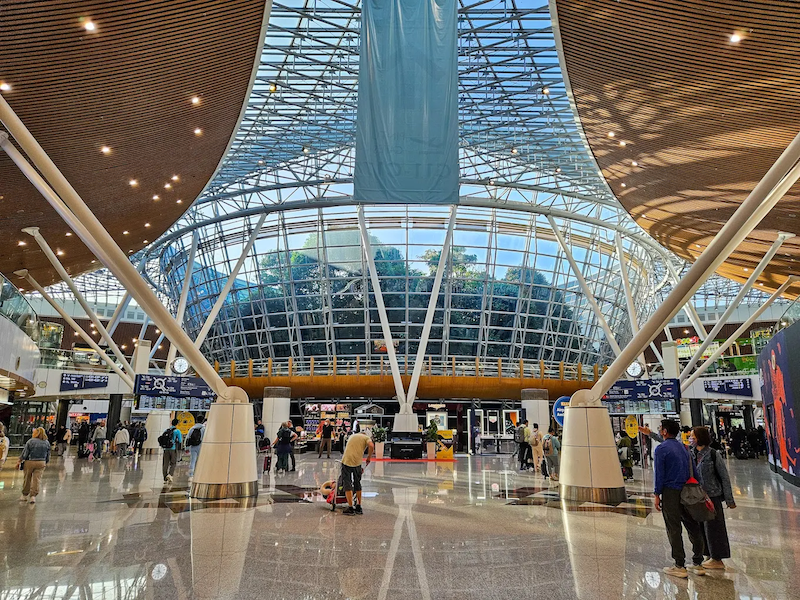
Kuala Lumpur International Airport has two major retail terminals, KLIA Terminal 1 and KLIA Terminal 2, serving international passengers, transit travelers, and low-cost carrier traffic.
For duty-free shops and airport retailers, this creates continuous demand for secure retail packaging, especially for liquids, alcohol, perfumes, cosmetics, tobacco products, chocolates, and premium gifts.
Custom duty free bags used in KLIA retail scenarios should support:
- tamper-evident sealing for airport security checks;
- transparent film for product and receipt inspection;
- barcode, serial number, or QR code tracking;
- multilingual warning text for international travelers;
- suitable bag sizes for bottles, cosmetics, gifts, and luxury products.
This makes STEB-style duty free bags an important packaging solution for airport retail compliance, product protection, and customer handover.

Core Duty-Free Products and Bag Requirements at KL Airport
Different duty-free product categories at Kuala Lumpur Airport require different bag sizes, film strength, and sealing structures. For B2B buyers, the key is not only what products are sold, but what type of STEB duty free bag is needed for secure handover, transit inspection, and brand presentation.
| Product Category | Packaging Requirement | Recommended Duty Free Bag |
|---|---|---|
| Tobacco products | Compact size, receipt visibility, anti-substitution protection | Small or medium STEB bag with serial number or barcode |
| Alcoholic beverages | Strong film, bottle weight support, leak-resistant structure | Large STEB bottle bag with reinforced sealing |
| Perfumes & cosmetics | Transparent display, premium appearance, tamper-evident closure | Custom branded STEB bag with clear window |
| Luxury goods | Brand protection, gift presentation, anti-tamper security | Custom logo duty free bag with barcode or QR code |
| Chocolates & gifts | Flexible size, lightweight packaging, retail branding | Medium custom duty free bag for gift packs |
Tobacco Products
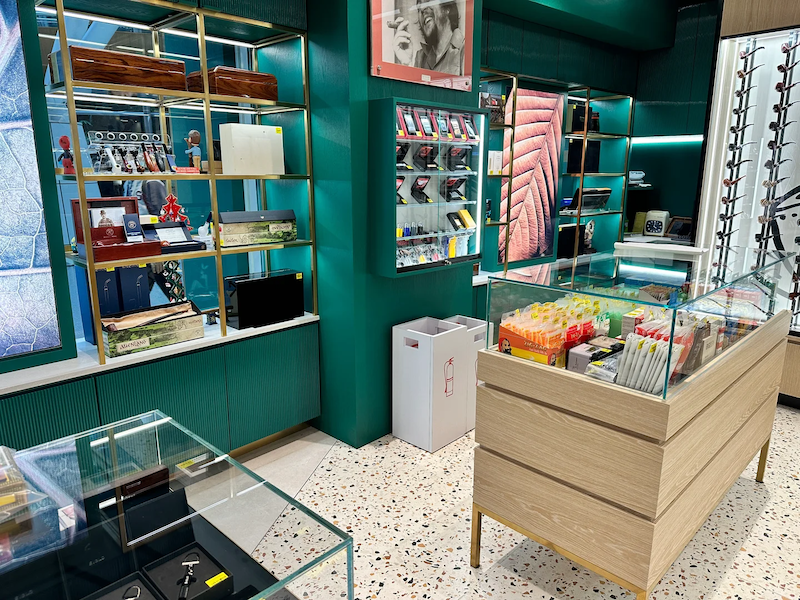
Tobacco products at Kuala Lumpur Airport duty-free stores require secure, compact, and traceable packaging. For cigarettes, cigars, and premium tobacco items, tamper evident duty free bags help prevent product substitution, protect tax-paid goods, and support controlled handover at airport retail counters.
Recommended bag features include small or medium STEB sizes, transparent film, visible receipt area, barcode or serial number, and strong tamper-evident sealing.
Alcoholic Beverages
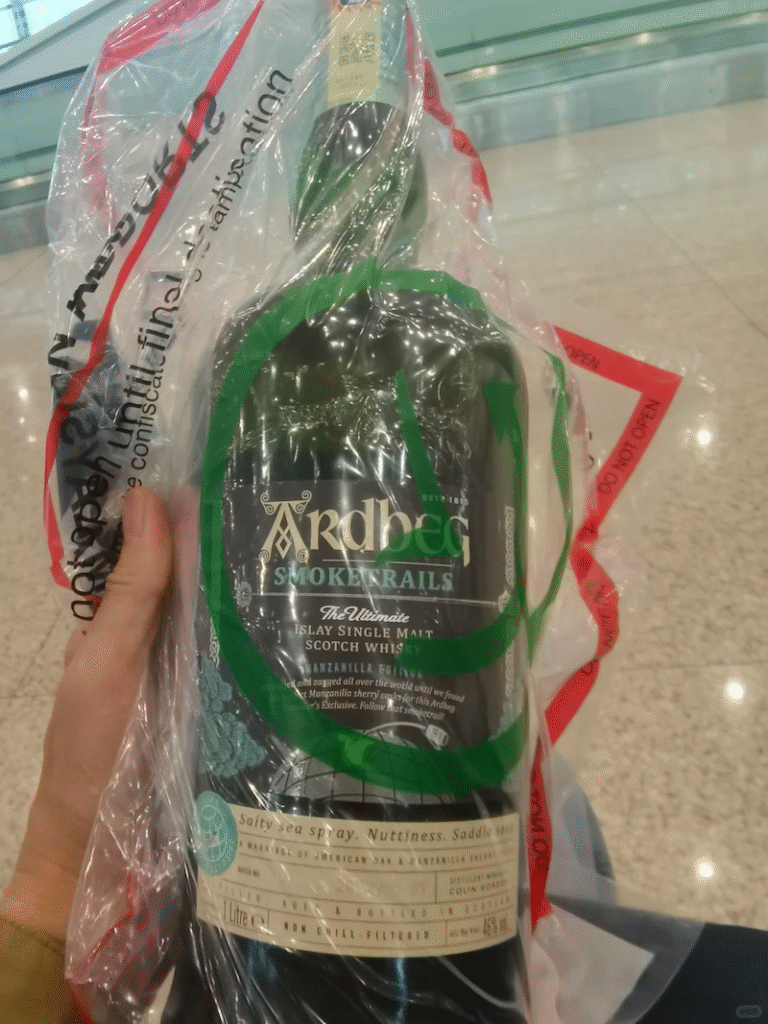
Alcoholic beverages require larger and stronger duty free bags, especially for wine, spirits, and gift packs. For airport retailers, the key requirements are film strength, leak resistance, receipt visibility, and secure tamper-evident sealing during transit and customs checks.
Recommended bag features include reinforced PE film, bottle-size options, strong side sealing, transparent body, receipt pocket, barcode or serial number, and clear multilingual warning text.
Luxury Goods
Luxury goods at KLIA duty free stores often include cosmetics, watches, jewelry, leather goods, and premium gift items. Because these products have higher unit value, the duty free bag should provide strong tamper-evident sealing, clear receipt visibility, and good product presentation.
Recommended features include transparent film, reinforced sealing, custom branding, barcode or serial number, and suitable bag size for premium retail packaging.

Chocolates and Confectionery
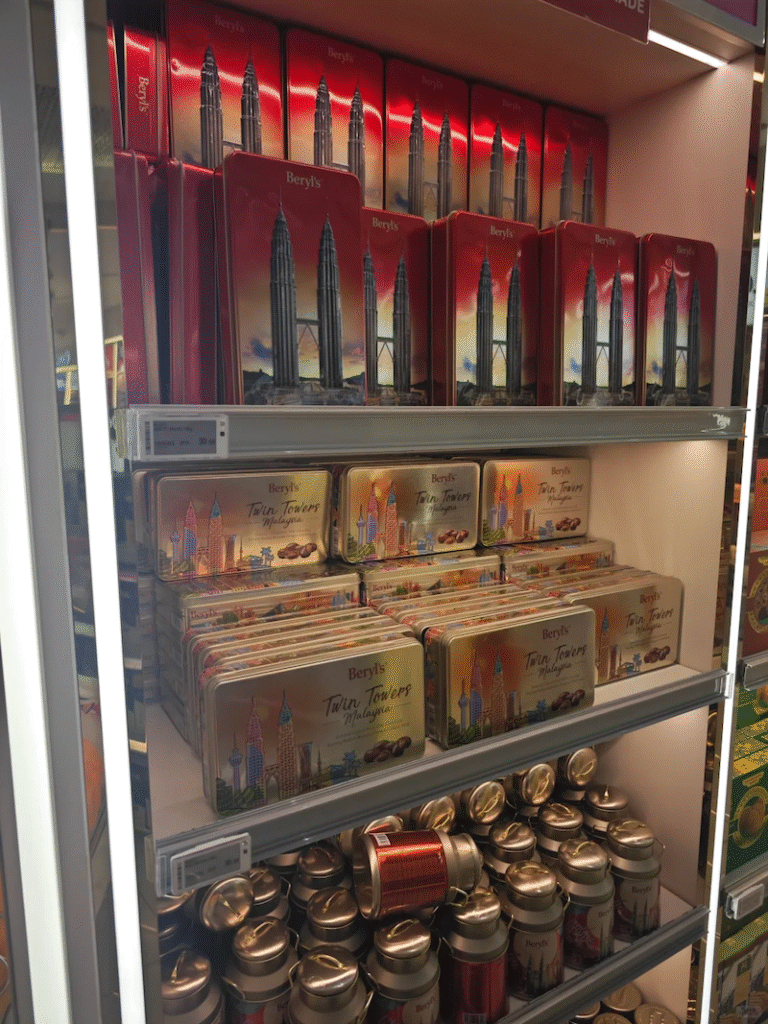
Chocolates and confectionery are common duty free products at KLIA, including international chocolate brands and Malaysian specialty gifts.
For these lightweight retail items, duty free bags should provide clear product visibility, receipt storage, and tamper-evident sealing for airport security checks and customer handover.
Duty Free Retailers at KL Airport
Heinemann
Heinemann is positioned as a premium boutique duty free retailer at Kuala Lumpur Airport, operating exclusive stores in prime departure areas of Terminal 1 with a retail space of approximately 800 square meters. Its core focus is on two high-value categories: alcoholic beverages and luxury cosmetics.
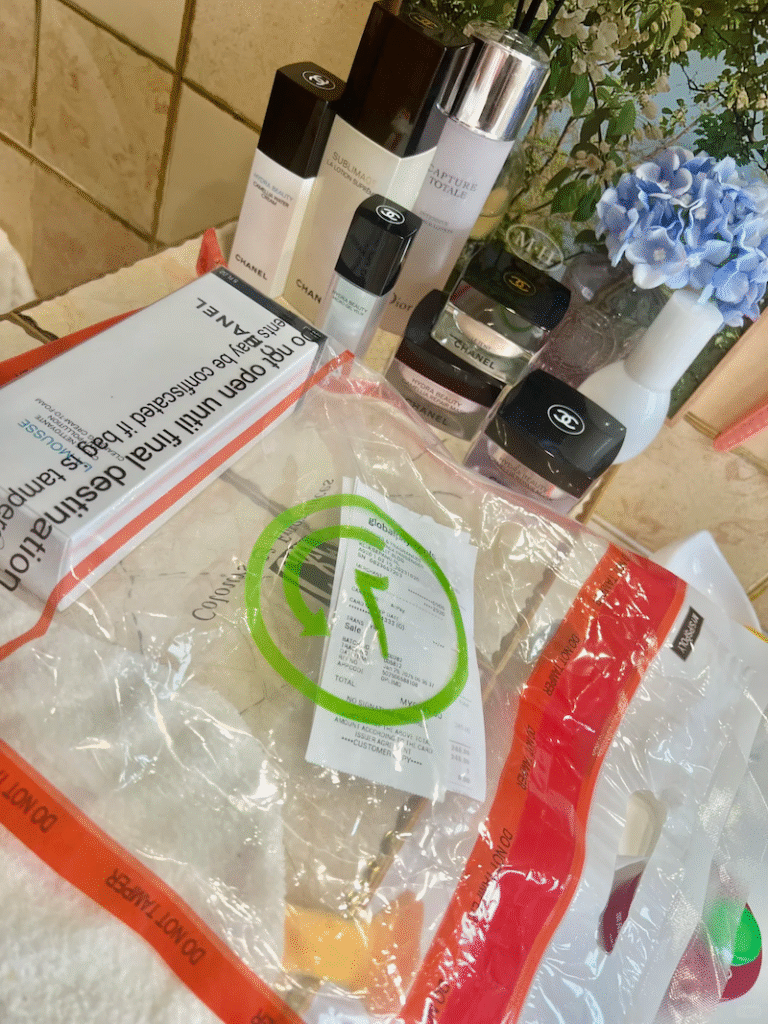
Given the high unit value and strong authenticity requirements of its products, Heinemann demands duty free bags with superior material quality, reliable tamper evident performance, and a refined aesthetic that aligns with its high-end brand positioning.
Eraman
Eraman is Malaysia’s leading domestic duty free retail chain and a core subsidiary brand under Malaysia Airports Holdings. It serves as the primary platform for showcasing local Malaysian specialty products at Kuala Lumpur Airport, with flagship stores in both T1 and T2 terminals.
Eraman’s key strength lies in its comprehensive coverage of local specialty categories, such as Batik textiles, Royal Selangor pewter products, and OldTown white coffee, while also maintaining a strong presence in international beauty brands, which account for approximately 18% of total sales.
Why Kuala Lumpur Duty Free Bags Matter
In the context of duty free operations at Kuala Lumpur Airport, the need for tamper evident bags can be clearly explained from three critical dimensions: compliance, risk control, and consumer trust.
Compliance Requirements
Tamper evident duty free bags are required to comply with international aviation and customs regulations, including guidelines issued by the International Air Transport Association (IATA) for the transportation of duty free goods, as well as Malaysia Customs Directive No. 123.
Within this regulatory framework, the tamper evident duty free bag functions as both a “customs clearance credential” and a “secondary resale restriction marker.” An intact security seal on the bag serves as the primary proof of a product’s duty free status. This helps prevent travelers from illegally circulating duty free items within the domestic market and reduces the risk of penalties for retailers, which can range from MYR 5,000 to MYR 50,000 for regulatory violations.
Protection of Product Authenticity
In response to the 12% counterfeit-related complaint rate reported in the Southeast Asian duty free market, tamper evident bags provide a critical safeguard. Their irreversible security seals effectively eliminate the risk of product substitution—such as purchasing genuine goods but receiving counterfeit items at delivery—particularly for high-value categories like luxury goods and premium alcoholic beverages.
Industry data indicates that duty free retailers using certified tamper evident packaging can reduce product dispute rates by up to 75%, helping to preserve the premium reputation of leading retailers such as Dufry and Eraman.
Building Consumer Trust
Approximately 60% of Kuala Lumpur Airport duty free customers are cross-border travelers, who place strong emphasis on authenticity and security when purchasing products away from their home markets. Tamper evident bags send a clear visual signal of product security and traceability, reassuring customers that their purchases are protected.
Market research shows that duty free stores using dedicated tamper evident packaging experience a 28% increase in customer satisfaction scores and a 32% rise in repurchase intent, particularly among mid- to high-end consumer segments that prioritize quality and reliability.
Kuala Lumpur Airport Duty Free Bag FAQs
Q1: Can Kuala Lumpur Airport duty-free bags be taken directly on board?
A1: Yes. Duty-free bags used at Kuala Lumpur International Airport (including KLIA and KLIA2) are airport-approved. As long as the bag remains properly sealed after purchase, it can pass security screening and be carried on board without additional repacking. If you have a transit security check, it is recommended to keep your duty-free receipt for inspection.
Q2: Are there volume limits for liquids in duty-free bags?
A2: According to Kuala Lumpur Airport security regulations, liquids, aerosols, and gels purchased duty-free (such as perfumes, cosmetics, and alcohol) must be placed in the airport-provided standard duty-free bag and kept sealed. For international transit passengers, there is generally no strict per-item volume limit, but the items must comply with the entry regulations of the final destination country or region.
Q3: Can non-duty-free items be placed in a duty-free bag?
A3: This is not recommended. Duty-free bags are intended only for items purchased from airport duty-free shops on the same day and must remain sealed for security verification. Placing non-duty-free items inside may result in the bag being opened for inspection and could affect the eligibility of the duty-free items.
Q4: Are duty-free bags at Kuala Lumpur Airport free of charge? Can I request extra bags?
A4: Duty-free bags are provided free of charge and are issued by shop staff only when duty-free items are purchased. The size and quantity are usually matched to the items bought. Extra bags are not available without a purchase. If you buy multiple items, you may explain your needs to the staff, who may provide additional bags within a reasonable range.
Q5: If a transit security check requires opening the bag, can it be resealed?
A5: Yes. If the bag must be opened during a transit security check, you can explain the situation to the security officers or airport service desk and request assistance with resealing. In some cases, you may also use the sealing sticker provided by the duty-free shop to reseal the bag yourself. Be sure to keep the duty-free receipt for any subsequent checks.
How Choose Duty Free Bags for Kuala Lumpur Airport Supplier
For airport duty-free shops, duty-free groups, travel retail distributors, and packaging buyers, choosing the right duty free bag supplier is not only about price. A reliable supplier should understand real airport retail use, provide suitable materials and tamper-evident seals, support customization, and make sample testing easy before bulk orders.
Supplier Experience with Duty-Free Bag Projects
Choose a supplier with experience in duty-free bags or similar tamper-evident packaging projects. Instead of asking for unrealistic contract copies, buyers can review product photos, sample bags, printing examples, and previous production experience.
For Kuala Lumpur Airport duty-free bag projects, the supplier should understand common retail needs such as product security, clear warning text, barcode or serial number printing, easy packing for store staff, and carton packing for bulk delivery.
Material and Tamper-Evident Seal Quality
Duty-free bags should be strong enough for liquor, cosmetics, perfumes, tobacco, gifts, and other airport retail products. Buyers should check film thickness, tear resistance, load-bearing performance, and whether the material fits their environmental requirements.
EcoSecurityTape uses eco-friendly biodegradable PE material and high-quality VOIDOPEN tamper-evident seals. Once opened, the seal shows a clear OPENVOID message, helping retailers identify possible tampering, product switching, or unauthorized opening.
Customization and Sample Testing
A good duty free bag supplier should support practical customization, including bag size, logo printing, warning text, barcode, serial number, QR code, and different language designs.
Before bulk production, buyers should test samples for material strength, seal performance, printing quality, barcode readability, and size suitability. EcoSecurityTape can provide 3-5 free samples for testing, with customers covering the sample shipping cost.
MOQ, Pricing, and Bulk Order Support
For new airport retail projects, buyers may not want to start with a very large order. EcoSecurityTape supports custom duty-free bag orders from 3,000 pieces, which is more flexible than many suppliers requiring 10,000 or 20,000 pieces. Buyers should confirm bag size, material, printing design, seal type, packing method, order quantity, and shipping details before production. A clear specification helps reduce communication errors and makes repeat orders easier to manage.
Duty Free Bags for KL Airport from EcoSecurityTape
EcoSecurityTape provides tamper-evident duty-free bags for airport retailers, duty-free groups, travel retail distributors, and packaging buyers. For KL Airport duty-free bag projects, buyers usually need packaging that is secure, easy for store staff to use, suitable for different product types, and flexible enough for custom branding.
Eco-Friendly Material and Tamper-Evident Seal
EcoSecurityTape uses eco-friendly biodegradable PE material for duty-free bags. The bags are designed for daily airport retail use and can help package products such as liquor, cosmetics, perfumes, tobacco, confectionery, electronics accessories, gifts, and souvenirs.
The VOIDOPEN tamper-evident seal shows a clear OPENVOID message once opened. This helps store staff and customers identify possible tampering, product switching, or unauthorized opening during handling and travel.
Custom Printing for Airport Duty-Free Retail
Airport duty-free bags often need clear branding and security information. EcoSecurityTape supports custom logo printing, warning text, barcode, serial number, QR code, and different language designs based on customer artwork.
Custom printed duty-free bags help retailers keep packaging consistent across stores while making product handling, inspection, and after-sales checking easier.
Flexible MOQ, Samples, and Bulk Order Support
For new airport retail projects, buyers may want to test the bag before placing a larger order. EcoSecurityTape supports custom duty-free bag orders from 3,000 pieces, which is more flexible than many suppliers requiring 10,000 or 20,000 pieces. We can provide 3-5 free samples for testing, with customers covering the sample shipping cost. Buyers can check material strength, bag size, sealing performance, printing quality, and packing suitability before confirming bulk production.
Conclusion
Tamper-evident duty free bags help airport retailers protect products, support package inspection, and improve customer confidence after purchase. For travelers, an intact security seal makes it easier to identify whether the package has been opened or tampered with during handling.
For duty-free shops, travel retail distributors, and packaging buyers, choosing the right bag means balancing security, material quality, custom printing, MOQ, and reliable bulk supply.
If you are sourcing duty free bags for Kuala Lumpur Airport or other airport retail projects, contact EcoSecurityTape for free samples or a quote.
Email: info@ecosecuritytape.com
WhatsApp: +1 615 480 2757

Focus on tamper evident packaging, free sample for test, small-batch MOQ, let’s have a talk.